Looking to grow fresh herbs or a few vegetables right on your windowsill? This guide highlights five practical windowsill garden kits that are beginner-friendly and space-efficient. Each option is suited for different households—from busy cooks seeking quick harvests to families exploring gardening as a hobby. Read on to find the best fit for your kitchen, condo, or apartment.
| Product | Best For | Why It Stands Out |
|---|---|---|
| PLANTMEW Indoor Herb Garden Starter Kit | Cooks who want ready-to-go herbs | All-in-one kit with four herbs and essential tools. |
| BUZZY Seeds My First Garden Windowsill Grow Kit | Family projects and beginners | Tomato and marigold mini-garden for hands-on learning. |
| Indoor Herb Garden Kit – 10 Non-GMO Herbs | Year-round herb cultivation | Ten herb varieties with moisture meter and pots. |
| Spade To Fork Organic Indoor Vegetable Kit | Organic-focused homes | USDA Organic seeds in a complete indoor system. |
| Back to the Roots Cherry Tomato Kit | Tomato lovers and STEM learners | Self-contained, year-round cherry tomato growing. |
PLANTMEW Indoor Herb Garden Starter Kit

The PLANTMEW kit provides a complete, all-in-one package. It includes four plastic planter pots, soil discs, plant markers, four heirloom herb seed packets, and necessary planting tools. This makes it ideal for cooks who want to snip cilantro, basil, chives, and parsley directly from a windowsill. The seeds are non-GMO and heirloom, focusing on culinary varieties to elevate everyday meals. A potential limitation is that the kit’s size may be best for small windowsills; larger harvests require additional containers.
Best for: Home cooks who want ready-to-use herbs within arm’s reach and a compact starter setup.
BUZZY Seeds My First Garden Windowsill Grow Kit

This kit focuses on a simple, family-friendly project by growing tomatoes and marigolds in a galvanizedwindowsill planter. Included are seeds and straightforward instructions, making it a lively STEM or learning activity for kids and beginners. A trade-off is that tomato seeds require adequate sunlight and warmth to thrive, so users with low sunlight may need supplemental lighting.
Best for: Families seeking an engaging, hands-on gardening project and beginners wanting a cheerful, quick-eye-catching harvest.
Indoor Herb Garden Kit – 10 Non-GMO Herbs

This kit provides a broader herb selection with ten non-GMO varieties, alongside reusable pots, soil discs, tools, and a moisture meter. It’s a solid choice for cooks who want a year-round supply of a wide range of flavors. The moisture meter helps beginners prevent overwatering, but the variety may be too many for those seeking a minimal setup.
Best for: Aspiring cooks and households that want a diverse herb pantry on a windowsill with simple moisture management.
Brainiac Club Grow Kit With LED Light

This kit emphasizes year-round growth with a bright LED grow light and a root-view window. It’s suitable for beginners who want a visible, kid-friendly STEM experience and steady germination. A limitation is that the kit includes two seed packets (carrot and kale) in addition to a general growing plan, which may require careful planning for harvest timing.
Best for: Kids and beginners who want an observant, diagnostic gardening experience and reliable indoor lighting support.
Spade To Fork Organic Indoor Vegetable Kit
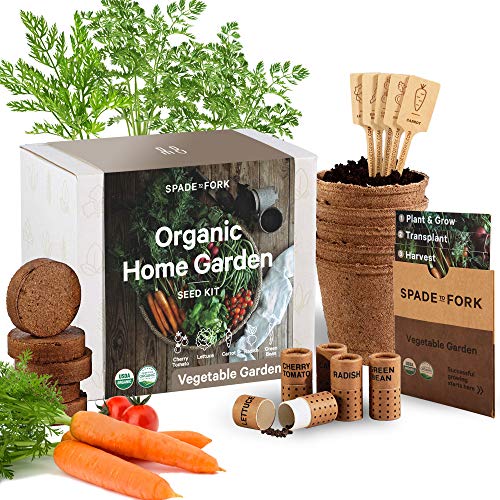
Spade To Fork’s kit centers on a fully organic approach. It includes five organic seed types (Early Cherry Tomato, Butterhead Lettuce, Carrot, Cherry Belle Radish, Bush Bean), compostable pots, soil discs, plant markers, and a growing guide. This option is best for eco-conscious buyers prioritizing USDA Organic and non-GMO seeds. A potential caveat is that some seeds may require more sunlight to reach best results.
Best for: Gardeners prioritizing organic seeds and an all-in-one, compact indoor system that prioritizes sustainability.
Back to the Roots Cherry Tomato Windowsill Planter Kit

This kit is dedicated to growing cherry tomatoes on a windowsill year-round. It includes organic seeds, organic soil, moisture-balancing biochar, a self-watering clay olla pot, and a STEM curriculum for kids. It’s ideal for tomato lovers who want a simple, self-contained system. A limitation is that tomatoes generally need more sunlight and warmth for optimal fruiting than leafy herbs.
Best for: Tomato enthusiasts looking for an easy, all-in-one solution with an educational component.
Buying Guide: Key Considerations for Windowsill Garden Kits
- Space and layout: Measure your window area and check if the kit’s pot size and planter depth fit your sill without crowding.
- Light requirements: Choose kits with herbs that thrive in your available sunlight or plan for supplemental lighting.
- Seed types: Decide between a broad herb set, a tomato-focused kit, or a mixed vegetable approach based on your culinary needs.
- Organic and non-GMO: If preference is given to organic or non-GMO seeds, verify certification and included soil quality.
- All-in-one or modular: An all-in-one kit is convenient for beginners; modular systems suit growing larger or multiple varieties over time.
- Care routine: Look for kits with moisture meters or simple measurement guidance to reduce over- or under-watering.
- Longevity and reuse: Consider the durability of pots and planters and whether components can be reused for future plantings.
Frequently Asked Questions
- What is the best starter kit for beginners on a windowsill?
Look for an all-in-one kit with clear instructions, basic tools, and seed varieties suited to your cooking needs. - Do windowsill kits require special lighting?
Natural light is ideal; if space has limited sun, LED grow lights can support seed germination and growth. - Can I grow both herbs and vegetables in the same windowsill kit?
Yes, if the kit includes multiple plant types and provides adequate pot space and light for each. - Are organic and non-GMO seeds worth it for windowsill gardens?
They appeal to buyers prioritizing sustainable practices and often come with higher germination quality. - What maintenance helps maximize yield on a windowsill garden?
Consistent watering (not overwatering), appropriate light, and occasional pruning or harvesting to encourage growth. - Is a moisture meter necessary?
Not required, but it helps beginners prevent over-watering and maintain steady soil moisture.