Finding a reliable wind-powered charging solution is essential for outdoor enthusiasts, remote builders, and emergency-preparedness planners. This guide highlights five top wind turbine charging products that convert wind into usable battery power. Each option is suited for different wind conditions and battery setups, so you can choose the best fits your needs. The top picks cover portable USB charging, hobby-grade education kits, MPPT controllers, and robust home-ready systems.
Summary table of selected products:
- Noteflora Wind Turbine USB Power Generator — Portable USB charging for devices on bikes, camping, or outdoor trips.
- Thames & Kosmos Wind Power V4.0 — Educational 3-foot turbine for learning and small EV power experiments.
- Rvluw MPPT Wind Turbine Charger Controller — 12V/24V, IP67, automatic matching, strong in variable wind.
- Fockety Wind Turbine Charges Controller — 12V/24V MPPT with high heat dissipation and efficient MPPT charging.
- VEVOR 12V-500W Wind Turbine Generator Kit — Balanced kit for homes, RVs, boats with MPPT control.
Noteflora Wind Turbine USB Power Generator

- Brand: Noteflora
- Key features: Portable wind turbine charger; converts wind into clean electricity; compact design; built-in USB port for phones and tablets.
Best for: Outdoor travelers and cyclists who need lightweight, pocketable wind charging. This option is best for devices that can be charged via USB, such as phones, power banks, or small tablets when wind is available. Consider this if you want a simple, travel-ready charger without a large setup.
Limitation: Output is modest (5W). For high-wuel charging or larger batteries, a larger turbine or additional solar input may be preferable.
Thames & Kosmos Wind Power V4.0
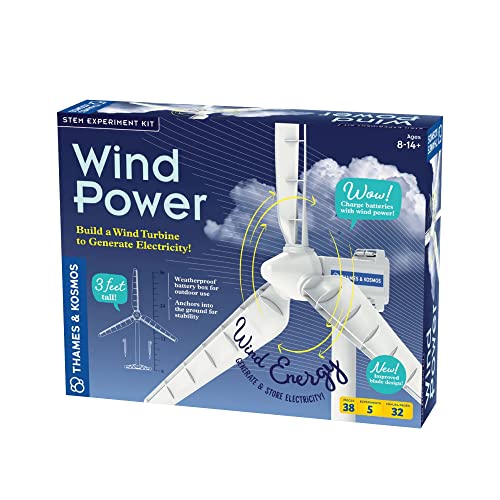
- Brand: Thames & Kosmos
- Key features: Real 3-foot wind turbine; durable single-piece blade construction; generates electricity to charge a battery and power a small model car.
Best for: Educational use and experiments in renewable energy; ideal for classrooms or hobbyists exploring how wind converts to electricity. This kit emphasizes learning and hands-on building more than rugged field deployment.
Limitation: While durable, it is primarily a learning tool and model-scale generator, not a heavy-duty charging solution for larger batteries or critical power needs.
Rvluw MPPT Wind Turbine Charger Controller

- Brand: Rvluw
- Key features: MPPT control; automatic 12V/24V battery matching; IP67 waterproof; deep heat dissipation design for stable charging.
Best for: Users with mixed wind conditions who need efficient charging and robust weather sealing. This controller is well-suited for off-grid or semi-permanent installations where variable wind is common. Choose this if you require automatic battery matching and durable performance.
Caution: Ensure proper wiring and ventilation; high current charging can generate heat, so installation should follow protective measures to prevent overheating.
Fockety Wind Turbine Controller

- Brand: Fockety
- Key features: IP67 waterproof MPPT controller; 12V/24V operation; high heat dissipation; 16A PWM-based control; automatic battery matching.
Best for: Small to mid-size wind systems requiring reliable MPPT performance and waterproofing. Suitable for solar-wind hybrid projects or standalone wind power setups with batteries. Might be especially useful where long exposure to weather is expected.
Limitation: Claimed 90% efficiency improvement; practical results depend on wind and system design. Ensure compatibility with your turbine specification and battery bank.
VEVOR 12V-500W Wind Turbine Kit

- Brand: VEVOR
- Key features: 500W high-efficiency output; 12V three-phase AC generator; MPPT microprocessor controller; weather-sealed wind turbine kit with anemometer and adjustable windward direction.
Best for: Home, RVs, boats, or farm use where a practical, mid-range wind power solution is needed. The integrated MPPT controller aids efficient charging across common wind ranges, making it a versatile all-around option.
Limitation: Like any wind kit, performance relies on wind availability and proper installation. Ensure turbine mounting and battery sizing align with your goals.
Buying Guide: Key Considerations For Wind-To-Battery Charging
- Output needs: How much power do you require to charge your battery bank or devices? For USB devices and small packs, smaller turbines work; for larger batteries, choose MPPT controllers and higher-watt turbines.
- Controller type: MPPT controllers optimize charging efficiency, especially in variable wind. PWM controllers are simpler and cheaper but may waste some energy at high voltage differences.
- Voltage and battery compatibility: Verify your system voltage (12V vs 24V) and ensure automatic matching and protection features are present to guard against overcharging or short circuits.
- Durability and weather resistance: Outdoor installations benefit from IP ratings, heat dissipation designs, and robust casings to handle rain, dust, and temperature swings.
- System scale: Portable USB wind turbines suit travel or emergency kits; larger kits with multi-kW capacity suit off-grid homes or boats. Start with your wind profile and space constraints.
- Installation considerations: Proper mounting, safe wiring practice, and adherence to local regulations improve reliability and safety. Consider professional help for complex setups.
Frequently Asked Questions
- What is the typical output of a small wind turbine for charging a battery?
– Small turbines commonly deliver 5W to a few hundred watts depending on design and wind conditions; MPPT controllers optimize charging across a range of wind speeds. - Do I need an MPPT controller for wind charging?
– MPPT controllers improve efficiency by maximizing energy harvest, especially at lower wind speeds or higher battery voltages. - Can these devices charge a car battery?
– They can charge smaller automotive or auxiliary batteries within their rated current. For full-size car batteries, higher-watt systems and proper charging strategies are required. - Are wind turbines suitable for indoor use?
– Most wind turbines require outdoor exposure to wind. Some educational kits and simulated setups can demonstrate principles, but real power generation relies on airflow. - What maintenance is needed for wind turbine systems?
– Routine checks include securing mounts, inspecting blades, cleaning vents, and verifying wiring connections and charge controller settings. - How do I choose between the models listed?
– Consider your wind profile, battery voltage, required power, installation space, and whether you need portable USB charging or a full battery system.