Looking for reliable water purifying bottles to stay safe wherever you travel or hike? This guide highlights top picks ideal for travelers, campers, commuters, and outdoor enthusiasts. Each product section explains who it’s best for, why it stands out, and any limitations to consider. Use the table below to compare key details at a glance.
| Product | Capacity | Best For | Notes |
|---|---|---|---|
| LifeStraw Go Series 22oz | 22 oz | Travelers on the road, airport or bathroom fills | Removes bacteria, parasites, microplastics; improves taste |
| GRAYL GeoPress 24 oz | 24 oz | Backcountry hiking, camping, travel | All-pathogen purification; VOCs and chemicals removal |
| SurviMate 5-Stage Bottle | Size varies by model | Survival kits, emergencies, outdoor use | 0.01 μm UF membrane; NSF/ANSI 42 |
| Brita Stainless Steel 20 oz | 20 oz | Everyday hydration, commuting | Chlorine taste/odor reduction; not a purifier |
| LifeStraw Go Series 1L | 1 L | Longer trips, water on the go | Similar filtration as 22oz version; good for larger needs |
LifeStraw Go Series Water Filter Bottle – 22oz

The LifeStraw Go Series 22oz bottle is designed for travelers who may fill up in less-than-ideal locations. Best for road trips, airports, or taps in areas with questionable water quality. The carbon filter improves taste by reducing chlorine and odors, while the membrane microfilter targets bacteria, parasites, and microplastics. This bottle is a strong choice for commuters and campers who want reliable flavor improvement and protection from common contaminants. A potential limitation is that it does not remove all chemical contaminants beyond organic compounds and chlorine.
Who it’s best for: Travelers and on-the-go users who prioritize taste improvement and broad microbial protection in varied water sources.
Why chosen: Combines portability, effective filtration, and taste enhancement in a single unit, making it a versatile upgrade over basic disposable bottles.
Caution: Not a complete chemical contaminant purifier; avoid relying on it for industrial or highly contaminated water without further treatment.
Brita Stainless Steel Premium Filtering Bottle – 20 oz
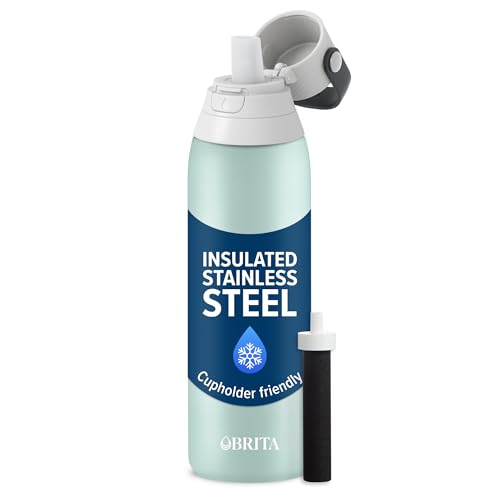
This bottle emphasizes sustainability and cost savings by reducing the need for single-use plastic bottles. It uses an activated carbon block filter to cut taste and odor from chlorine and to reduce particulates. Best for daily hydration, workouts, or office use where you want a simple taste improvement without full water purification. It is not a purifier, so it won’t remove all pathogens or microplastics like a true purifier bottle.
Who it’s best for: People who want a durable, insulated stainless bottle with a filter that improves taste and reduces waste.
Why chosen: Combines filtration with insulation to keep drinks cold for long periods, reducing plastic waste in daily routines.
Caution: Not a purifier—reliant on the filter for taste, not for removing all pathogens in very uncertain water sources.
LifeStraw Go Series — Insulated 1L Water Filter Bottle

This insulated LifeStraw Go 1L model extends hydration on longer trips or throughout the workday. It uses the same membrane microfilter technology to remove bacteria, parasites, and microplastics while the carbon filter helps reduce chlorine taste and odor. Best for travelers and outdoor enthusiasts who need more water capacity between refills. A caveat is the larger size may be less convenient for very tight spaces in backpacks.
Who it’s best for: Those who want extended hydration capacity and reliable filtration on longer outings.
Why chosen: Combines LifeStraw’s trusted filtration with an insulated, larger-capacity bottle for prolonged use.
GRAYL GeoPress 24 oz Water Purifier Bottle
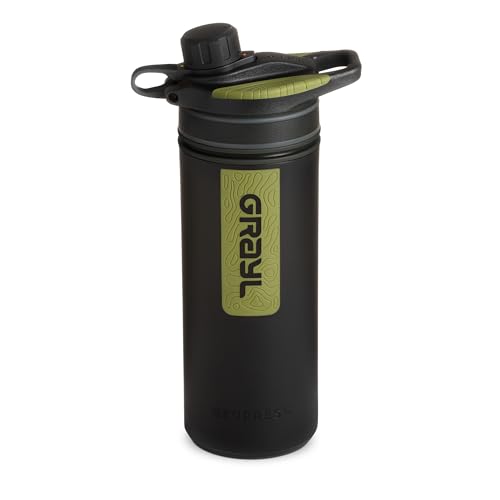
The GRAYL GeoPress provides full purification, removing viruses, bacteria, protozoa, particulates, and chemicals. It’s well-suited for hikers, campers, travelers, and people in areas with uncertain water safety. The quick “Fill. Press. Drink!” workflow makes it easy to generate safe water on the go. A limitation is the water flow rate, which some users find slower compared to plain filters, especially in high-sediment sources.
Who it’s best for: Outdoor adventurers and global travelers who require comprehensive pathogen and chemical removal in one step.
Why chosen: It delivers broad purification capabilities in a compact form, ideal for backcountry use and emergency readiness.
SurviMate 5-Stage 0.01μm Ultra-Filtration Bottle

The SurviMate bottle uses a 5-stage filtration system with a 0.01-micron hollow fiber UF membrane, delivering 99.99% removal of harmful substances. It also includes purification beads and activated carbon to address chlorine, odors, heavy metals, and organic matter. Best for survival kits, emergencies, and outdoor enthusiasts who want high filtration precision. A potential drawback is the more complex filter replacement process and maintenance.
Who it’s best for: Survival-minded buyers and campers who need robust filtration in remote settings.
Why chosen: The smaller pore size and multi-stage approach offer strong protection against a wide range of contaminants.
GRAYL GeoPress 24 oz Water Purifier Bottle – Oasis Green

This GRAYL GeoPress variant emphasizes outdoor travel in greenspace contexts. It purifies water anywhere, removing all pathogens and adsorbing VOCs, PFAS, pesticides, heavy metals, and odors. Best for travelers and hikers who may encounter a mix of untrusted water sources. A limitation could be the filter replacement cost over time, which should be considered for long trips.
Who it’s best for: Global travelers and backpackers who want versatile purification in one bottle.
Buying Guide
What should you look for in a water purifier bottle?
Filtration vs. purification: Purifier bottles remove pathogens, viruses, and chemicals; filtration bottles target particulates and odors. Choose based on the water risk level you expect to encounter.
Capacity and weight
Higher capacity means fewer refills but more weight. For day trips, 22–24 oz is common; for longer trips, 1 L models are advantageous. Consider how you balance weight and hydration needs.
Filter lifespan and replacement costs
Check how many liters or refills the filter lasts and the cost of replacements. Some brands offer long-lasting filters, while others may require more frequent changes in remote areas.
Maintenance and ease of use
Look for straightforward fill-and-filter processes and clear instructions. A built-in purifier that’s easy to clean reduces maintenance friction during adventures.
Certifications and testing
NSF/ANSI certifications indicate tested performance. While not all bottles carry certifications, they can help validate claimed filtration capabilities.
Best use case scenarios
Road trips and airports: prioritize taste improvement and portability. Hiking and camping: prioritize full purification and larger capacity. Emergency kits: multi-stage filtration and robustness are key.
Maintenance tips
Rinse filters with clean water after use, replace according to manufacturer guidance, and dry bottles to prevent mold. Store with the cap off to avoid moisture buildup inside.
Frequently Asked Questions
- Are water purifier bottles safe for international travel? Yes, many are designed for varied water sources, but verify if the bottle purifies viruses and chemicals for the specific regions you visit.
- What’s the difference between purification and filtration? Purification removes pathogens and contaminants; filtration mainly reduces particulates and improves taste.
- How often should I replace the filter? Replacement schedules vary by product and usage; consult the manufacturer’s guidelines for liters or refills.
- Can these bottles remove microplastics? Some models advertise removal of microplastics; verify the product specifications for microplastic filtration.
- Do these bottles remove heavy metals? Some purifiers address heavy metals in combination with other contaminants; check product claims and certifications.
- Is insulation important? Insulation helps keep water cold and reduces condensation, beneficial for daily use and long trips.