Looking for a reliable water purifying bottle for travel, hiking, or daily use? This guide highlights five top bottles that balance filtration power, portability, and practicality. Each product is suited to different needs—from ultralight travelers to outdoor explorers and family users. See the quick comparison table below to help choose the right bottle for your trips.
| Product | ||
|---|---|---|
| LifeStraw Go Series Water Filter Bottle (22oz) | Travelers needing compact filtration | Filters bacteria, parasites, microplastics; improves taste |
| LifeStraw Go Series Insulated 1L | All-conditions travelers | Stainless steel design with carbon filter; retains cold |
| Brita Stainless Steel Premium Filtering Bottle (20 oz) | Everyday use and commuting | Reduces chlorine taste/odor; sustainable with filters |
| SurviMate 5-Stage 0.01μm Bottle | Outdoor enthusiasts and emergencies | High-precision filtration; small pore size for safety |
| GRAYL GeoPress 24 oz | Hiking, travel in diverse regions | Purifies water on demand; removes pathogens and chemicals |
Next, explore concrete options to match your needs, from ultralight daily carry to rugged outdoor use. Each section outlines who the bottle is best for, what makes it stand out, and a clear caveat to consider.
LifeStraw Go Series Water Filter Bottle — 22 Oz

The LifeStraw Go 22oz bottle is a BPA-free travel companion designed for quick-fill options from airports, taps abroad, or roadside stops. Its carbon filter improves taste by reducing chlorine and odors while the membrane microfilter blocks 99.999999% of bacteria, 99.999% of parasites, and 99.999% of microplastics, along with particulates.
Best for: Light travelers who prioritize compact filtration and easy back-up hydration on layovers or city trips. The bottle works well for people who want a simple, reliable filtration solution without extra frills.
Caution: As with most filtration bottles, the cartridge life varies with water quality; expect filter replacement based on usage and contaminant load.
LifeStraw Go Series Insulated 1L Bottle

This insulated stainless steel LifeStraw Go 1L bottle provides a larger filtration capacity with the same protective membrane microfilter and a carbon stage to improve taste. The stainless steel design helps keep drinks cold longer and reduces condensation on hot days or during transit.
Best for: Travelers or commuters who want a larger, durable bottle that maintains cold beverages during long travel days. It’s a better option when you’ll be away from a fridge for extended periods.
Caution: Heavier than 22-ounce models; balance insulation benefits against weight for lightweight packing goals.
Brita Stainless Steel Premium Filtering Bottle — 20 Oz
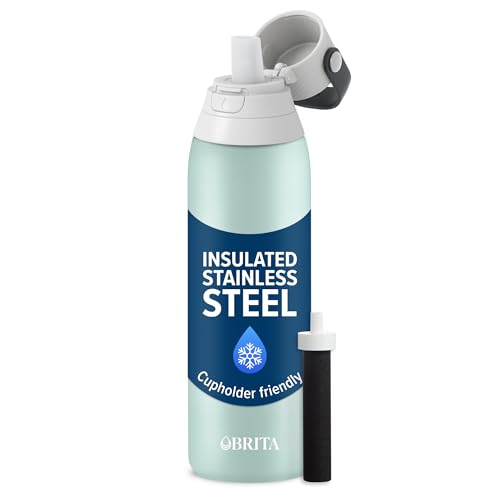
The Brita Stainless Steel Premium Filtering Bottle uses an activated carbon block filter to cut taste and odor from chlorine and reduce particulates. It is BPA-free, double-wall insulated, and designed to keep drinks cold for a full day. It’s not a purifier bottle, but it helps improve tap water wherever you are.
Best for: People who want an affordable, easy-to-maintain bottle for everyday use, commuting, or short trips with significant chlorine taste concerns.
Caution: Not a true purifier; it won’t remove all pathogens or microplastics beyond what its carbon filter handles.
Brita 36386 Premium Water Filter Bottles — 26 Oz
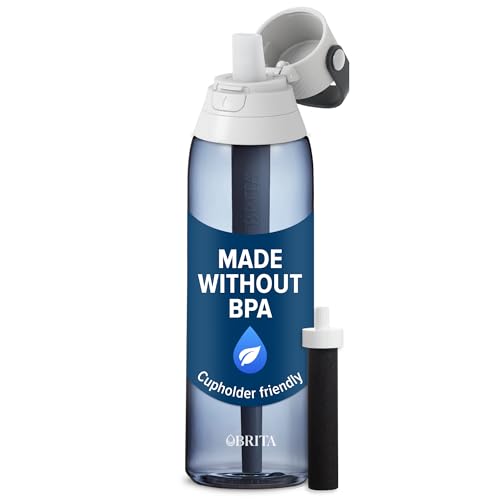
This 26-ounce Brita bottle offers a car cup-friendly design with one filter that reduces chlorine taste and odor on the go. It’s built for convenient hydration with one-handed operation and built-in straw, making it a practical option for daily commuters and travelers who want quick access to filtered water.
Best for: Those who value convenience and quick access to filtered water during travel or daily routines. It’s great for office or school use and long commutes.
Caution: Like other Brita bottles, it is not a water purifier; contaminants beyond chlorine reduction may remain if water quality is poor.
SurviMate 5-Stage 0.01μm Ultra-Filtration Bottle

SurviMate offers a five-stage filtration system with a 0.01-micron hollow fiber UF membrane, plus sediment and activated carbon elements. Certified features include an NSF/ANSI 42/372 framework, aiming to remove a broad range of contaminants, odors, and chemicals while preserving essential minerals.
Best for: Outdoor enthusiasts, campers, and emergency-prepared households seeking high filtration precision with a compact design. The built-in filtration stack is designed for tougher water sources.
Caution: The filtration stack can require more maintenance and replacement planning during extended trips with limited access to replacement cartridges.
GRAYL GeoPress 24 Oz Water Purifier Bottle

The GRAYL GeoPress purifies water on demand, making sketchy water safe to drink. It’s designed for hikers, travelers, and survival scenarios, removing pathogens, particulates, and many chemicals from a wide range of water sources. It also filters and cleans to reduce tastes and odors, providing potable water more reliably in remote areas.
Best for: Outdoor adventurers and travelers who frequently encounter uncertain water quality or seek a single device that purifies at the point of use. It’s well-suited for multi-day trips and international travel with variable water sources.
Caution: Heavier and bulkier than simple bottle filters; plan for extra space in your pack when carrying this purifier bottle.
Buying Guide: Key Considerations for Water Purifying Bottles
- Filtration vs. Purification: Decide if you need true purification (removing pathogens) or filtration (reducing particulates, taste, and odors). For risky water sources, a purifier is preferable.
- Micron Rating and Contaminants: Lower micron ratings generally indicate finer filtration. Check whether the bottle removes bacteria, parasites, microplastics, heavy metals, VOCs, and PFAS as needed.
- Capacity and Weight: 20–26 oz bottles are common for daily carry; larger 1L options are ideal for longer trips. Consider how weight and volume affect packing.
- Filtration Life and Maintenance: Some cartridges last for many liters, while others require frequent replacement. Plan for replacement costs and availability during travel.
- Durability and Materials: Stainless steel bottles are robust and temperature-retentive; BPA-free plastics are lighter. Choose based on climate, handling, and reuse expectations.
- Use Case and Connectivity: If you often fill from airports or public taps, portability and ease of use matter. For camping, look at built-in features like compasses or multi-stage filtration.
Frequently Asked Questions
- What is the difference between filtration and purification in water bottles?
– Filtration reduces particulates and improves taste, while purification also removes pathogens and some chemicals. For uncertain sources, purification is preferable. - How often should I replace the filter or cartridge?
– It depends on usage, water quality, and the manufacturer’s guidelines. Monitor flow rate and taste to determine replacement needs. - Can these bottles be used in airports or on airplanes?
– Yes, many are designed for travel; you can fill from public taps and airport facilities where permitted. - Are BPA-free bottles safer for drinking water?
– BPA-free materials reduce exposure to BPA, but overall safety also depends on overall bottle design and filtration performance. - Do all bottles remove microplastics?
– Several models target microplastics; check the product’s stated filtration capabilities to confirm.