If you need precise hot, cold, or room-temperature water, a temperature-controlled water dispenser is the right choice. This guide highlights five top picks, explains who each model is best for, and helps you compare features like bottom-loading versus bottleless designs, safety locks, and filtration. Whether you’re outfitting a busy kitchen, a shared office, or a dorm room, these options cover a range of needs from quick hot beverages to crisp cold water. The quick-reference table below summarizes who each product serves best.
| Product | Best For | Notes |
|---|---|---|
| Brio Bottom Loading Water Cooler | Home users who want easy bottle swaps and 3 temps | Bottom-load design with hot, cold, and room temp |
| Manastin Bottom Loading Water Cooler | Small offices or apartments seeking space-saving design | Includes dry-burn protection and child safety |
| Avalon Bottleless Water Cooler | Homes or offices with plumbing for direct-filtration | Dual filtration, under-sink kit, three temps |
| AIRHOP Instant Hot Dispenser | Busy kitchens needing instant hot water | Multiple temperatures and quick-dispense tech |
| Housiwill Countertop Dispenser | Rented spaces or limited cabinets needing compact unit | Top-loading, 3-in-1 with temperature options |
Brio Bottom Loading Water Cooler Dispenser

The Brio model offers a bottom-loading design that eliminates heavy lifting when replacing 5-gallon bottles. It supports hot, cold, and room-temperature water, and includes an LED display and an empty-bottle alert. The two-step hot-water safety lock helps prevent accidental dispensing, making it suitable for households with children or pets. A potential limitation is the need to use compatible 3- or 5-gallon jugs, which may influence placement and cabinet fit.
Who it’s best for: households that want easy bottle changes, a clear indicator when a bottle runs low, and a simple three-temperature setup for beverages and foods.
Manastin Bottom Loading Water Cooler

Manastin’s unit emphasizes a bottom-loading design with a hidden, space-saving look. It provides hot, cold, and room-temperature water and adds a dry-burn protection feature—helpful for avoiding dry-run damage. A built-in temperature sensor helps maintain consistent output, and a 3-in-1 design supports various uses. The main caveat is that it relies on 3- or 5-gallon bottles, so be aware of jug compatibility and the longer-term cost of replacements.
Who it’s best for: offices or homes seeking a sleek, compact look with reliable safety features and a focus on ease-of-use during bottle changes.
Avalon Bottleless Water Cooler
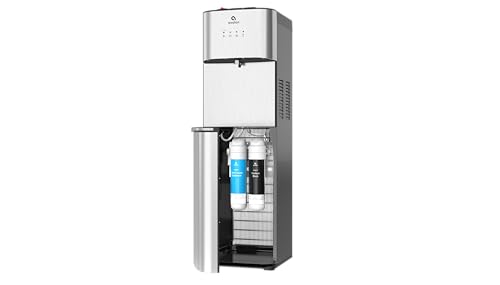
Avalon’s bottleless option connects directly to a water line and includes dual filtration (sediment and carbon) plus an installation kit. It delivers hot, cold, and room-temperature water and features a self-cleaning mode for ongoing hygiene. This is a strong choice for homes or offices with plumbing access who want ongoing filtered water without handling bulky bottles. The complexity of installation is a consideration, and ongoing filter changes are part of the maintenance plan.
Who it’s best for: households or small offices that prioritize filtration quality and want to eliminate bottle deliveries altogether.
AIRHOP Instant Hot Water Dispenser

AIRHOP emphasizes instant hot water with a compact 3-liter tank and five temperature presets. It’s designed for quick beverage preparation, soups, or hot cereal needs, and includes a memory function to recall last settings. A limitation is that it is countertop-based, which may limit placement and capacity for larger households or constant use scenarios.
Who it’s best for: busy kitchens or desks where immediate hot water is a primary requirement, and users want precise temperature presets and spill prevention features.
Housiwill Countertop Water Dispenser

Housiwill offers a countertop, top-loading dispenser that holds 1.2–5 gallon bottles. It provides hot, cold, and room-temperature water, with a visible work indicator and a compact design suitable for small spaces. The top-loading design may be easier to manage than heavy bottom loads for some users, but it requires regular bottle changes and careful placement to maintain hygiene at the spout area.
Who it’s best for: renters or small spaces where a compact, easy-to-install solution is preferred, with flexible bottle capacity and three temperature options.
Buying Guide: Key Considerations For Your Temperature-Control Dispenser
- Loading design: Bottom-loading units save back strain and hide bottles, ideal for frequent bottle changes. Top-loading units are simpler to set up in smaller spaces but may require more direct handling of the bottle.
- Temperature range and stability: Look for models with clearly labeled hot, cold, and room-temperature outputs and reliable temperature sensors to maintain consistent water temps.
- Safety features: Child locks on hot-dispenser spouts or dual-action safety mechanisms reduce accidental burns. Dry-burn protection helps avoid damage if the bottle runs empty.
- Filtration vs. bottleless: Bottleless systems add filtration and plumbing integration, reducing bottle deliveries but increasing installation complexity. Filtration life and replacement costs matter for ongoing maintenance.
- Capacity and footprint: Consider daily water usage and space. Countertop models save space but have smaller capacities, while full-size floor units support higher loads and feature larger reservoirs.
- Maintenance: Self-cleaning features, easy-access components, and filter indicators simplify upkeep. Plan for routine sanitization and filter changes where applicable.
Frequently Asked Questions
- What should I consider when choosing between bottom-loading and bottleless dispensers? Bottom-loading reduces lifting strain and bottle exchanges; bottleless dispensers remove bottle handling altogether but require plumbing and ongoing filter maintenance.
- Are heat and cold temperatures adjustable on these dispensers? Yes, most models provide hot, cold, and sometimes room-temperature settings, with some allowing precise temperature sensors for stability.
- Is a child-safety lock important? For homes with kids, locks help prevent accidental hot-water dispensing and potential burns.
- Do bottleless dispensers need professional installation? Installation varies by model. Some include full kits and under-sink adapters, while others are plug-and-play with tabletop placement.
- How often do filters need replacing? Dual-filter bottleless units typically require filter changes every several months or after a set volume of water, depending on usage.
- Which design is best for an office? For high usage, a bottom-loading or bottleless unit with dual filtration and high throughput can be ideal, balancing ease of use with continuous supply.
Choosing a temperature-controlled water dispenser involves weighing loading method, filtration needs, safety features, and space constraints. The five options above represent practical choices across common use cases, from compact countertop units to bottleless filtration systems. Align your selection with how you plan to use hot and cold water, how often you replace water bottles, and how much space you can dedicate to the dispenser.