Converting pasture feeding into a streamlined routine is essential for busy farms. This guide highlights top walk-through sheep feeders that promote cleaner feeding areas, reduce waste, and simplify goat and sheep husbandry. Each option is chosen for durability, capacity, and safety, with buyer-friendly notes on who benefits most. Whether you run a small homestead or a larger operation, these feeders help keep livestock fed without constant attention.
Product snapshot: the table below compares the five featured feeders at a glance, focusing on capacity, design, and suitability. Use it to quickly identify which model aligns with your flock size, fencing, and feeding style.
| Product | Capacity | Best For |
|---|---|---|
| VEVOR Livestock Hay Feeder, 2 in 1 | 56 gal hay, 24 gal grain | Medium to large flocks; needs grain and hay in one unit |
| 4 Pack Goat Feeders Hanging | Large capacity per unit | Fencing or pasture setups; multiple feeding stations |
| Garvee Livestock Feeder, 45.13″ | 22 gal | Smaller groups; easy relocation and stability |
| 5 Ft Long Goat Hay Feeder, 96 Gal | 72 gal hay, 24 gal grain | Large farms; feeds many goats or sheep simultaneously |
| ActiveTrail 22 Gallon Capacity Feeder | 22 gal | Rugged, long-lasting option for pasture use |
VEVOR Livestock Hay Feeder, 2 in 1

Best for: Farms needing a single unit that feeds both hay and grain to sheep or goats. The 2-in-1 design reduces clutter and simplifies feeding routines. Capacity supports feeding 10–12 animals at once, making it suitable for mid-sized flocks.
Why selected: A heavy-duty steel frame with galvanized plates offers longevity in outdoor conditions. The bottom tray catches loose hay, helping maintain a clean feeding area. The design features reinforced welding and rounded edges to minimize injuries during feeding.
Caution: Heavy construction may require secure mounting and adequate space to accommodate its length and footprint. Ensure fencing or barns can support its weight when full.
4 Pack Goat Feeders Hanging with Heavy Duty Carabiner
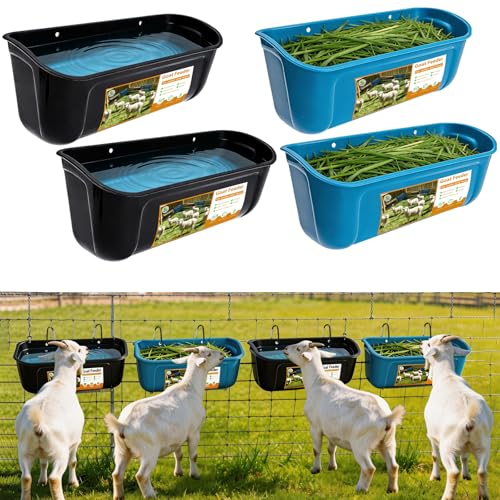
Best for: Users who prefer easy, tool-free installation and multiple hanging stations. Ideal for fence lines, runs, or portable setups where quick relocation matters.
Why selected: Heavy-duty hooks and carabiners deliver reliable suspension, and the wide capacity reduces refills. Installation is quick, making it practical for beginners and seasoned keepers alike.
Caution: Monitor for chew or wear at mounting points, especially on windy days. Ensure the feeder remains level to prevent feed spillage.
Garvee Livestock Feeder, 45.13″ Hay Feeder

Best for: Larger sheep groups needing a stable, long trough with a simple V-shaped bottom for stability. Suitable for barns or covered runs where a long trough fits along a wall or fence line.
Why selected: Galvanized steel with a powder coat resists rust and weather. The 22-gallon capacity supports longer feeding intervals, and smooth edges reduce risk of hand injuries during loading and cleaning.
Caution: Long troughs can be heavy to reposition. Plan placement to avoid crowding at feeding times and to ensure easy cleaning access.
5 Ft Long Goat Hay Feeder, 96 Gal

Best for: Large farms needing high capacity to minimize refills for many goats or sheep at once. Ideal for institutional settings or expansive pasture systems.
Why selected: All-in-one design combines hay storage and grain pan, reducing waste and simplifying maintenance. Stainless steel frame and galvanized components resist corrosion while remaining easy to clean.
Caution: This unit is sizable; ensure you have space for installation and future movement if needed. Check fencing and terrain for level placement.
ActiveTrail 22 Gallon Capacity Feeder

Best for: Those seeking a sturdy, compact feeder with solid capacity for smaller flocks or limited space. Good for pasture corners or fence lines where a compact feeder fits well.
Why selected: Heavy-duty galvanized steel and a protective powder coat provide durability for outdoor use. The design emphasizes stability and safety with smooth edges and a V-shaped bottom to prevent tipping.
Caution: Consider wind exposure and mounting security; a gusty site may require additional stabilization to prevent movement when animals feed.
Buying Guide: Key Considerations For Walk Through Sheep Feeders
- Capacity and flock size: Match feeder capacity to the number of animals fed per session. Larger setups reduce refills but require more space and heavier installation.
- Material and durability: Look for galvanized steel or stainless steel frames, rust resistance, and reinforced welds for outdoor longevity.
- Multi-function design: 2-in-1 hay and grain feeders save space and labor, but ensure the layout fits your feed types and delivery schedule.
- Safety features: Check for rounded edges, smooth corners, and stable mounting to minimize injuries during feeding.
- Installation and maintenance: Tool-free setups or lightweight components reduce time to deploy. Easy cleaning designs help maintain hygiene in feeding areas.
- Placement and mobility: Consider whether you need stationary installations along fences or portable units for rotation across pastures.
- Waste reduction: Choose troughs with clean-bottom designs and adequate height to minimize spillage and feed waste.
- Compatibility with fencing: Ensure attachments or hooks fit your existing fence material and dimensions.
Frequently Asked Questions
- What should I look for in a walk-through feeder? Durability, ease of access, capacity suited to flock size, and safe, smooth edges to prevent injuries.
- Are 2-in-1 hay and grain feeders effective? Yes, they reduce clutter and consolidate feeding areas, but ensure the combined design matches your feeding rhythm and hay/grain proportions.
- How do I position feeders for cleanliness? Place them away from muddy areas, use bottom trays or catches to reduce spill, and ensure easy cleaning access.
- Can feeders be moved between pastures? Some models offer portable options with hooks or lightweight frames; check weight and mounting requirements.
- What is the best feeder for large flocks? Higher-capacity, long troughs with secure mounting and wide feeding openings minimize refills and crowding.
- Do feeders deter waste better than troughs? Designs with enclosed or sloped bottoms help retain feed and guide it toward the trough, reducing waste.