Whether you’re maintaining large lawns, clearing overgrown edges, or tackling tough brush, a walk-behind wheeled trimmer can boost productivity and reduce fatigue. This guide highlights five top options suited to different yard sizes and terrain. The best pick is Powerhorse for big cutting swaths, while Earthquake models balance power with ease of use. SENIX and YARDMAX offer strong performance with sturdy wheels, and the Earthquake 60V option provides cordless convenience for lighter, smaller jobs. Read on to compare features, suitability, and practical considerations.
| Product | Engine / Power | Cutting Width | Wheels | Best For |
|---|---|---|---|---|
| Powerhorse High-Wheeled Walk-Behind String Trimmer | 173cc vertical gas engine | 22 in. | Rear wheels | Large properties, demanding brush, long runtimes |
| Earthquake Walk Behind String Mower 40314 | 160cc Viper 4-Cycle | 22 in. | 14 in. never-flat wheels | Rugged terrain, easy path clearing |
| SENIX High Wheel Walk Behind Brush Cutter (STMG-L) | 160cc 4-Cycle | 22 in. | 14 in. rubber wheels | Heavy weeds and brush, larger areas |
| YARDMAX YL2250 Walk Behind String Trimmer | 170cc | 22 in. | 14 in. wheels | Fence lines and wide open spaces |
| Earthquake 60V Walk Behind String Mower | 60V electric (two 4Ah batteries) | 22 in. | 14 in. wheels | Light to medium tasks, cordless convenience |
Note: The table above summarizes key attributes to help compare suitability across yard size, terrain, and power source. For detailed specs, refer to each product section below.
Powerhorse High-Wheeled Walk-Behind Trimmer

Engine: 173cc vertical gas engine with recoil start. Cutting head offers a 22-inch cutting swath. Rear wheels enable straightforward walk-behind control and maneuverability.
Best for: Property owners with large lawn areas or substantial brush who want a robust, high-capacity trimmer that covers ground quickly.
Why selected: The large cutting width and powerful engine help reduce cycle time on expansive tasks. The rear wheels provide stable guidance for consistent trimming along borders and open spaces.
Limitation: Gas-powered operation requires fuel management and maintenance; consider storage and starting routine for frequent use.
Earthquake Walk Behind String Mower 40314
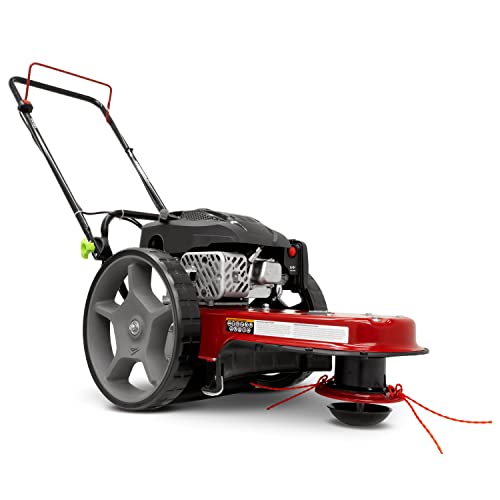
Engine: 160cc 4-Cycle Viper engine with easy-start features. Cutting width 22 inches and 14-inch never-flat wheels for stable operation on uneven terrain.
Best for: Users who need reliable power with straightforward operation and forgiving wheels for rough ground.
Why selected: The quick-start and wide wheels help maintain momentum on variable terrain, reducing fatigue during long sessions.
Limitation: Slightly heavier than smaller units; maneuvering may require more effort on very tight spaces.
SENIX High Wheel Walk Behind Brush Cutter (STMG-L)

Engine: 160cc 4-Cycle engine. Cutting width 22 inches with .155-inch line. Features 14-inch rubber wheels and a steel deck, with height adjustment.
Best for: Large-area trimming and brush clearance where a wide swath reduces time spent moving around obstacles.
Why selected: The combination of a sizable cutting swath and adjustable height makes it versatile for varied grass heights and brush density.
Limitation: Heavier than some handheld trimmers; ensure adequate operator strength for prolonged use.
YARDMAX YL2250 22 in. Walk Behind Trimmer
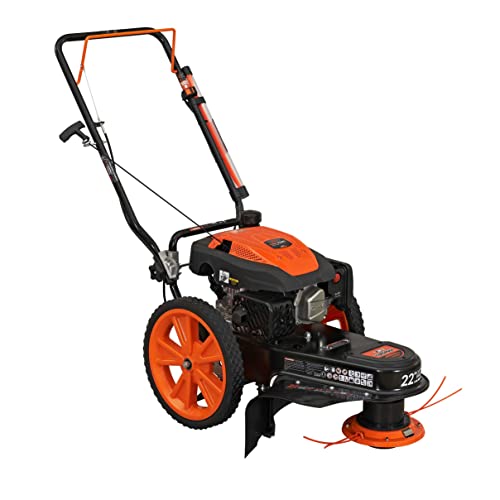
Engine: 170cc gas. Cutting width 22 inches. Offset head position facilitates trimming along fences, barns, and landscaping edges. Onboard string storage helps reloads.
Best for: Property owners who need efficient edging along structured features and continuous line trimming in larger landscapes.
Why selected: Offset head simplifies straight-line trimming and reduces back-and-forth movement around obstacles.
Limitation: Onboard string storage is convenient, but line replacement may still require manual handling in tight spaces.
Earthquake 60V Walk Behind String Mower
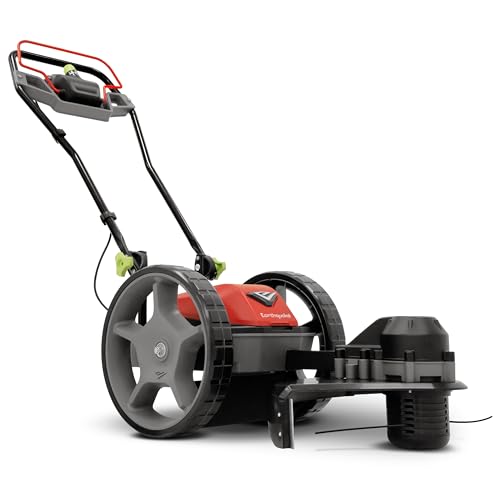
Power: Cordless electric with two 4Ah batteries, 22-inch cutting diameter, three cutting speed settings. Includes two 4Ah batteries for extended runtime and easy assembly.
Best for: Small-to-medium yards or properties where cordless operation reduces noise and maintenance needs.
Why selected: Battery-powered operation provides quiet, emission-free trimming with immediate start, ideal for frequent, shorter sessions.
Limitation: Runtime is battery dependent; plan for charging cycles during longer tasks or consider spare batteries for extended use.
Buying Guide
Key factors to consider when choosing a walk-behind wheeled trimmer:
- Yard size and terrain: Larger properties with uneven ground favor models with bigger cutting width and robust wheels. For hilly or rocky areas, look for high ground clearance and stable traction.
- Power source: Gas engines deliver continuous power for big jobs; corded or cordless electric options reduce noise and maintenance but may limit runtime.
- Cutting width and organ layout: A wider swath reduces passes but can require stronger handling. An offset head helps with linear edging along fences and borders.
- Weight and maneuverability: Heavier units may fatigue users over long sessions. Check wheel size and handle ergonomics for comfortable operation.
- Maintenance and parts availability: Easy-start mechanisms, common engine types, and widely available replacement parts improve long-term usability.
- Safety features: Look for belt guards, recoil start reliability, and clear operator controls to minimize strain and risk during use.
Frequently Asked Questions
- What is a walk-behind wheeled trimmer best used for?
They excel at clearing tall grass and brush over large areas and edging along fences, sidewalks, and borders with minimal back-and-forth movement.
- Should I choose gas or electric for a walk-behind trimmer?
Gas offers longer runtime and more power for tough growth; electric (corded or cordless) provides quieter operation and lower maintenance for lighter tasks.
- Which wheel size matters most?
Wider, higher-quality wheels improve stability on uneven terrain and reduce user fatigue during long sessions.
- Is an offset head important?
Yes, it helps trim straight along edges such as fences and landscaping without repositioning the unit frequently.
- What should I consider for storage and startup?
Gas units require fuel management and routine starting, while electric units require charging and battery care. Choose based on available storage and preferred maintenance level.