If you want to preserve vinyl memories by transferring them to CD or digital files, the right device makes this task straightforward. This guide highlights five capable options for different needs, from standalone turntables with built‑in CD/MP3 conversion to dedicated USB capture devices. Best for: beginners who want an all‑in‑one solution; audio hobbyists who need clean digital transfers; and budget shoppers who want flexible input options.
Below is a quick at-a-glance table of the top picks, showing who they’re best for and why they stand out as transfer solutions.
| Product | Best For | Why It Stands Out |
|---|---|---|
| DIGITNOW 9‑in‑1 Record Player | All‑in‑one system seekers | 3 speeds, CD/Cassette, Bluetooth, USB/SD, AM/FM — multiple formats in one unit. |
| DIGITNOW Bluetooth Record Player Turntable | Vinyl lovers needing built‑in MP3/USB | Vinyl to MP3 with CD, radio, USB/SD encoding and built‑in amp. |
| LoopTone 10‑in‑1 Turntable | Retro style with modern features | 3 speeds, Bluetooth, CD/Cassette, AM/FM, USB recorder, RCA outputs. |
| DigitPro USB 2.0 Audio Capture Card | Dedicated computer transfers | Direct USB recording from analog sources; flexible inputs. |
| Cubilux RCA to USB‑C Capture Cable | Direct capture without playback | Simple capture of RCA outputs to USB‑C devices; not for playback. |
DIGITNOW 3‑Speed Turntable With MP3 CD Encoding

Features include three selectable speeds: 33, 45, and 78 RPM with a 45‑RPM adapter. It acts as a Bluetooth turntable with a built‑in MP3 encoder that can convert vinyl to MP3 and also supports CD, cassette, radio, and USB/SD encoding. An auxiliary input allows connection of other devices.
Best for: vinyl enthusiasts who want a compact, all‑in‑one package that can convert to MP3 or CD without needing additional equipment. Limitations: built‑in features may be limited for high‑fidelity archival work; external DAC or higher‑end cartridge may be preferred for critical transfers.
DigitPro USB 2.0 Audio Capture Card

This device provides plug‑and‑play USB capture for analog audio, including vinyl, cassette, and radio. It supports direct recording to a PC or Mac and can convert into MP3 or WAV formats. It accepts 3.5mm and RCA L/R inputs, broad compatibility with Windows and Mac OS, and does not require an external power supply.
Best for: users who want precise digital capture on a computer without standalone playback features. Limitations: some Mac OS versions beyond 10.14 may require workarounds; not all models will support 10.15+ without updates.
LoopTone 10‑in‑1 Vinyl Turntable And CD/Cassette

This all‑in‑one unit offers 3 speeds, built‑in Bluetooth, and a CD/Cassette player plus AM/FM radio and USB recording. It supports AUX input and RCA line‑out for external speakers, making it versatile for mixed media playback and archiving tasks.
Best for: households seeking a retro aesthetic with modern conveniences and multiple output options. Limitations: the inclusion of many features can complicate setup for strict CD‑only archival work.
DIGITNOW 9‑in‑1 Multifunction Record Player
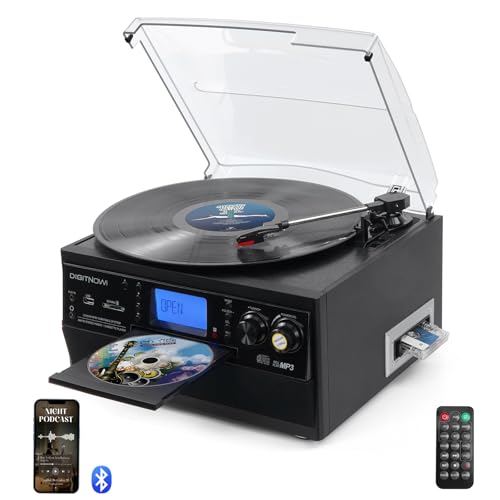
This 9‑in‑1 system encompasses a vinyl turntable with Bluetooth, CD and cassette playback, USB/SD playback, and AM/FM radio. It provides a remote control for convenience and supports various formats in a single, stylish package.
Best for: shoppers who want a single device to handle multiple formats without adding separate players. Limitations: more complex feature set may not suit purists seeking only vinyl or a dedicated CD workflow.
Cubilux RCA to USB‑C Capture Cable
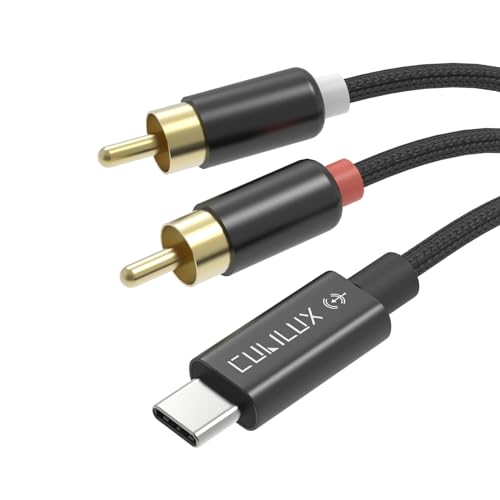
RCA audio capture cable designed to record from line‑out sources directly to USB‑C devices. It is not intended for playback, and it’s best used when you want to digitize a source without a separate capture device. It supports up to high‑resolution capture (96 kHz/24‑bit) in theory, but verify compatibility with your software.
Best for: users who already have a computer or USB‑C device and need a simple capture path. Limitations: not suitable for direct playback or high‑fidelity archival without a proper interface.
Buying Guide: Key Considerations For Transferring Records To CD Or Digital
- Purpose and format: Decide whether you need a standalone system (all‑in‑one) or a focused capture device (best for raw transfers to PC or Mac).
- Input and output options: Look for devices with RCA inputs, USB outputs, and options like Bluetooth or AUX for flexible workflows.
- Speed compatibility: Ensure the turntable supports 33, 45, and 78 RPM if you intend to play older or varying vinyl formats.
- Compression and formats: MP3 is convenient, but WAV or FLAC may be better for archival quality. Verify your encoding options.
- Ease of use vs. fidelity: All‑in‑one units are convenient; dedicated capture gear can yield higher fidelity with the right setup.
- Compatibility: Check OS compatibility for capture cards and software, especially with newer Macs or Windows builds.
- Future upgrades: Consider modular setups that let you upgrade a single component (e.g., capture card) without replacing the whole system.
FAQ
- Q: Do I need special software to convert vinyl to CD? A: Some devices include built‑in encoding; others require recording software on your computer. Choose based on your preferred workflow.
- Q: Is Bluetooth transfer quality good enough for archiving? A: Bluetooth is convenient but can introduce compression. For archival work, use USB/analog capture with a wired connection if possible.
- Q: Can I transfer cassette tapes to CD with these devices? A: Yes, many listed options support cassette playback and digital encoding to MP3 or WAV formats.
- Q: Are these devices compatible with both Windows and Mac? A: Most capture cards list broad OS support; check your exact version for compatibility.
- Q: What’s the difference between MP3 and WAV for transfers? A: MP3 is lossy but smaller; WAV is lossless and better for archives but larger in size.
- Q: Which option is best for beginners? A: An all‑in‑one system with CD/USB encoding is typically easiest for new users.