Answering common buyer questions, these copper flashing rolls offer durable, corrosion-resistant protection for roofs, windows, chimneys, and gutters. The best options vary by thickness, width, and roll length, so pick based on project size and handling needs. This guide highlights five top picks and explains who benefits most from each. The included buying guide explores sizing, compatibility, and installation considerations to help you choose confidently.
| Product | |||
|---|---|---|---|
| GOORY Copper Flashing 28 Gauge | 28 Ga | 6 in × 10 ft | Small repair jobs, jewelry crafts |
| GOORY Copper Flashing 26 Gauge | 26 Ga | 8 in × 10 ft | Medium projects, varied materials |
| GOORY Copper Flashing 28 Gauge | 28 Ga | 12 in × 10 ft | Longer runs, wider coverage |
| Royilink Copper Flashing 28 Gauge | 28 Ga | 4 in × 10 ft | Contractor use, durable flashing |
| uxcell Copper Flashing Sheet Roll | 20 Gauge (approx) | 3500 mm × 200 mm (~8 in × 11.5 ft) | DIY shaping, flexible applications |
GOORY Copper Flashing 28 Gauge 6in x 10ft

The GOORY 28 gauge copper flashing roll is a 6 inch by 10 foot sheet, designed for light to moderate roofing repairs and small crafting projects. It uses copper grade C11000 and meets ASTM B152 specifications, offering good compatibility with most building materials. A one-sided protective film guards the surface during handling. Best for focused repairs, ornamental accents, and jewelry who value easy shaping with thin copper.
Who it’s best for: homeowners tackling small patches, DIY crafters, and contractors needing precise, narrow flashing. Choose this if you need a compact roll for detailed work. Caution: very thin copper is more prone to denting during rough handling.
GOORY Copper Flashing 26 Gauge 8in x 10ft

This GOORY 26 gauge option is wider and thicker than the 28 gauge variant, measuring 8 inches by 10 feet. It’s still a copper grade C11000 product, with ASTM-B152 compliance and a protective film on one side. Best for projects requiring extra rigidity and slightly larger coverage per strip. Better for mid-size repairs or where a more durable edge is beneficial.
Who it’s best for: DIYers handling mid-sized roofs and professionals needing a forgiving balance between conformability and strength. Caution: may be harder to form around tight curves compared to thinner gauges.
GOORY Copper Flashing 28 Gauge 12in x 10ft

The 12-inch wide GOORY roll extends coverage per piece while remaining a thin 28 gauge. It is suitable for longer runs and wider flashing applications on low-pitched roofs or larger surfaces. A protective film on one side aids surface protection during installation. Best for single, longer flashing segments or bulk edge lining.
Who it’s best for: builders and DIYers needing a wider sheet for faster coverage, while preserving flexibility. Caution: the wider width can be less maneuverable in very tight corners.
Royilink Copper Flashing 28 Gauge 4in x 10ft

Royilink offers a compact 4 inch by 10 foot copper flashing roll at 28 gauge. It emphasizes pure copper with ASTM B152 compliance and RoHS standards for durability against moisture exposure. It’s ideal for small professional projects or repairs needing a reliable, visually appealing copper edge. Best for brief, precision work and restoration accents. Caution: narrower width means more pieces for large areas.
uxcell Copper Flashing Sheet Roll 8in x 11.5ft
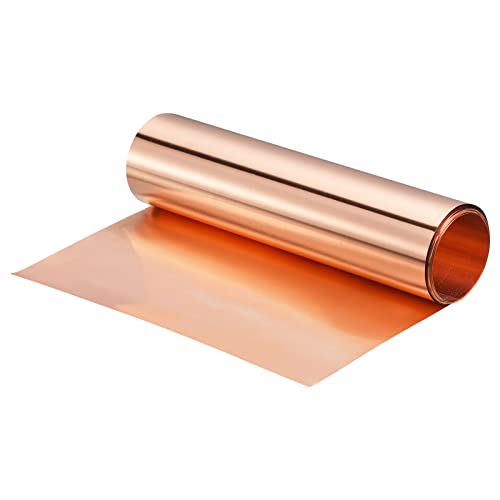
uxcell provides a copper sheet roll with roughly 8 inch width and 11.5 feet length, marketed as 99.9% pure copper. It emphasizes ease of bending, cutting, and shaping, with good electrical and thermal properties. It’s suitable for flexible DIY projects and light flashing tasks. Best for projects needing a balance of flexibility and formability. Caution: not intended for heavy-duty, high-load applications.
Buying Guide
How thick should your copper flashing be?
Thicker copper (lower gauge number) offers greater durability and rigidity but is harder to shape. Thinner copper is easier to bend around corners but may dent more easily under wind or hail. Match gauge to project scope: small repairs often use 28–29 gauge, while wider, longer runs may benefit from 26 gauge.
What width and length are best for roofing tasks?
Wider rolls cover more area per piece, reducing joints but may be harder to maneuver in tight spaces. Narrow rolls provide precision around contours and details. Lengths of 10 feet are common and adequate for many residential applications, but longer lengths reduce seams on larger projects.
Material and compatibility considerations
All listed products use copper (Grade C11000) meeting ASTM B152. Copper works well with most materials but does not pair well with galvanized steel, redwoods, or cedar. A protective film on one side helps prevent scratches during handling and installation.
Installation and handling tips
Shape copper with tin snips or appropriate shears; drill holes as needed; and avoid excessive force that may kink the sheet. If using thicker copper, plan for slightly longer working time and use proper safety gear, such as cut-proof gloves.
Long-term considerations
Copper develops a natural patina over time, offering an aesthetically pleasing finish and added weather resistance. Consider how patina may affect appearance on visible exterior areas and whether you prefer a traditional copper look from installation onward.
FAQ
- What gauge should I choose for roof flashing? For small repairs, 28–29 gauge is common; for broader coverage, 26 gauge offers more rigidity.
- Is copper flashing compatible with all roof types? Copper works well with many materials but not with galvanized steel, redwoods, or cedar in some conditions.
- Can I bend copper flashing by hand? Yes, copper is bendable, but thicker sheets require careful handling and stronger tools.
- How long does copper flashing last? Copper resists corrosion well and develops a patina over time, contributing to durability in outdoor environments.
- Should I use a protective film? A one-sided protective film helps prevent surface scratches during handling and installation.
- Do I need special tools? Tin snips, pliers, and metal ruler are typically sufficient for initial shaping and cutting.