Answering the question for hobbyists seeking improved thrust, torque management, and maneuverability, this guide highlights top contra-rotating propeller options and related motors. Ideal for F3A and sport RC aircraft enthusiasts, these selections emphasize balance, efficiency, and controllable torque. The buyer profiles vary from entry-level pilots needing better stability to experienced pilots chasing precise yaw control and aggressive aerobatics. A concise summary table follows to help you compare core specs at a glance.
| Product | Main Use | ||
|---|---|---|---|
| Falcon 22″ Carbon Contra-Rotating F3A Props 22X20 Rear | Propellers | Rear-rotating setup with high thrust | Quality carbon, rear props |
| CRM2413A Brushless Metal Motor Contra-Rotating Motor CRM2413 1300KV | Motor with adapters | Two-ESC systems, strong power | Includes prop adapters |
| Falcon 22″ Carbon Contra-Rotating F3A Props 22X20 Front | Propellers | Front-rotating setup for balance | Complementary to rear props |
| Falcon 22″ Carbon Contra-Rotating F3A Props 22X22 Rear | Propellers | Higher thrust for demanding flights | Larger rear props |
| Model Airplane 1045 Contra Rotating Propeller 10 Inches | Propeller pair | Quadcopter/multi-rotor stability | Smaller dia, lightweight |
Falcon 22″ Carbon Contra-Rotating F3A Props 22X20 Rear
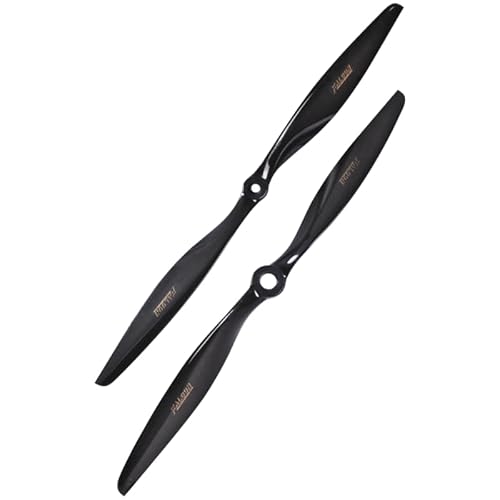
Best for: Pilots seeking strong rear-prop thrust in a contra-rotating setup. These carbon props are designed to deliver improved thrust while managing torque through a dual-rotation arrangement. Suitable for F3A and sport models that benefit from predictable yaw control and clean torque distribution. Cited features include 22X20 rear configuration with carbon construction for stiffness and light weight.
Why selected: Carbon fiber offers high stiffness-to-weight ratio, contributing to precise handling at high prop RPM. The rear orientation helps balance thrust vectors and torque effects, making it a solid option for pilots prioritizing stability during aggressive maneuvers. Caution: Ensure compatibility with your motor and ESC pairing to avoid vibration or clearance issues.
CRM2413A Brushless Metal Motor Contra-Rotating Motor CRM2413 1300KV

Best for: Multi-motor setups requiring robust power delivery and two-prop compatibility. This motor includes a prop adapter and is designed to function with two propellers, making it well-suited for dual-ESC configurations in aerobatic or sport RC planes. Features emphasize high torque and strong power supply support through 1300KV rating.
Why selected: The design supports contra-rotating arrangements and a twin-ESC configuration, enabling more controlled torque compensation. Limitation: The suitability of this motor depends on your ESC and propeller pairing; verify clearance and wiring before flight tests.
Falcon 22″ Carbon Contra-Rotating F3A Props 22X22 Rear
Best for: Pilots needing higher rear thrust for steep climbs or heavy airframes. The 22X22 rear props provide increased thrust, which can benefit demanding flight profiles or larger models. The selection pairs with contra-rotating motors to improve overall stability during dynamic flight.
Caution: Heavier rear props may demand more robust power systems and careful weight distribution. Confirm your airframe’s capability to handle the heavier prop assemblies.
Model Airplane 1045 Contra Rotating Propeller 10 Inches

Best for: Small quadcopters or multi-rotor configurations seeking stable, reduced vibration with contra-rotating design in a compact footprint. The 10-inch size and balanced aerodynamics support enhanced thrust and responsive control in lighter airframes.
Why chosen: The 1045 design offers balanced thrust with engineered aerodynamics that minimize vibration. Limitation: Compatibility with specific quadcopter frames and mounting provisions should be validated before integration.
Contra-rotating Brushless Motor Dual Motors Double Props 30g 560g Pull

Best for: Lightweight RC aircraft requiring high thrust-to-weight ratio in a contra-rotating motor setup. The dual-motor, double-prop configuration emphasizes torque cancellation for agile aerobatics. It weighs only about 30 grams, offering an efficient power-to-weight balance and flexibility for F3P or micro-airframes.
Limitation: This option is highly mission-specific; verify motor and propeller compatibility with your airframe and ESC arrangement to avoid overloading components.
CRM2208A RC Brushless Motor Metal Outrunner Contra-Rotating Motor CRM2208 1600KV

Best for: Airplane models needing strong torque counteraction with a robust 1600KV rating. The motor pairs with two 8-inch propellers and a prop adapter, forming a compact contra-rotating system that supports stable multi-rotor action and smooth throttle response in mid-sized airframes.
Why selected: The 1600KV rating provides substantial RPM potential, which, when matched with appropriate propellers, yields crisp throttle control. Caution: Verify propeller clearance and ESC capacity to prevent binding or overheating during intensive maneuvers.
Buying Guide: Key Considerations For Contra-Rotating RC Propellers
- Airframe compatibility: Confirm propeller diameter and motor KV match your model’s weight, thrust goals, and airframe clearance.
- Torque management: Contra-rotating setups reduce torque effects but require precise motor and ESC pairing to avoid vibration or yaw instability.
- Propeller material: Carbon fiber offers stiffness and lightness but may be more brittle than plastic in minor crashes. Choose based on flight style and durability needs.
- Propeller size and pitch: Larger rear props (e.g., 22X22) increase thrust but demand more power and heavier frames. Smaller props improve responsiveness but reduce top-end thrust.
- Motor KV and ESC compatibility: Higher KV motors require ESCs with adequate current rating and heat handling. Ensure the two ESCs (if used) are matched for balanced performance.
- Weight considerations: Lightweight configurations benefit micro and FPV builds, while heavier airframes need stronger propulsion and sturdier mounts.
- Maintenance and durability: Carbon parts resist fatigue but require careful inspection for micro-cracks after heavy flights. Regular checks improve reliability.
FAQ
- What is the main benefit of contra-rotating props?
- Do I need two ESCs for contra-rotating motors?
- Can I mix propeller sizes in a contra-rotating setup?
- Is carbon better than plastic for RC props?
- How do I choose the right KV motor for contra-rotating props?
- What safety checks should I perform before first flight?
Contra-rotating props cancel out torque and gyroscopic effects, improving yaw stability and potentially increasing overall thrust efficiency in suitable airframes.
Not always, but many setups use two ESCs to independently drive each motor in the contra-rotating pair for balanced control. Always follow the airframe and motor recommendations.
Mixing sizes is possible in some configurations but requires careful testing. In many cases, matching prop sizes helps ensure balanced thrust and predictable handling.
Carbon offers higher stiffness and lighter weight, contributing to efficiency and control. Plastic is generally more forgiving and cheaper, but heavier impacts can deform or break carbon less forgivingly.
Consider your airframe weight, desired thrust, prop size, and battery voltage. A higher KV motor spins faster and might require larger ESCs and robust cooling, while lower KV motors emphasize torque and efficiency.
Verify prop mounting, prop adapters, wiring, ESC settings, and gyro/flight controller calibration. Ensure propellers are securely fastened and that there is no contact with the airframe at full throttle.