If you’re looking to automate rain barrel watering, these pumps are designed to move collected rainwater to your garden without a full irrigation system. This guide highlights five reliable options and who they’re best for, from small decks to larger yards. Each entry explains how the pump works, what makes it stand out, and any limitations to consider before you buy. Use the buying guide to compare essential factors like head height, flow rate, and power source to pick the right pump for your setup.
| Product | Best For | Key Benefit |
|---|---|---|
| ECO-WORTHY 33-Series Industrial Water Pump | Large gardens, fixed installations | On-demand 50 PSI with self-priming |
| FLUENTPOWER 1/2HP Rain Barrel Pump | Submerged use in barrels or pits | 1050 GPH with automatic float switch |
| Solar Automatic Drip Irrigation Kit (JIYANG) | Sun-powered, off-tap setups | Solar-powered, up to 30 pots |
| Water Transfer Pump (FIDISP) | Simple water transfer tasks | High head, 330 GPH with switch |
| RAINPOINT Compact Programmable Solar Waterer | Vacation watering, small gardens | 12 timer modes, 10 pot support |
Below you’ll find five carefully selected pumps, aligned with rain barrel irrigation needs. Each section includes who it’s best for, why it was chosen, and a practical caution to consider before purchasing.
ECO-WORTHY 33-Series Industrial Water Pump
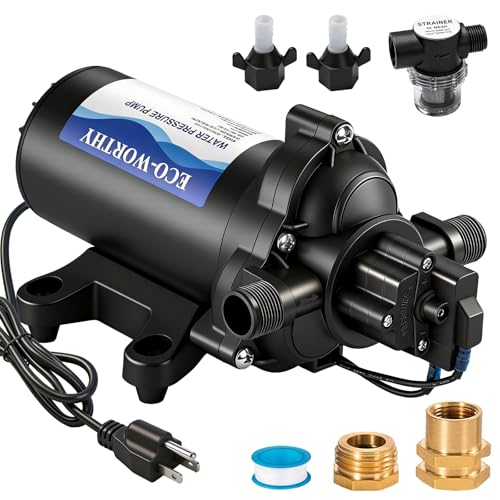
The 33-Series diaphragm pump draws water from rain barrels and delivers up to 4.0 GPM at about 50 PSI. It is 110V AC powered, so no marine battery is needed. A smart pressure switch turns the pump on and off as faucets are opened or closed, and the unit includes adjustable pressure from 45–70 PSI. It is self-priming up to 9.8 vertical feet and can lift water up to 131 feet. Thermal overload protection helps prevent motor damage. Best for homes or cabins with fixed irrigation needs and a desire for quiet operation. Caution: higher pressure can stress small-diameter lines; ensure hose and fittings match the 50 PSI range.
Best for: Fixed installations with steady water demand and need for auto on/off based on faucet use.
FLUENTPOWER 1/2HP Rain Barrel Pump

This submersible pump handles up to 1050 GPH and can lift water up to 36 feet. It features a float switch for automatic on/off and is designed to pump water from rain barrels, ponds, or other containers. The unit’s compact form makes it suitable for tight rain barrel setups and small basins. Best for: users with a rain barrel system that requires straightforward, automatic operation and a higher flow than tiny utility pumps. Caution: ensure the barrel opening and float switch height align with your water level needs to avoid running dry.
JIYANG Solar Automatic Drip Irrigation Kit

This solar-powered drip kit supports up to 10 pots with multiple timing modes. It draws water directly from containers, offering a flexible, off-tap irrigation solution for balconies, patios, or small gardens. Best for: users seeking eco-friendly, autonomous watering with solar power and simple setup. Caution: expandable to more pots, but expansion kits may add complexity and cost to your system.
FIDISP Water Transfer Pump

This 115V transfer pump moves up to 330 GPH with a maximum lift around 42 feet. It uses a metal build for durability and includes a waterproof built-in switch and long power cords for convenient placement. Best for: basic rain barrel drain tasks or moving water to a garden hose quickly. Caution: not designed for continuous high-demand irrigation; plan for intermittent use to avoid motor overheating.
RAINPOINT Compact Programmable Solar Waterer
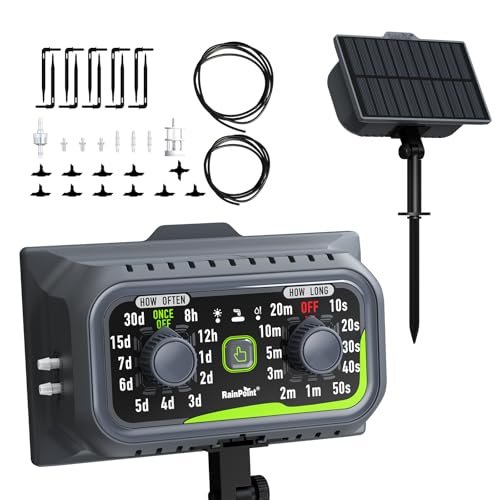
The Rainpoint kit offers 12 programmable modes designed to water 10–20 plants. It runs on solar power and includes a 180° adjustable solar panel for flexible positioning. It’s ideal for busy households, vacations, or gardens without easy access to electricity. Best for: solar-powered, autonomous irrigation with multi-day scheduling. Caution: the standard kit supports up to 10 pots; larger setups may require expansion kits.
ECO-WORTHY 110V AC Fresh Transfer Diaphragm Pump

This high-pressure 110V pump delivers 5.5 GPM at 70 PSI, with self-priming up to 9.8 feet and lift up to 131 feet. It includes a safety-focused design with thermal overload protection and a quieter, safer operation. Best for: scenarios requiring stronger pressure for longer hose runs or higher elevation irrigation. Caution: higher flow and pressure may require reinforced hoses and fittings to prevent leaks or burst lines.
Buying Guide: Key Purchase Considerations
Power source: Decide between AC-powered pumps for constant use and solar or battery-powered options for off-grid setups. Consider the availability of power near your rain barrel and garden.
Flow rate and head: Match GPM and PSI to your irrigation needs. Higher GPM is better for larger gardens; higher PSI helps push water through longer hose runs or higher elevations.
Submersible vs. inline: Submersible pumps work well inside barrels but require waterproofing and placement considerations. Inline pumps mounted outside need weather protection but are easier to service.
Auto features: Float switches and pressure switches automate operation, reducing maintenance. Look for adjustable pressure and auto shut-off to prevent over-watering.
Durability: Materials like metal housings and corrosion-resistant components extend longevity in outdoor environments. Thermal protection protects motors during heavy use.
Expansion and compatibility: Some kits offer expansion options for more plants or longer run distances. Check hose connections, fittings, and compatibility with your current rain barrel size.
FAQ
- Which pump is best for a small balcony rain barrel? A compact, float-switch operated unit or a solar-powered micro-kit is ideal for small spaces with limited water volume.
- Do I need an AC-powered pump if I have solar panels? No. Solar-powered pumps are suitable for off-grid setups, especially with limited sun hours; AC pumps excel where power is already available.
- What is the importance of a float switch? A float switch automates on/off based on water level, protecting the pump from running dry and reducing waste.
- Can I use any hose with these pumps? Hose compatibility depends on fittings and PSI. Use hoses rated for the expected pressure to avoid leaks or bursts.
- Is higher PSI always better for rain barrels? Not necessarily. Use PSI appropriate for your hose length and elevation to avoid stressing fittings and adapters.
- Do these pumps require maintenance? Regular inspection of seals, fittings, and electrical connections helps prevent leaks and motor wear.