Looking for a portable power bank with a 110V/120V AC outlet to run laptops, CPAP machines, or small appliances? This guide highlights five reliable options that provide real AC power on the go and are suitable for camping, home backup, road trips, and emergency situations. Each pick targets different needs—from compact portability to higher-capacity power—the goal is to help you choose the right balance of size, capacity, and output for your devices.
The following table compares key details to jump-start your decision. Columns show capacity, AC output type, weight, and best-use scenario. Use this quick reference to identify which models align with your typical power needs and travel style.
| Product | Capacity (Wh) | AC Output | Weight | |
|---|---|---|---|---|
| DARAN Portable Power Station | 89.6 | 2× AC sockets up to 100W | 2.54 lb | Lightweight daily power and camping with quick-charge |
| EnginStar Portable Power Station | 296 | 110V Pure Sine Wave, 300W | 6.5 lb | High-demand devices, emergency backup, CPAP use |
| GRECELL Portable Power Station | 288.6 | 330W total, USB-C PD 60W | 6.6 lb | Family camping and multi-device charging |
| SinKeu 23,400mAh/86.58Wh | 86.6 | 1× 120V/65W AC, USB, DC | ~1.4–2.0 lb | Travel-friendly power with multiple outputs |
| ZeroKor Portable Power Station (120W) | 97.6 | 120W AC, USB-C | ~2.2 lb | Compact backup for essential devices |
Daran Portable Power Station – Slim, Portable LiFePO4

The Daran model combines a compact 89.6Wh LiFePO4 battery with practical AC output. It weighs about 2.54 pounds and features two 100W AC sockets plus multiple USB-C and USB-A ports. The LED display clearly shows status and remaining power. Best for travelers who need a pocketable backup that supports light home-office devices. It is particularly suitable for charging laptops and small electronics during camping or outages. A limitation is that solar charging isn’t bundled, so you’d need an external panel.
Who it’s best for: light travelers, students, and weekend campers needing a small but capable AC backup. Why chosen: ultra-portable, fast-charging capable, and easy to carry in a backpack or briefcase.
Caution: initial conditioning is recommended—fully charge and discharge twice for best results. Solar panel not included.
EnginStar Portable Power Station 300W

EnginStar offers a robust 296Wh capacity with two 110V pure sine wave outlets and a 300W continuous AC output. It weighs about 6.5 pounds and includes eight output ports for simultaneous device charging, including DC outputs for low-voltage appliances. The unit is designed for reliability in outdoors, camping, and emergencies, and includes a battery management system for protection against short circuits and overcharges. Best for heavy-use scenarios where multiple devices need simultaneous charging. Limitation: heavier than ultra-portable models, which may affect portability for long hikes.
Who it’s best for: home backup, CPAP users, and campers who need reliable, multi-device power. Why chosen: strong AC output and comprehensive protection features support broader device compatibility.
GRECELL Portable Power Station

GRECELL delivers a generous 288.6Wh capacity with a 330W peak output and a USB-C PD port for fast charging. It supports USB-A Quick Charge and multiple ports, plus an upgraded battery management system and dual cooling fans for safety and stability. This model balances capacity and portability, making it strong for family camping and travel where several devices need steady power. Caution: must manage heat with higher output devices; ensure adequate ventilation during use.
Who it’s best for: families or groups needing a high-capacity, versatile charging hub outdoors. Why chosen: strong overall port configuration and a focus on safety, with efficient USB-C PD for modern devices.
SinKeu 23,400mAh Portable Power Bank
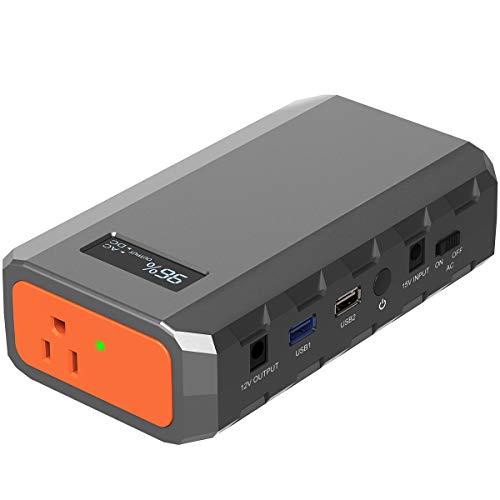
This SinKeu model packs 86.58Wh with a 120V/65W AC outlet plus USB and DC outputs. It recharges quickly via DC input and includes an OLED display for battery monitoring. The compact design is ideal for travel and short trips while providing enough power for smartphones, tablets, and light laptops. Best for: travelers who want a compact option with an AC outlet and multiple smaller device ports. Limitation: the 65W AC outlet limits the power available to high-wattage devices.
ZeroKor Portable Power Bank With AC Outlet
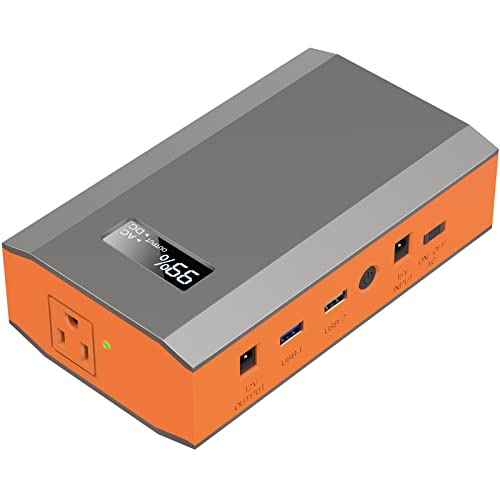
ZeroKor’s 65W, 110V-capable power bank sits around 24000mAh with a practical 1.6 lb form factor. It includes a 110V AC outlet and additional DC and USB ports. The user interface emphasizes a manual AC on/off control and a compact size ideal for quick, everyday emergency power for laptops, fans, and small appliances. Best for: ultralight travelers needing a slim, ready-to-go AC backup. Limitation: the AC output requires manual activation and may cut power if no load is detected after a short period.
ZeroKor Portable Power Station 120W (Second Model)

This ZeroKor model delivers 120W maximum AC output from a compact 97.6Wh battery. It offers multiple charging methods, including USB-C and car charging, and a clear display of remaining power and outputs. Best for: a compact, ready-to-carry unit for essential devices during short trips or power outages. Limitation: the 97.6Wh capacity is on the smaller side for longer outages or higher-wattage equipment.
Buying Guide: Key Considerations For 110V/120V Portable Power
What size and power do you actually need? Choose based on your device lineup and typical usage length. If you mostly charge phones, tablets, and a laptop, a compact unit with 80–100Wh may suffice. For CPAP machines, cameras, or mini-fridges, consider 200Wh or more with sustained 100–300W AC output.
How important is weight and portability? Ultralight models under 3 pounds are ideal for backpacking and short trips. Heavier units over 6 pounds suit car trips, camping with access to a vehicle, or home backup scenarios where portability is less critical than power capacity.
What charging options matter? Look for multiple recharging paths—AC wall charging, USB-C PD, car charging, and ideally solar compatibility. Fast charging helps reduce downtime between uses, especially in remote locations.
What safety features should you verify? A robust Battery Management System (BMS), overcharge protection, short-circuit protection, and temperature control are essential for reliability and device safety. Dual cooling fans or passive cooling can help with higher loads.
How to compare real-world usefulness? Consider peak vs. continuous output, the number and type of ports, and how many devices you can charge at once. Hard numbers in the spec sheet (Wh, W) translate to practical limits on how long devices run before recharging.
FAQ
- What does Wh mean in portable power stations?
Wh (watt-hours) indicates the energy capacity; higher Wh means more stored energy and longer runtimes for devices. - Can I run a CPAP with these power banks?
Yes, some models provide 110V/AC outlets and sufficient capacity to power CPAP devices for backup use; check the device’s wattage requirement and the unit’s continuous output rating. - Is LiFePO4 a better battery chemistry for travel?
LiFePO4 cells offer longer life cycles and stability in portable packs, often preferred for longer-term use and safety. - Do these units support solar charging?
Several models advertise solar input compatibility; you’ll typically need a compatible solar panel (not always included). Confirm panel compatibility and charging efficiency. - How do I determine which model is best for me?
Start by listing devices you plan to power, their wattage, and how long you’ll need power. Match capacity (Wh) and continuous output (W) to those needs, then consider weight and port variety. - Are these devices safe for travel?
Reputable models include protection systems and clear status displays; follow manufacturer guidelines for charging, storage, and operation to maintain safety.