The best bass pitch shifter pedals provide precise tracking, polyphonic versatility, and musical harmony options without muddying your tone. This guide highlights five reliable choices that work well for bass players seeking harmonization, octave shifts, detune textures, and seamless live performance. Each pick targets a different use case—from subtle detune to bold octave jumps—so you can match your pedal to your playing style and venue needs.
| Product | Best For | Key Benefit |
|---|---|---|
| LEKATO Mini Pitch Shifter Pedal | Artists seeking multiple modes | Three effects and 16 parameters for flexible shaping |
| Donner Octave Guitar Pedal | Budget players wanting many sounds | 7 shift types, 3 tone modes for wide variety |
| Mooer Drop Pitch Harmonizer | Quick tuning shifts on stage | Three modes with true bypass |
| Klowra Vein Polyphonic Pitch Shifter | Live gigs and studio work | Low-latency, four-mode engine |
| Electro-Harmonix Pitch Fork | Classic polyphonic pitch shifting | Three shift modes with extended control |
LEKATO Mini Pitch Shifter Pedal
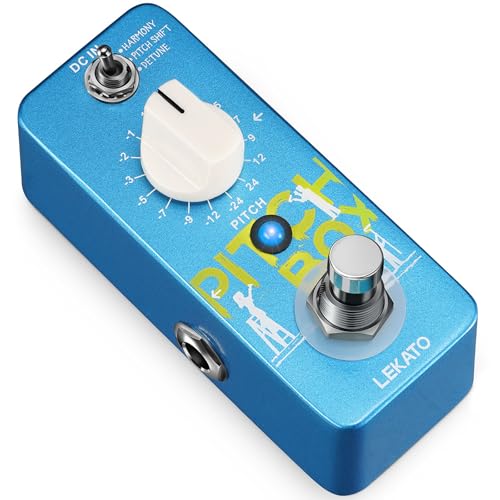
The LEKATO Mini Pitch Box Harmonizer for bass offers three effects modes: Harmony, Pitch Shift, and Detune. Harmony shifts tones up or down by two octaves for layered, rich textures, Pitch Shift provides a full wet output for quick tuning adjustments, and Detune adds subtle, textured variations to your tone. This pedal is designed for ease of use, supporting precise polyphonic pitch shifting with a ±2 octave range and 16 customizable parameters. Best for bassists who want studio-like versatility in a compact package, especially when you need complex harmonies without extra pedals.
Who it’s best for: bass players seeking a compact, feature-rich harmonizer with several editable parameters for studio or live performance. Why selected: it combines multiple core pitch effects in one small stompbox, reducing pedalboard clutter. Caution: a busy live signal may require careful gain staging to avoid phase issues in certain rigs.
Donner Octave Guitar Pedal

The Donner Octave Guitar Pedal, a Harmonic Square Digital Octave Mini Pedal, provides 7 shift types across 3 tone modes: Sharp (up), Flat (down), and Detune (10-cent variation). It features dedicated wet and dry knobs to balance blended signals. This pedal is best for players who want a wide sonic palette at an affordable price, offering quick octave and semi-tone shifts with clear control of wet/dry blend. Caution: some players may notice a slight lag in extreme detune settings on very dynamic passages.
Who it’s best for: bassists or guitarists exploring a broad set of octave and detune textures on a budget. Why selected: the 21 total sound options across modes make it a flexible choice for experimenting with harmonized passages and octave lines. Limitation: the user interface relies on quick knob tweaks mid-performance, so setups may benefit from prior testing on your rig.
Mooer Drop Pitch Harmonizer
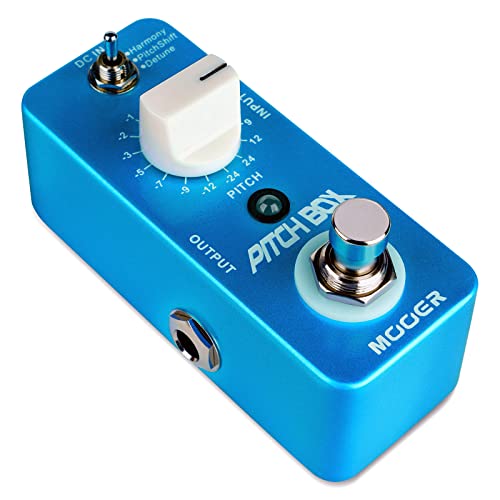
The Mooer Drop Pitch Harmonizer (MPS1) offers three modes: Harmony, Pitch Shift, and Detune, with a focus on precise polyphonic pitch conversion. Harmony shifts up to two octaves for thick, chorus-like textures; Pitch Shift outputs a full wet signal for quick transpositions; Detune blends small variations into the sound. Best for players needing a compact, easy-to-use harmonizer that preserves harmony while maintaining note integrity. Caution: Mooer pedals can feel a bit sensitive to input level changes, so set levels before a live show.
Who it’s best for: players who want reliable live performance with straightforward controls and a lightweight pedalboard. Why selected: the three modes cover common bass harmonizing needs without overcomplicating the signal path. Limitation: the pedal’s tone can be sensitive to gain staging, so careful setup is advised.
Klowra Vein Polyphonic Pitch Shifter

The Klowra Vein Polyphonic Pitch Shifter provides four modes—Harmony, Pitch Shifter, Detune, and Glide/Ramp—powered by the WildSeed engine with an ultra-low latency of about 8 ms. It delivers a massive +/- 2 octave range, adjustable Attack/Release, and two independent processing modes designed for guitarists and bassists. Best for live performance or studio work requiring near-zero latency and dramatic expressiveness. Caution: feature-rich engines may require time to dial in perfect settings for complex chords.
Who it’s best for: bassists who want near-zero latency tracking and a four-mode engine capable of delivering bold harmonies and glides. Why selected: the independent modes and low-latency tracking make it a strong choice for fast live passages and intricate chord work. Limitation: more advanced features may require longer setup to realize full potential.
Digitech DROP Compact Polyphonic Drop Tune

The DigiTech DROP is a compact polyphonic drop-tune pedal with momentary-latch switching and true bypass. It offers downward pitch shifting across seven semitone steps and additional settings for octave-down shifts with or without the dry signal. This pedal is best for bassists who need precise, simple down-tuning with a reliable bypass path. Caution: focus on the exact semitone steps you’ll use live to avoid accidental detuning during performances.
Who it’s best for: players who want a straightforward, dependable drop-tune pedal for quick changes during gigs. Why selected: established DigiTech drop-tune technology with clear, predictable tracking. Limitation: it emphasizes downward shifts and may lack some of the richer harmonic options found in multi-mode pedals.
Buying Guide: Key Purchase Considerations
- Tracking accuracy: Look for low-latency, true polyphonic tracking to preserve your phrasing, especially on complex chords.
- Range and modes: Consider whether you need up to two octaves of shift, plus Harmony, Detune, and Glide/Ramp options for live performance and studio work.
- Dry/Wet balance: A good blend control helps you maintain your bass’s core tone while adding harmonized elements.
- Footswitch feel and layout: For gig use, ensure the pedal’s footswitches are responsive and you can operate them confidently in real time.
- Power and footprint: Check whether you need battery support or an optional power supply, and ensure the pedal fits your board layout.
- Compatibility with bass: Some pedals are optimized for guitar; confirm tracking behavior and input gain for bass signals specifically.
FAQ
- What is a polyphonic pitch shifter? A device that tracks multiple notes simultaneously and shifts their pitch without producing a single-note artifact, ideal for chords and bass lines.
- Do these pedals work with bass guitars? Yes, all listed units are designed to handle bass signals, though tracking and tone can vary by model.
- Is detune mode useful for bass? Detune adds subtle chorus-like changes that can enrich bass tones, especially in dense mixes.
- What should I consider for live use? Look for low latency, reliable bypass, and a compact footprint to keep your pedalboard manageable.
- Can I use these pedals with a bass amp and DI? Yes, but check each pedal’s output level and dry/wet settings to ensure compatibility with your front-of-house and stage rigs.
- Do these pedals require complex setups? Some models offer extensive parameters, but most provide straightforward defaults for quick on-the-floor use.