The solar system comes to life with tangible, interactive models that classrooms and homes can admire. This guide highlights five top physical models: interactive projectors, glow-in-the-dark kits, windup mechanical systems, glow-in-the-dark displays, and crystal ball gifts. Each option offers a different way to explore planets, orbits, and space concepts in a hands-on format suitable for American learners and spaces ranging from desks to dorm rooms.
| Product | What It Delivers | Best For |
|---|---|---|
| Science Can Solar System for Kids, Talking Astronomy Solar System Model Kit | Projection of 8 planets onto walls/ceilings with bilingual audio (English/Spanish); 24 slides for visuals | Home learning and ceiling planetarium experiences |
| National Geographic Glow-in-The-Dark Solar System Model Kit | 3D glowing model with movable arms; all-in-one painting and display kit | Room decor that glows and adapts to imagination |
| Science Can Interactive Talking Solar System Model | 3 knowledge cards, 48 facts, 53 quiz questions; wall-projection with disks | Structured STEM learning with interactive quizzes |
| 4M Solar System Planetarium | DIY glow-in-the-dark kit with paints, stencils, and quiz materials | Hands-on crafting and classroom display |
| Thames & Kosmos Orbiting Solar System STEM Kit | Windup motor drives rotating planets; mechanical gear exploration | Engineering concepts and gear mechanics exploration |
Science Can Solar System for Kids: Talking Model with 8 Planets

This solar system model offers an engaging projection feature that turns any surface into a planetarium. It displays eight planets orbiting the sun via a built-in projector and includes 24 color-rich slides. The base also provides bilingual audio, switching between English and Spanish, enabling accessible space education for a broader audience. Suitable for ages around 5 to 7, it emphasizes exploration and narration of planetary facts through interactive patterns on the base.
Key points: projection onto walls or ceilings, 24 slides, bilingual mode. This model emphasizes visual immersion and straightforward operation, making it a strong choice for classroom corners or a child’s reading nook where space content can be explored in a casual setting.
National Geographic Glow-in-the-Dark Solar System Model Kit

This kit combines a glowing, three-dimensional planetary model with movable arms to adjust planet positions. It includes six vibrant paint colors, glow accents, brushes, decals, a solar-system poster, and kid-friendly instructions. The glow-in-the-dark feature enhances nighttime observation and boosts engagement during STEM activities. Movable arms help educators and students arrange the planets to reflect orbits and scales during demonstrations.
Key points: glow feature, all-inclusive kit, movable arms. It suits hands-on learners who enjoy painting, displaying, and reorganizing planetary layouts as part of ongoing science projects or bedroom decor with a space theme.
Science Can Solar System Interactive Talking Model

This interactive solar system project kit emphasizes 48 fascinating space facts via knowledge cards and includes a mix of English and French options. It features 3 knowledge cards and 53 quiz questions to challenge learners while reinforcing astronomy concepts. The immersive planetarium projector uses three disks with 24 images to project realistic planetary scenes onto walls or ceilings, supporting both independent exploration and group learning contexts.
Key points: bilingual learning, quiz-based reinforcement, projector with disks. This model is well-suited for structured lessons, after-school clubs, or families seeking a deep, interactive understanding of solar system content through questions and discoveries.
4M Solar System Planetarium
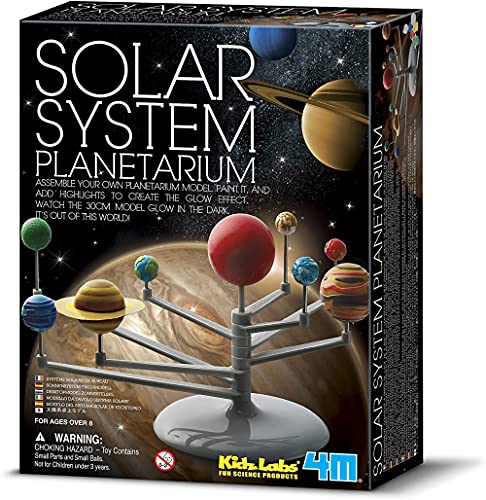
The 4M kit provides a complete DIY approach to learning about the solar system. It includes planets, stencils, glow paint, rods, strings, a wall chart, and a set of quiz questions. Builders paint and assemble the model to gain a tactile understanding of planetary scales and relationships. The included wall chart and quizzes support assessment and reinforcement of space concepts in a classroom or at home.
Key points: DIY assembly, glow-in-the-dark option, educational wall chart. This option appeals to students who enjoy hands-on crafts and want a tangible, display-ready solar system model for long-term learning and exploration.
Thames & Kosmos Orbiting Solar System STEM Kit

This STEM kit presents a rotating model of the solar system powered by a windup motor, meaning no batteries are required. It provides insight into fundamental gear mechanics and introduces planetary gear systems. The mechanical design helps learners understand motion, ratios, and how planetary models simulate orbital dynamics, making it a strong choice for science fairs or engineering-focused classrooms.
Key points: windup motor, mechanical gears, orbiting planets. It’s ideal for students exploring physics, engineering, and kinematics through a hands-on, kinetic model that demonstrates motion without electric power.
Buying Guide: Key Purchase Considerations
When choosing a physical solar system model, consider purpose, age, space, and learning goals. For classroom or home use, balance interactivity with setup complexity. If you want ceiling projections or a room-wide display, model kits with projectors and disks may be best. For younger children, glow-in-the-dark or interactive audio models provide engaging visuals and easy operation. For older students or makers, windup or gear-driven models raise understanding of mechanics and orbital motion.
Evaluate the following dimensions:
- Interactivity: Do you prefer projection, audio narration, movable arms, or rotating gears?
- Educational scope: Are you seeking simple visuals, or a quiz-based, fact-rich experience?
- Ease of assembly: Are you ready for DIY craft kits, or do you want a ready-to-display model?
- Display needs: Will the model be a decor piece, a classroom demonstration, or a portable teaching tool?
- Language options: Bilingual features can support broader learning environments.
Across these options, the best choice depends on whether your priority is immersive projection and color (Science Can models), glow-in-the-dark display and planet-scale decoration (National Geographic and 4M options), or mechanical understanding of motion and gears (Thames & Kosmos). For a balanced STEM experience that covers facts, visuals, and hands-on construction, combining a projector-based model with a mechanical kit can offer complementary insights into the solar system’s structure and dynamics.