If you need dependable solar charging for outdoor security cameras, a USB solar panel is a smart, maintenance-free solution. This guide highlights five top picks that work with DC 5V rechargeable cameras, offer weatherproof durability, and provide flexible mounting for sun exposure. Each option targets different setups, from compact two-pack solutions to higher-power panels for extended uptime. The recommended picks are best for battery-powered cameras, garage or yard surveillance, and remote locations where frequent battery changes are impractical.
Quick buying summary for busy readers: the table below compares core attributes to help you decide at a glance.
| Product | Best For | Power | Waterproof | Cable Length |
|---|---|---|---|---|
| EverExceed 5W Solar Panel | Small to mid-size cameras | 5W | IP65 | 9.8 ft |
| Catgod 5W Solar Panel | Rugged outdoor mounts | 5W | IP65 | 9.8 ft |
| gulisot 6W Solar Panel | More wind and weather exposure | 6W | IP66 | 10 ft |
| BONAI 9W Solar Panel (2-Pack) | Budget-friendly multi-camera setups | 9W (per panel) | IP65 | 10 ft |
| VUEBEE 2W Solar Panel (2 Pack) | Backyards with smaller cameras | 2W | IP65 | 7.2 ft |
EverExceed 5W Solar Panel for Security Camera Outdoor
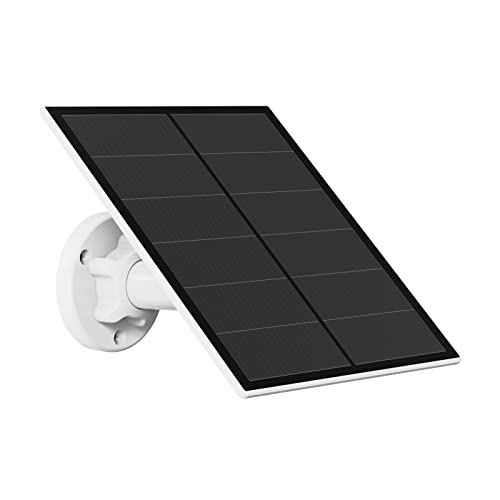
Best for compact outdoor cameras that rely on a DC 5V battery and require a reliable solar trickle charge. EverExceed specifies compatibility with DC 5V rechargeable battery cameras that use micro USB or USB-C, making this panel a straightforward fit for many small security devices. It is not designed for plug-in cameras without batteries. With IP65 waterproofing and a wide operating range, it stays productive in varied weather. A 360° adjustable bracket and a 9.8 ft cable allow flexible sun positioning for consistent charging.
Best use case: small to medium outdoor cameras in decks, porches, or entryways where weather resilience and simple wiring reduce maintenance. Caution: Not compatible with Arlo, Blink, Ring, or other plug-in cameras that lack a rechargeable battery.
Catgod 5W Solar Panel With Micro USB & USB-C Port

Catgod’s 5W panel targets outdoor security cameras that use micro USB or USB-C power. It excludes plug-in cameras without batteries and a few popular brands, which helps set expectations for compatibility. IP65 waterproofing and a broad temperature range support year-round operation in harsh conditions. The 360° adjustable mount and 9.8 ft cable help maximize sun exposure by positioning the panel on walls, eaves, or fences.
Best for: cameras with USB-C or micro USB power needs in exposed or windy locations. Limitation: not compatible with some top brands like Eufy, Arlo, Blink, or Ring in some configurations.
gulisot 6W Solar Panel Charger

Choosing this option makes sense for outdoor setups demanding a bit more power. The 6W panel supports cameras with micro USB or USB-C, and it includes a 360° adjustable mounting bracket plus a long 10 ft cable to reach optimal sun exposure. It carries IP66 waterproofing and an extra-wide operating temperature range, which suits severe weather. Best for larger or more sun-dependent cameras that still rely on battery power for operation.
Best for: more demanding outdoor cameras that rarely receive ideal sunlight. Caution: not compatible with several popular plugged-in or non-rechargeable camera types.
BONAI 9W Solar Panel Pack (2-Pack)

BONAI offers a value-packed option for multi-camera installations. Each 9W panel provides robust charging for DC 5V cameras via micro USB or USB-C. The 2-pack includes mounting hardware and a longer reach for flexible placement. IP65 waterproofing safeguards against rain and dust, while the panel’s higher wattage helps maintain charge during cloudy days. Choose this when you need to power more than one camera reliably from solar energy.
Best for: budget-conscious buyers with several outdoor cameras. Limitation: higher wattage panels may be bulkier and require more mounting space than smaller units.
VUEBEE 2W Solar Panel (2 Pack)
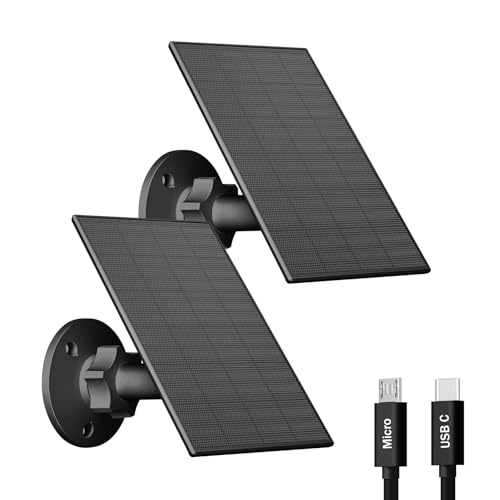
VUEBEE’s compact 2W solution suits smaller cameras or backyards with lower energy demands. The two-pack provides redundancy and easier distribution across multiple cameras. IP65 waterproofing and a 7.2 ft cable heighten adaptability for fence lines or small outbuildings. It’s best for cameras with modest power needs or for extending solar coverage in a multi-camera system.
Best for: small, energy-efficient cameras in limited sun areas. Caution: limited charging capacity in consistently overcast conditions.
Buying Guide: Key Considerations For Outdoor USB Solar Panels
- Camera power compatibility: Confirm your camera uses micro USB or USB-C and relies on a rechargeable battery. Some panel models exclude plug-in or non-battery cameras.
- Wattage needs: Higher wattage panels deliver more robust charging, especially in shaded or cloudy conditions. For multiple cameras, consider packs or higher-wattage units.
- Weatherproofing: IP65 is common for outdoor use; IP66 offers extra protection against dust and water. Temperature ranges indicate suitability for extreme climates.
- Mounting flexibility: 360° adjustable brackets and long cables simplify sun-angle optimization and placement on walls, fences, or rooftops.
- Installation and maintenance: Look for easy installation with included brackets and screws. Debris resistance and ease of cleaning help maintain performance.
- System limits: Some panels do not include batteries, meaning they only power cameras with onboard batteries rather than direct plug-in devices.
Practical Buying Scenarios
- Single camera on a shaded patio: A 5W panel with a flexible mounting angle may be enough.
- Multiple cameras along a driveway: A 9W or higher panel per camera or a two-pack solution provides better uptime.
- High-dust or heavy rain areas: Look for IP66 waterproofing and a broad operating temperature range.
- Budget-conscious expansion: A two-pack setup with mid-range wattage balances cost and coverage.
FAQ
- What is the main advantage of a USB solar panel for security cameras?
Answer: It provides continuous charging for cameras with onboard batteries, reducing manual battery changes and maintenance. - Can these panels power any security camera?
Answer: They work with cameras that use a 5V rechargeable battery and have micro USB or USB-C ports; some brands or plug-in cameras are not compatible. - Do I need to buy batteries separately?
Answer: Some panels power cameras that require batteries, but the panel itself does not include a battery in most cases. - Is IP65 enough for harsh weather?
Answer: IP65 offers substantial protection against water and dust; IP66 provides additional protection for tougher environments. - How long does installation take?
Answer: With proper mounting hardware, most installations can be completed in minutes, followed by sun exposure optimization. - Can I use a solar panel if my camera is not always in direct sunlight?
Answer: Yes, but charging efficiency drops in shade or overcast conditions. Consider higher wattage or multiple panels for reliability.