Investing in quality oil painting canvases helps ensure smooth color application, minimal warping, and lasting artwork. This guide highlights five top canvas options best suited for oil painting, along with who benefits most from each choice. Whether you’re new to painting, teaching an art class, or building a studio collection, these selections cover a range of sizes, materials, and price points to fit different needs.
| Product | Best For | Key Benefit |
|---|---|---|
| KEFF 24-Pack Premium Canvas for Painting | Students and hobbyists seeking variety | Four sizes in one value pack; triple-primed and versatile for acrylics, oils, watercolors |
| Gotideal Canvas for Painting, 14 Pcs | Beginner to intermediate artists needing multiple small-to-mid canvases | 14 pre-stretched boards with acid-free primer and solid wood frame |
| ESRICH Stretched Canvas 24×36 Inch, 3-Pack | Creators needing large practice or display canvases | Large 24×36 size; primed cotton; versatile for oil, acrylic, watercolor |
| ESRICH Stretched Canvas 18×24 Inch, 5-Pack | Medium-scale projects and group workshops | Premium primed canvases; acid-free; durable for multiple media |
| ESRICH Stretched Canvas 8×10 Inch, 5-Pack | Compact studies and framing experiments | Smaller format; ready-to-paint; suitable for oil and acrylic |
KEFF 24-Pack Premium Canvas for Painting
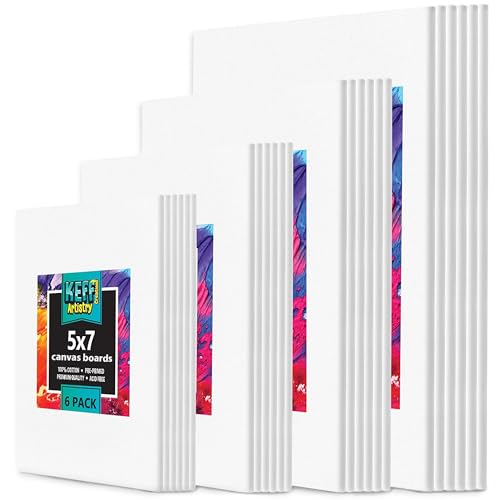
This set includes 6 canvases each of four sizes: 5×7, 8×10, 9×12, and 11×14. The canvases are triple-primed cotton and designed for acrylics, oils, watercolors, or tempera. Best for art classes, home studios, or personal collections needing a versatile, bulk option. Choose this if you want a broad range of sizes in one purchase for plans that vary from quick studies to larger compositions. A potential limitation is that bulk canvases may require space and organization to keep surfaces flat during storage.
Gotideal Canvas for Painting, 14 Pcs

Offers 14 pre-stretched canvases in sizes including 4×4, 4×6, 5×7, 8×10, and 11×14. The canvases are 100% cotton with a medium grain and pre-coated acid-free acrylic gesso. This set is well-suited for beginners and students who want to explore multiple formats without buying individually. Best for practice, class sets, or gifting art supplies. A caution: some users may prefer larger formats for detailed oil work, while these are ideal for smaller studies and experiments.
ESRICH Stretched Canvas 24×36 Inch, 3Pack

Three large canvases at 24×36 inches each, primed with acid-free gesso on cotton. These canvases are designed for bold, expansive oil paintings, as well as acrylics and gouache. Best for artists planning larger studies or gallery-ready pieces, or for group workshops needing substantial practice surfaces. Limitation to consider: large canvases require sturdy supports and may be harder to frame for some spaces.
ESRICH Stretched Canvas 18×24 Inch, 5-Pack
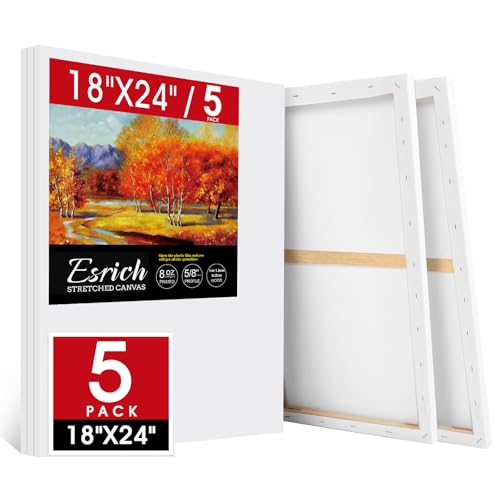
Five 18×24 canvases with primed acid-free cotton. Ideal for mid-sized oil or acrylic projects, exhibitions, or classroom use. These canvases strike a balance between surface area and manageability for learners and intermediate artists. A potential limitation is mid-sized canvases may not suit very large, sweeping oil techniques without a second larger piece for extended studies.
ESRICH Stretched Canvas 8×10 Inch, 8-Pack

Eight canvases in 3×5, 5×7, 8×10, and 10×12 with two of each size. These small-to-mid formats are excellent for quick studies, color tests, and framed display experiments. Best for practice, color studies, and gift sets for aspiring artists. Limitation: small canvases may not capture grand oil compositions or require frequent rework for those preferring large-scale works.
Buying Guide: Key Purchase Considerations
What size should I choose for oil painting?
Consider your available space, subject matter, and project goals. Small canvases (4×4 to 8×10) are ideal for studies, color tests, and plein-air practice. Large canvases (18×24, 24×36) suit bold strokes and detailed landscape work. For beginners, a mixed-size pack provides variety without multiple purchases.
What material and priming matter?
Look for 100% cotton canvases with acid-free, triple-primed surfaces. Cotton handles oil more smoothly and resists deterioration over time. A gesso primer helps prevent paint from soaking too quickly and protects the surface during layering.
Are pre-stretched canvases or canvas boards better?
Pre-stretched canvases offer ready-to-paint surfaces and sturdy frames, suitable for traditional oil painting. Canvas boards are lighter, often cheaper, and good for students, travel, or practice. Choose based on portability and framing plans.
What should I know about framing and display?
Framing requirements vary by size. Larger canvases often need custom frames or gallery wraps. Unframed options can be framed after painting, while some sets are ready-to-frame in standard sizes.
Which set best fits a class or studio?
Sets with multiple sizes and quantities, like KEFF or GOTIDEAL, are ideal for classrooms or shared studios. They reduce the need for separate purchases and keep varied projects within reach for learners at different levels.
Care and storage tips
Store canvases flat or stacked between protective sheets to prevent warping. Keep away from direct sunlight and humidity. Once painted, allow drying and curing according to paint type before handling or framing.
FAQ
- What is the advantage of cotton canvases for oil painting?
Answer: Cotton canvases provide a smooth surface that holds paint well and resists excessive absorption, supporting rich color and even layering for oils. - Do these sets include primers suitable for oil paints?
Answer: Yes. Many sets feature acid-free acrylic gesso primers designed to work with oil, acrylic, and mixed-media applications. - Are canvas boards different from stretched canvases?
Answer: Yes. Canvas boards are rigid and portable, whereas stretched canvases are mounted on frames and intended for traditional stretching and hanging. - Can I use these canvases for watercolor as well as oil?
Answer: Some can handle watercolors, but oils typically require surfaces designed for oil use; check the product description for suitability with water-based media. - Which size is best for learning new techniques?
Answer: Start with 8×10 or 9×12 to balance handling ease and enough surface for practicing brushwork and layering. - Is there a best option for classroom use?
Answer: Bulk multi-size packs are ideal for classrooms due to variety, consistency, and cost efficiency per piece.