Answering the question: what are the best natural gas line hoses for fire pits and related outdoor appliances? This guide highlights five solid options chosen for compatibility with low-pressure natural gas systems, durability, and ease of installation. Each product is suited for outdoor setups like fire pits, pizza ovens, grills, generators, and patio heaters. Use the buying guide and FAQ to compare sizes, fittings, and use-cases to pick the best match for your setup.
| Product | Length | Size | Best For |
|---|---|---|---|
| 25 ft | 3/8″ ID | Grills, pizza ovens, heaters | |
| 24 ft | 1/2″ ID | Grills, fireplaces, generators | |
| 15 ft | 1/2″ ID | Grills, pizza ovens, heaters | |
| 5 ft | 3/8″ ID | Weber, Blackstone, fire pits | |
| 37 ft | 3/4″ ID | Whole-home or larger outdoor setups |
CALPOSE 25 Feet 3/8 Inch ID Natural Gas Grill Hose

Best for mid-sized outdoor grills and fire features that run on natural gas. Features a weather-resistant natural rubber outer layer with a flexible stainless steel inner layer for durability. The 3/8″ quick connect/disconnect brass fittings ensure easy installation and removal. This hose is suitable for connecting natural gas or LP gas appliances to a low-pressure supply, including pizza ovens and patio heaters. A note: its length makes it ideal for setups with some reach, but verify clearance in tight spaces.
Who it’s best for: homeowners with standard 3/8″ low-pressure gas lines needing a robust, quick-connect hose for outdoor cooking and heating devices. Why selected: strong construction, clear safety credentials, and broad compatibility with common outdoor appliances.
Caution: ensure all connections are leak-tested after installation to prevent any gas leakage, and avoid kinks by routing the hose away from sharp edges.
GasXpert 24FT 1/2 Inch Natural Gas Hose

Better for longer outdoor runs where 1/2″ ID is desired for stable gas flow to grills, fireplaces, or generators. This hose uses flame-retardant PVC and premium Titanium Zinc, with a stripwound metal design that resists degradation and minimizes gas contamination. It includes 1/2″ quick-connect/disconnect fittings and is compatible with standard brass fittings. It’s a solid choice when you need reliable, higher-capacity gas delivery over a distance.
Who it’s best for: outdoor kitchens or pits that require a longer hose with strong flow. Why selected: durable construction, standardized brass fittings, and versatility across multiple outdoor gas appliances.
Caution: confirm compatibility with your specific appliance’s flare and connection standards before installation to avoid mismatches.
CALPOSE 15 Feet 1/2 Inch ID Natural Gas Grill Hose

This option suits medium-length runs where a 1/2″ ID hose is required, paired with solid brass 1/2″ quick-connect fittings for straightforward installation. It is designed for low-pressure natural gas or LP gas appliances, making it ideal for Weber grills, patio heaters, fire tables, and pizza ovens. The 1/2″ size supports a decent gas flow without excessive pressure loss.
Who it’s best for: users needing a balance of length and gas capacity for standard outdoor setups. Why selected: reliable 1/2″ ID performance and easy-to-use brass fittings.
Caution: ensure the route does not place the hose near heat sources or sharp edges to prevent damage over time.
GasSaf 5FT 3/8″ ID Natural Gas Hose
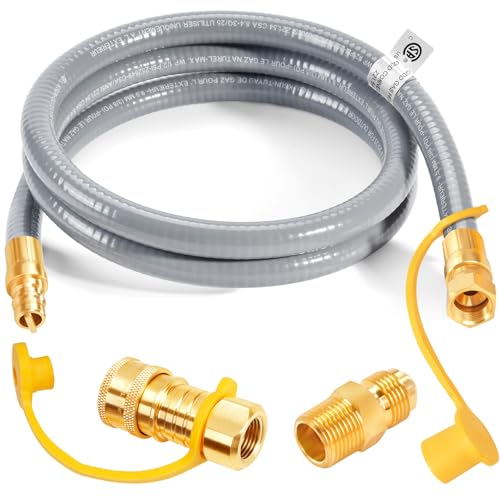
Best for compact outdoor setups or close-in appliances like Weber grills or small fire pits where a short, flexible hose is ideal. It uses a 3/8″ inner diameter with quick-connect fittings and a compatible brass connector. Its shorter length minimizes clutter and risk of tripping or snagging, making it a good choice for tight patios.
Who it’s best for: compact spaces needing a short, dependable hose. Why selected: shorter length reduces risk in tight areas, while maintaining a strong connection.
Caution: for longer runs or higher BTU needs, consider a longer hose to preserve gas flow and pressure.
CSST Gas Line 37Ft 3/4″ Flexible Stainless Steel

Best for larger outdoor installations or whole-home setups with outdoor gas requirements. The 3/4″ ID line handles up to 150,000 BTU for whole-home systems, while the 1/2″ version handles up to 65,000 BTU for outdoor grills and fire pits. It comes with two brass NPT connectors and can be cut to fit with a DIY guide available on the product page.
Who it’s best for: homeowners planning long runs or multiple appliances from a shared gas source. Why selected: high BTU capacity and flexible routing options for complex outdoor layouts.
Caution: CSST systems require proper grounding and installation per code; consult local codes or a professional if unsure.
Buying Guide
- What size do I need? Choose based on the appliance inlet size and desired gas flow. Common IDs are 1/2″ and 3/8″.
- How long should the hose be? Measure the distance from your gas source to the appliance and add a little extra slack for routing and safety.
- Are fittings compatible? Look for standard brass quick-connect/disconnect fittings to simplify installation and reduce leakage risk.
- Material considerations? Durable hoses use stainless steel inner laminates and rubber or PVC exteriors; stainless cores resist wear and weathering.
- Safety and testing? Always test for leaks after installation using soapy water and follow manufacturer guidelines for leak testing.
- Which hose is best for high-BTU needs? For longer runs or higher BTU appliances, prefer 1/2″ or 3/4″ IDs and ensure fittings support these capacities.
Frequently Asked Questions
- What is the difference between 3/8″ and 1/2″ gas hoses? A: The inner diameter affects gas flow; 1/2″ can carry more gas for higher BTU appliances or longer runs, while 3/8″ is sufficient for many grills and fire pits.
- Do I need CSST for outdoor gas lines? CSST is designed for flexible outdoor and whole-home gas distribution and often requires proper grounding and code-compliant installation.
- Can I use these hoses with propane gas? A: Many hoses are designed for both natural gas and LP gas, but always confirm compatibility with the appliance and local codes.
- How do I test for leaks? A: Apply a soapy water solution to all connections and look for bubbles; tighten or replace fittings if leaks appear.
- Are quick-connect fittings safer? A: Quick-connect fittings simplify installation and replacement, but ensure they are brass and rated for gas to maintain safety.
- Should I consult a professional? A: If you are unsure about gas routing, pressure, or code compliance, a licensed plumber or gas technician is recommended.