Looking for a sturdy mounted pull-up bar to upgrade your home gym? This guide highlights top options that install on joists or walls, suitable for different space needs and training goals. Each pick is explained with ideal users in mind, plus practical limits to consider before you buy. The selections emphasize solid construction, grip comfort, and installation compatibility to help you choose confidently.
| Product | Best For | Installation Note |
|---|---|---|
| Fitarc Joist Mount Pull Up Bar | Home gym users needing ceiling/joist mounting | Joist mounting; high load capacity |
| Yes4All Wall Mounted Pull Up Bar | Wall-mounted setups with 16″ or 24″ stud spacing | Wall studs required; multiple grip options |
| Jusgym Wall Mounted Pull Up Bar | Versatile depth options for space planning | Solid wall needed; wide capacity range |
| Fitarc Heavy Duty Wall Mount Pull Up Bar | Heavy home gym use with secure mounting | Requires solid wood studs or concrete |
| LIONSCOOL Multifunctional Wall Mounted Bar with Pulley System | Expanded workouts beyond pull-ups (pulley training) | Wall mount; more complex assembly |
Fitarc Joist Mount Pull Up Bar
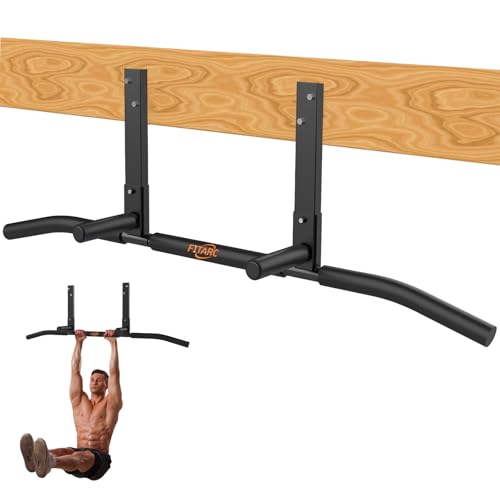
The Fitarc Joist Mount Pull Up Bar is designed for ceiling or joist installation with a wide 42-inch bar. It emphasizes a sturdy, thicker weight-bearing tube and a user-friendly non-slip, foam-padded grip. Best for buyers seeking a ceiling/joist mounted setup that supports comprehensive upper-body training across back, chest, arms, and shoulders. Note the product’s emphasis on durability via spray-coated finish to maintain appearance and longevity; ensure the installation area has solid joists capable of supporting the load. Caution: Verify joist spacing and ceiling structure before mounting to prevent instability during intense movements.
Yes4All Wall Mounted Pull Up Bar

The Yes4All Wall Mounted Pull Up Bar features solid steel construction with a black powder-coated finish to resist rust. It’s designed for 16″ and 24″ stud spaces and offers multi-grip positions padded with soft foam for comfort and slip resistance. This option is best for users who want a straightforward wall installation with versatile grips to target different upper-body muscles, including back, shoulders, chest, and arms. Caution: It requires wall studs; installation on drywall-only walls is not recommended.
Jusgym Wall Mounted Pull Up Bar

The Jusgym Wall Mounted Pull Up Bar offers adjustable depth (19″ or 27″), enabling compact spaces or extended range for advanced movements like muscle-ups and kippings. It supports up to 500 pounds, thanks to reinforced steel and industrial-grade bolts. Best for those needing flexible clearance from the wall and robust stability for a variety of exercises, including pull-ups, chin-ups, and bar-assisted movements. Caution: Proper installation is essential on solid concrete or wooden walls; follow mounting hardware instructions carefully.
Fitarc Heavy Duty Wall Mount Pull Up Bar

This Fitarc model is a wall-mounted, heavy-duty bar designed for doorways and wall installation, focusing on durable steel construction and stable welds. It emphasizes a high load capacity suitable for professional-like training at home, with quick installation guidance. Best for buyers who want a compact, sturdy bar that fits standard walls while delivering solid performance for back, chest, arms, and core work. Caution: It requires solid studs or concrete; not compatible with drywall-only installations.
LIONSCOOL Multifunctional Wall Mounted Bar with Pulley System

The LIONSCOOL bar combines a multi-grip pull-up station with a built-in pulley system, expanding workouts beyond standard pull-ups to include lat pulldowns, tricep pushdowns, cable flies, and more. It offers multiple grip positions and a 1.2 mm knurl for secure grip. Best for users seeking a versatile setup that enables full upper-body and core work through cable-assisted movements. Caution: The pulley system adds complexity to the assembly and space requirements; ensure you have adequate room for cable paths.
Buying Guide
What mounting type suits your space? Ceiling/joist mounts fit ceilings or beams, while wall-mounted bars require solid studs or concrete. Measure available space and stud/joist spacing to match product specs. Consider grip options and padding for comfort during longer sessions. If you want expanded exercises, a bar with a pulley system can unlock additional movements like lat pulldowns and cable pushdowns. Check weight capacity relative to your body weight and planned workouts; higher capacities support heavier, more dynamic routines.
Installation considerations: Ensure a solid substrate (wood studs or concrete), follow hardware requirements, and verify that mounting points align with your room structure. For shared spaces, choose a design with a compact footprint or modular components that can be removed if needed. For beginners, opt for a bar with straightforward mounting and visible safety features, such as secure grips and anti-slip handles.
FAQs
- What is a mounted pull-up bar best for? Mounted bars provide a stable anchor for upper-body workouts, enabling pull-ups, chin-ups, and accessory movements while saving floor space.
- Do I need professional installation? Most options require basic DIY installation. If mounting into concrete or multiple studs, consider professional help for safety.
- Can I install on drywall? Drywall-only installations are not recommended; use solid studs, joists, or concrete for support.
- Which is better for small spaces? Wall-mounted bars with a compact depth and multi-grip options are generally best for small rooms; avoid ceiling installations that intrude on headroom unless space permits.
- Is a pulley system necessary? Not for standard pull-ups, but a pulley system adds variety by enabling cable-based exercises that target different muscle groups.
- What grip options should I look for? Multi-grip bars with neutral, wide, and neutral/hammer grips offer versatile training angles and reduce strain on the wrists.