In today’s homes and offices, a reliable mechanical keypad door lock offers keyless entry without relying on batteries or electricity. This guide reviews top mechanical code door locks designed for security, durability, and simple installation. Each pick below provides robust access control with no power draw, while catering to various door types and handedness. Read on to compare features, installation considerations, and practical use cases.
| Product | Brand | Key Benefit | Notes |
|---|---|---|---|
| Megaflint Keyless Entry Door Lock Deadbolt | Megaflint | Wear-free keypad, 100% mechanical | Suitable for standard doors; 1.38–1.96 in thickness |
| Elemake Keypad Door Lock | Elemake | Battery-free mechanical keypad with handle | Non-deadbolt design; may require extra holes on single-hole doors |
| VEVOR Mechanical Keyless Entry Door Lock | VEVOR | Auto-lock and normal-open mode | Includes left/right handle flexibility; multiple screw sets |
| JOUNJIP Single-Sided Mechanical Keyless Lock | JOUNJIP | Square spindle; high combination count | Fits standard doors; upgrade compatibility with extension kit |
| Bravex Keyless Deadbolt Entry Door Lock | Bravex | 100% mechanical, Sabbath (no electricity) | Two Bravex variants available; verify non-automatic locking |
Choosing a mechanical code door lock involves understanding your door type, whether you need auto-locking features, and how you access the space on a daily basis. The options below cover a range of door thicknesses, hardware compatibilities, and installation prerequisites to help you make an informed decision.
Megaflint Keyless Entry Door Lock

The Megaflint entry lock is fully mechanical, offering a wear-free keypad surface designed to deter thieves by leaving no clues on the keypad. It supports both left/right handed doors and inward/outward openings, making it versatile for standard doors. Installation is described as achievable in about an hour, though users should note that the lock does not auto-lock, which can be a pro or con depending on your security workflow. Borehole compatibility is up to 2-1/8 inches, and the unit is suitable for doors 1.38–1.96 inches thick.
Key installation considerations include bore adjustments for double bore doors and ensuring the gate cutout width accommodates a 5-1/2″ x 3-1/4″ lock body. The product is ideal for spaces where battery-free operation is valued and where consistent mechanical performance is prioritized over automatic locking behavior.
Elemake Keypad Door Lock

Elemake’s keypad lock emphasizes a fully mechanical approach with a battery-free operation. It’s designed for single-hole doors and may require drilling additional holes depending on the door configuration. A notable feature is the “stays open after unlocking” behavior, which can reduce the risk of lockouts in busy environments like deliveries or frequent entries. The product is non-deadbolt by design, offering smoother operation and flexible access while retaining core security through a mechanical keypad.
Important installation guidance includes confirming door thickness (35–50 mm) and matching the door’s right-hand opening direction to the product diagram. While removal of keys and battery dependence are clear advantages, users should plan for potential extra drilling on some doors and assess compatibility with their existing door hardware.
VEVOR Mechanical Keyless Entry Door Lock

VEVOR presents a Gen2 mechanical keyless lock with no need for charging or batteries. It includes left/right handle adaptability and multiple screw and spindle options to fit varying door thicknesses. An auto-lock feature enhances security for closed doors, while a normal-open mode makes frequent entries more convenient when needed. This model emphasizes installation flexibility, supporting a wide range of door thicknesses (35–65 mm) and common outdoor and interior door configurations.
Consider the following usage notes: ensure proper drilling clearance because the lock requires through holes in front and rear panels, and verify that your door thickness aligns with the listed ranges. The model’s versatility suits courtyards, garages, and metal or composite doors, but users should be aware of the potential need for drill bit adjustments and careful alignment during installation.
JOUNJIP Single-Sided Mechanical Lock

The JOUNJIP lock features a modern square spindle design that simplifies installation and improves durability. It offers a high-number keypad with 14 push-button codes, providing a broad range of possible combinations to deter unauthorized access. The lock is designed for standard door thickness (35–60 mm) and is compatible with specific JOUNJIP boxes and extension kits for thicker doors. It is energy-independent since it is fully mechanical, with no keys or batteries required.
Installation considerations include ensuring compatibility with existing doors and kits, and understanding that this model is optimized for standard doors but may require additional hardware for thicker or custom doors. It represents a robust option for users seeking a durable, low-maintenance mechanical keypad solution with straightforward installation.
Bravex Keyless Deadbolt Entry Door Lock

Bravex’s 100% mechanical deadbolt lock combines a zinc alloy construction with a keypad option to provide a strong, battery-free access solution. The product emphasizes a Sabbath-compliant (Shabbos) design with keys or passcodes to lock/open, focusing on reliability without electricity. It is described as non-automatic, requiring user action to engage locking, which can be favorable for users who prefer explicit control over when doors latch shut.
When evaluating this Bravex model, consider whether non-automatic locking meets your daily flow and whether the metal alloy contributes to the expected level of physical security for your door environment. It suits indoor and protective outdoor applications where a mechanical approach is preferred for long-term durability and minimal maintenance
Bravex Keyless Entry Keypad Deadbolt
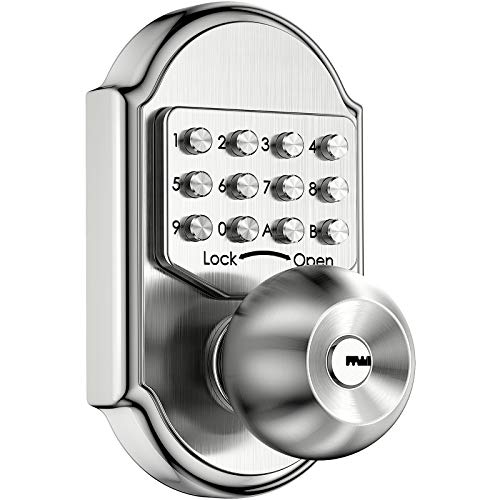
This Bravex variant emphasizes 100% mechanical operation with a stainless steel 304 deadbolt. The design supports passcode or key usage to unlock and is described as highly resistant to prying attempts. Like the other Bravex option, it does not rely on power, aligning with users who want a consistent, battery-free security mechanism for both indoor and outdoor doors. It appeals to households and small businesses seeking a durable, low-maintenance keypad solution.
Consider the trade-offs: battery-free performance is advantageous, but users should verify that the door’s thickness and hole patterns align with the product’s installation requirements. As with other mechanical locks, ensure the locking mechanism’s behavior aligns with your security expectations and traffic patterns.
Lockey Digital M210 Mechanical Option

The Lockey M210 offers a mechanical keyless push-button interface with an adjustable deadbolt. Although labeled digital, its core feature is a mechanical, code-based entry that does not require electricity. It emphasizes easy programming of a code and a simple, robust operation that remains functional in a power outage scenario. This model is well-suited to doors where a dependable mechanical locking system is preferred and electrical dependence is a concern.
Consider installation ease, compatibility with your door thickness, and how often you expect to change codes. The M210 suits residential or small business settings where straightforward mechanical control and reliability are prioritized over advanced electronic features.
YGAFFAGY Mechanical Code Entry Lock

YGAFFAGY offers a weatherproof, 14-digit keypad mechanical lock designed for outdoor and indoor use. It touts a 3–8 digit customizable code and a broad operating temperature range, making it suitable for home, yard gates, or office entrances exposed to the elements. The lock is fully mechanical, with no electricity required, and uses a zinc alloy panel and stainless steel lock body to resist rust and wear.
Key considerations include weather resistance, door thickness compatibility (35–58 mm), and ensuring the installation hardware is included. The lock’s waterproof and windproof properties help it perform reliably in environments with variable weather, while its mechanical design reduces maintenance concerns related to power issues.
Buying Guide: Key Factors To Consider When Selecting A Mechanical Code Door Lock
Strategic decision-making for mechanical code door locks centers on door type, traffic pattern, and security expectations. Consider the following perspectives to balance convenience, durability, and protection:
- Door compatibility: Measure door thickness and bore size. Many models support standard doors, but thicker doors or unusual hole patterns may require adapters or different models.
- Locking behavior: Decide if you want automatic locking after closing or a manual/controlled locking approach. Auto-lock can improve security, while non-automatic options provide predictable entry control.
- Weather and durability: For exterior doors, choose models with weather-resistant bodies (e.g., zinc alloy, stainless steel) and corrosion resistance.
- Maintenance and power: Mechanical locks avoid battery or power failures but verify the availability of replacement parts and spares for long-term maintenance.
- Installation complexity: Some models are straightforward to install, while others may require drilling extra holes or synchronization with mounting boxes. Align with your DIY comfort level or hire a professional if needed.
- Security posture: Evaluate the locking mechanism’s resistance to tampering, including bump resistance and the number of possible combinations. Higher combinations and robust materials can deter unauthorized access.
- Accessibility: If frequent entries happen (deliveries or family members with keys), features like “stays open” or normal-open modes can enhance convenience without sacrificing overall security.
- Warranty and support: Check manufacturer warranties and customer support quality, especially for locks used in high-traffic areas or commercial spaces.
Overall, mechanical code door locks deliver dependable, power-free entry control for homes, apartments, and small offices. By aligning product features with door specifications and daily usage patterns, you can select a solution that provides consistent security and straightforward maintenance for years to come.