Choosing the right latex-based leveling compound can streamline installation of carpet, vinyl, tile, and other coverings. The products below offer a mix of rapid setting, strong adhesion, and easy workability for common interior subfloors. This guide highlights five reliable options and explains what to look for when selecting a leveling compound for home or light commercial projects.
Selected Products at a Glance
| Product | Brand | Type | Approx. Size | Key Benefit |
|---|---|---|---|---|
| DAP Flexible Floor Patch and Leveler | DAP | Latex-based patch/leveler | 32 Oz | Crack resistance; sands to feather edge |
| Ardex K 60 Arditex | Ardex | Rapid-setting latex smoothing/leveling | 35 lb powder + 1 gal liquid | Excellent adhesion; versatile interior use |
| Henry W. W. Co. 12167 Floorpro Self-leveling Underlayment | Henry | Self-leveling underlayment | 40 lb | Professional-grade underlayment |
| Henry, W.W. Co. 12064 Floor Patch ARDEX LP | Henry / ARDEX LP | Floor patch/underlayment | 1 gal | Pre-mixed convenience; versatile use |
| SAVOGRAN 4-1/2 lb Floor Leveler | Savogran | Floor leveler | 4.5 lb | Value and durability |
Note: The products listed here are selected for relevance to latex-based floor leveling and varied use cases. Always follow the manufacturer’s instructions for surface prep, mixing ratios, curing times, and application temperatures to achieve the best results on your project.
DAP Flexible Floor Patch And Leveler

DAP’s latex-based filler is designed to fill and level surfaces before installing carpeting, vinyl, or floor sheeting. The formula is crack resistant and can be sanded to a feathered edge, helping achieve a smooth substrate. It typically sets in about six hours, enabling faster project timelines. This option suits smaller patches, edge work, and minor level adjustments on interior floors.
Ardex K 60 Arditex

Ardex K 60 Arditex is a rapid-setting latex smoothing and leveling compound designed for interior floors. It blends Portland cement with hydraulic cements to provide flexibility and strong adhesion on concrete, wood, terrazzo, tile, and more. It can smooth floors up to 1/8 inch (3 mm) without priming in many cases and mixes easily with latex additive. This product is well-suited for larger areas and demanding substrate conditions where quick return to service is desirable.
Henry W. W. Co. Floorpro Self-leveling Underlayment

Henry Floorpro is a professional-grade self-leveling underlayment designed to create a flat, smooth surface for various floor coverings. It is formulated to flow evenly and fill minor irregularities, reducing the need for extensive surface prep. This option is favored for larger rooms and renovations where consistent flatness is critical for proper installation of vinyl, carpet, or tile.
Henry, W.W. Co. 12064 Floor Patch
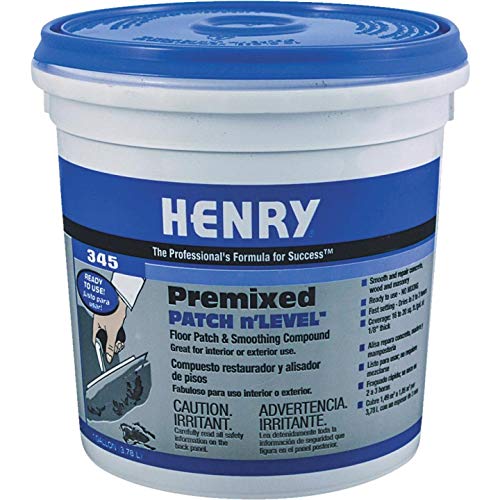
This 1-gallon pre-mixed floor patch by Henry/W. W. Co. provides a convenient option for quick repairs and leveling of indoor subfloors. It is suitable for gray underlayment contexts and offers practical handling for smaller jobs or touch-ups where a pre-mixed formula helps save time on-site.
Savogran Floor Leveler

Savogran Floor Leveler is a value-oriented option designed to deliver durable leveling performance. It is suitable for quick, economical projects where a reliable floor surface is needed before installation of final coverings. The product emphasizes ease of use and broad compatibility with common substrates found in residential settings.
Buying Guide: Key Purchase Considerations And Comparisons
- Subfloor type and compatibility: Interior concrete, wood, terrazzo, and existing adhesives each respond differently to latex leveling compounds. Check adhesion claims and recommended substrates from the manufacturer.
- Setting speed and工作 windows: Rapid-setting formulas (such as Ardex K 60) reduce downtime but may require faster tool work. Consider project size and crew availability when selecting a set time.
- Flexibility and shrinkage: Latex content contributes to moisture tolerance and crack resistance. For areas with movement or temperature changes, choose products noted for flexibility and low shrinkage.
- Coverage and mix ratios: Determine how much area a bag, bottle, or gallon yields and whether you prefer lightweight, ready-to-use premixes or powder formulations that mix on site.
- Primer requirements: Some leveling compounds require priming or surface profiling; others claim universal applicability without priming. Follow the product’s surface prep guidelines to ensure bonding and longevity.
- Application method: Tools vary from trowels and squeegees to self-leveling rollers. For larger slabs, self-leveling products paired with bubble-free applications provide the best results.
- Curing and finishing: Note curing times before flooring installation, as premature traffic or moisture exposure can affect leveling quality. Feather-edge sanding and crack resistance features help achieve a seamless transition to final flooring.
- Environmental and health considerations: Many latex-based products emit low odors and have reduced volatile organic compounds (VOCs). Ventilation and proper PPE are still recommended during mixing and application.
When selecting a latex floor leveling compound, align product capabilities with your subfloor condition, project scale, and scheduling needs. For small patches and edge work, a ready-to-use patch may suffice, while larger areas benefit from high-adhesion, rapid-setting leveling compounds that minimize downtime and ensure a smooth base for final flooring installation.