Looking for a practical rolling backpack to lighten the load for kids? This guide highlights top kids school bags with wheels that balance capacity, durability, and ease of use. Ideal for elementary and middle school students, these options help reduce shoulder strain, simplify commuting, and keep supplies organized. Each pick targets specific needs—from lightweight commuting to high-capacity storage—and is suited for different types of travelers, including those who ride to school, travel between classes, or navigate planes and trains with luggage-style convenience.
| Product | Best For | Why It Stands Out |
|---|---|---|
| NIWEIYA Kids Rolling Backpack | Primary to Middle Schoolers | Water-resistant fabric, multiple pockets, smooth wheels |
| Meetbelify Boys Rolling Backpack | Active kids needing high capacity | 4-wheel design, versatileCarry options, multiple pockets |
| Bansusu Galaxy Rolling Backpack | Stylish, budget-friendly | Galaxy print, adjustable pull rod, water-resistant |
| J World Sunrise Rolling Backpack | Older kids and travel-friendly | Large capacity, organized front pocket, versatile use |
| MITOWERMI Rolling Backpack Set | All-in-one for daily use | 3-in-1 set with lunch bag, strong wheels |
NIWEIYA Kids Rolling Backpack for Girls & Boys
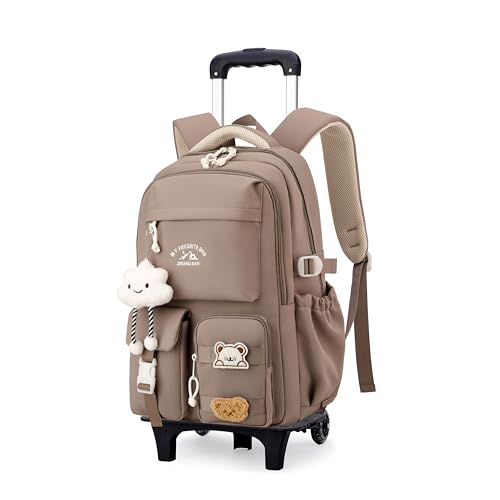
Best for: Primary and middle school students who need a lightweight, reliable rolling option for daily school routines. This NIWEIYA backpack weighs about 0.7 kg and ships with a 2-wheel cart plus a retractable handle for easy rolling. The bag features a spacious main compartment, multiple front pockets, and side pockets for water bottles or small items. The water-resistant nylon fabric helps protect contents in light rain. Caution: Not a heavy-lift luggage solution; best for everyday school use and light trips rather than heavy travel.
Meetbelify Boys Rolling Backpack With Wheels
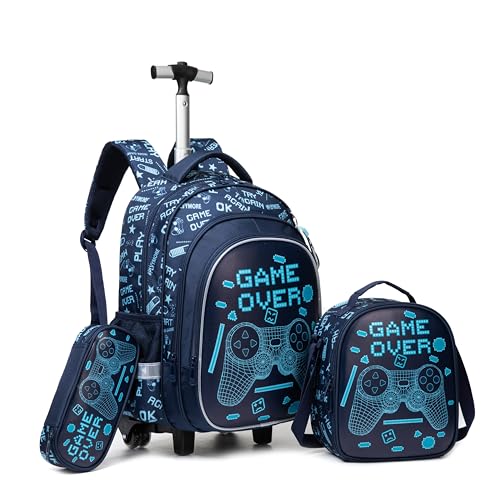
Best for: Active students who want high capacity and flexible use as luggage or a backpack. This bag includes a large main pocket, multiple front pockets, mesh bottle pockets, a lunch bag, and a pencil case. The 4-wheel design and aluminum alloy rod support smooth rolling. Caution: Heavier when fully loaded; consider lighter day-to-day use to maximize mobility as a backpack.
Bansusu Galaxy Rolling Backpack
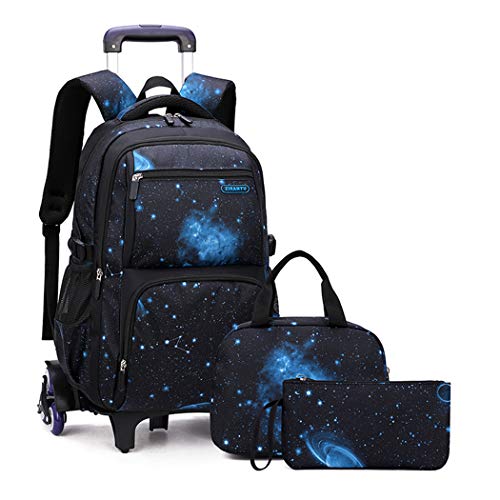
Best for: Kids who like a playful design and practical features. This galaxy-themed backpack offers water resistance, a rounded capacity of about 31 liters, and an adjustable aluminum pull rod. It converts between rolling and standard backpack use for flexibility. Caution: The data notes removable rod; ensure proper usage so wheels stay aligned when in rolling mode.
J World Sunrise Rolling Backpack
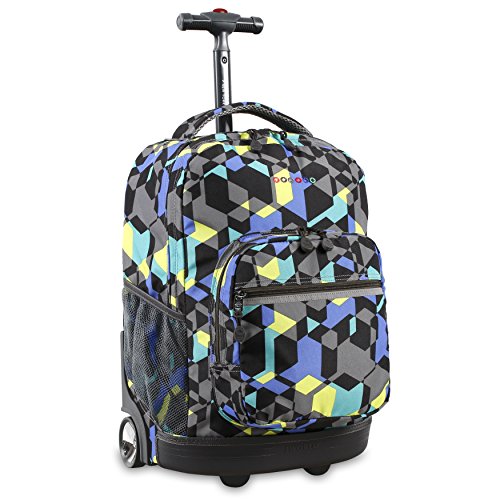
Best for: Older kids and travelers who want a larger, organized carry-on style backpack. It combines a rolling feature with a roomy main compartment, front organizer pocket, and side mesh pockets. The design supports carrying two big textbooks along with lunch and small items. Caution: Heavier structure means it’s best for longer school days or trips rather than ultra-light commuting.
Meetbelify Kids Rolling Backpack 3-in-1
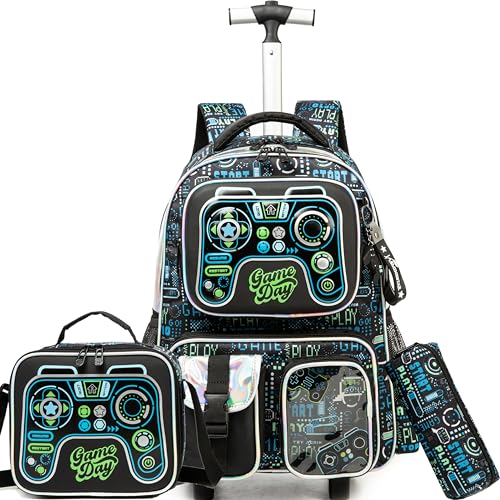
Best for: Elementary students needing an all-in-one solution — backpack, lunch bag, and a pencil case all in one. The set includes a large main pocket with a laptop sleeve, multiple outer pockets, and a lunch bag with adjustable straps. The bag uses a noiseless 4-wheel system and durable nylon material. Caution: Rod and bag components are connected; separate handling could be difficult for younger children.
MITOWERMI Rolling Backpack With Lunch Bag
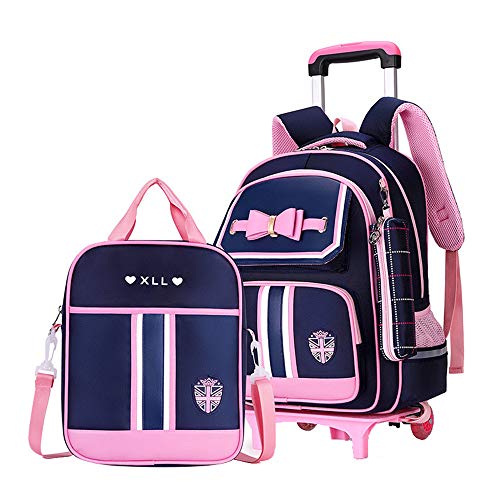
Best for: Younger students who need a lightweight, durable rolling backpack plus a lunch bag. The set includes a 3-in-1 arrangement with reinforced stitching, a rigid yet comfortable back panel, and sturdy wheels designed for curb navigation. Caution: Some users may find the lunch bag attachment less secure on very active days; ensure proper strap adjustments.
Buying Guide: How To Choose The Right Rolling Backpack
What features matter most when selecting a kids rolling backpack? Consider wheel type, weight, capacity, material, and ease of use. For younger children, lightweight builds with simple folding handles and broad wheels help prevent tipping. For older kids, larger main compartments and organized pockets support textbooks, notebooks, a laptop, and lunch. Look for water-resistant fabrics to protect contents in light rain, and reinforced stitching to endure daily wear. If the bag doubles as luggage, prioritize a larger capacity and stable wheels for stairs or uneven surfaces.
What size is best for your child?
For elementary students, aim for bags around 10–12 inches wide with 16–20 inch tall profiles. Middle schoolers can often handle 12–14 inches wide and 18–21 inches tall. Ensure the bag fits in school lockers or under desks when needed.
Which wheel type should you choose?
2-wheel bags are lighter and simple to roll on flat surfaces; 4-wheel “spinner” bags roll easily on smooth floors but may be less stable on stairs. Noiseless, smooth-rolling wheels with sturdy axles are preferable for frequent traveling between classes.
What about material and durability?
Water-resistant nylon or polyester fabrics provide protection from rain and spills. Look for reinforced stitching, strong zippers, and a supportive back panel. A retractable or ergonomic handle reduces strain during long commutes.
Is a lunch bag or extra accessories important?
Some sets include lunch bags or pencil cases. If your child carries snacks or needs to separate lunches, a bundled lunch bag offers convenience and helps distribute weight.
How should I compare products?
Compare capacity (liters or main pocket size), total weight of the bag, wheel configuration, and the number and size of pockets. For frequent travel, prioritize higher build quality and multi-pocket organization to keep items accessible and secure.
Practical buying tips
- Check return policies in case the fit is not ideal for your child.
- Verify compatibility with school guidelines for bag size and features.
- Test the bag with a few textbooks to ensure comfortable weight distribution.
FAQ
- What age is appropriate for a rolling backpack?
Typically ages 6–12, depending on the child’s ability to maneuver a wheeled bag and carry small items safely. - Are rolling backpacks better than standard backpacks?
Rolling backpacks reduce shoulder strain and distribute weight, but can be heavier and less maneuverable in crowded spaces. - How do I maintain wheels?
Regularly check wheels for debris, clean the axles, and tighten any loose screws to maintain smooth rolling. - Can rolling backpacks fit laptops?
Many models include a dedicated laptop sleeve or compartment; confirm laptop dimensions fit before purchase. - What should I do if the bag tips over easily?
Choose a bag with a wider base, sturdier wheels, and reinforced frame to improve stability.