Answer: Keyless WiFi door locks offer remote access, multi-user codes, and hands-free control for modern homes. This guide highlights five top options, clarifying who each is best for and why. Ideal buyers include busy families, renters needing flexible access, and homeowners seeking integration with Alexa or Google Assistant. The table below summarizes the five featured models to help quick comparisons.
| Product | Best For | Key Features | Connectivity |
|---|---|---|---|
| Philips Wi-Fi Door Lock | Families needing flexible unlock options | Fingerprint, passcode, voice, app | Built-in WiFi |
| Philips WiFi Keypad Door Lock | Front doors with keypad access | Remote control, codes, fingerprints | 2.4 GHz WiFi |
| Veise VE012W Built-in WiFi Lock | Tech-savvy households with many access methods | 6-in-1: app, fingerprint, codes, keys, voice | WiFi |
| Schlage Encode Smart Lock | Homes needing high compatibility with ecosystems | Keyless entry, 100 codes, app control | Built-in WiFi |
| Wyze Auto-Lock Bolt v2 | Budget-friendly, reliable performance | AI learning, fingerprint, codes, USB-C backup | WiFi |
Philips Wi-Fi Door Lock

- Unlock Methods: App, passcode, fingerprint, physical key, or voice via Alexa/Google Assistant. This provides flexible options for different user needs.
- Remote Access: Built-in Wi-Fi enables locking/unlocking from anywhere via your smartphone. No extra hub required.
- Compatibility Notes: Requires 2.4GHz network for remote control; 65-foot range recommended for best reliability.
Best for: Households that want multi-user options and hands-free voice control, with the convenience of remote access. Caution: Batteries are not included, so plan for standard replacements.
Philips WiFi Keypad Door Lock
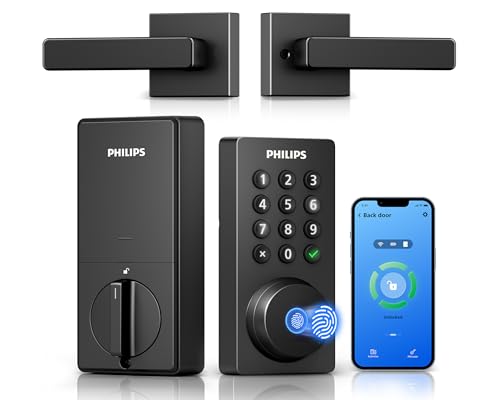
- 2.4GHz WiFi Connection: Direct setup to home WiFi without an extra hub.
- Real-Time Control: Manage access, codes, and fingerprints through the Philips Home Access App.
- Voice Compatibility: Works with Alexa or Google Assistant for hands-free status checks and locking.
Best for: Front door users who prefer a keypad-centric approach with remote management and voice support. Caution: Ensure stable WiFi to maintain reliable remote control.
Veise VE012W Built-in WiFi Fingerprint Smart Lock

- 6-in-1 Access: App, fingerprint (20 fingerprints), unlimited one-time codes, 100 custom PINs, 2 physical keys, or voice commands (gateway required).
- Remote Control: Built-in 2.4GHz WiFi for control from anywhere via the app.
- AI Fingerprint: 0.2-second recognition with 99.99% accuracy, with learning over time.
Best for: Homes needing versatile access methods and rapid biometric entry. Caution: Voice control may require an additional gateway for full functionality.
Schlage Encode Smart Wi-Fi Deadbolt
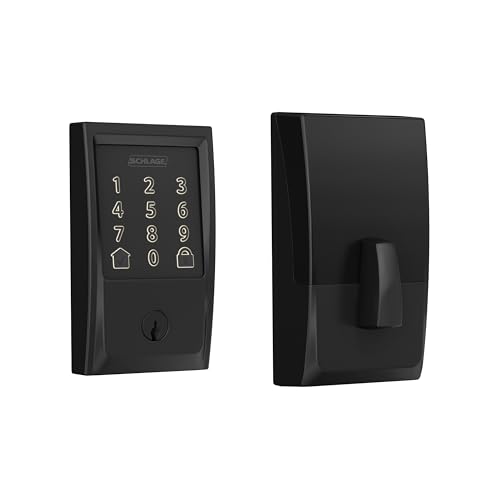
- Built-in WiFi: Connects to home network for remote access and monitoring via Schlage Home app.
- Access Codes: Manage up to 100 codes for keyless entry and monitor lock history.
- Voice Assist: Compatible with Alexa and Google Home for hands-free control.
Best for: Homes needing extensive access code management and broad ecosystem compatibility. Caution: Requires robust WiFi for reliable remote operations.
Wyze Auto-Lock Bolt v2

- 8-Month Battery Life: Uses 8 AA batteries, with USB-C backup for emergency power.
- AI Learning: Fingerprint recognition improves with use for faster access.
- Multiple Entry Methods: Fingerprint, codes, app, and mechanical keys as backup.
Best for: Budget-conscious buyers who want reliable, learning-capable AI unlocking with multiple backup options. Caution: Battery life varies with usage; expect occasional maintenance checks.
Buying Guide
What type of connectivity should I choose?
Built-in WiFi locks connect directly to your home network, enabling remote operation without a hub. If you prefer a hub-based setup, look for locks compatible with popular hubs, though most current models emphasize direct WiFi for simplicity.
Which unlocking methods matter most?
Consider a mix of biometrics (fingerprint), codes, and app control. Biometrics offer quick access, codes work well for guests, and apps provide remote management and activity logs.
What about compatibility with smart assistants?
If you use Alexa or Google Assistant, verify the lock supports voice commands for locking/unlocking and status checks. Some models require app updates or a stable network to ensure reliable voice control.
How important is battery life and power backup?
Locks with long battery life reduce maintenance. Look for emergency power options (USB-C or port) and indicators that alert when power is low.
What should I know about installation and security?
Most locks fit standard deadbolt or handle sets, but check size and backset for your door. Review activity logs and access history to monitor who enters and when. For multi-tenant homes, prioritize models with guest and user-permission controls.
Multi-User and guest access considerations
Choose models that accommodate multiple codes or profiles, with easy management through the app. This is essential for families, roommates, or service providers needing temporary access.
FAQ
- Do keyless WiFi door locks require a hub? Most current models offer built-in WiFi, removing the need for a separate hub, but some systems may still rely on a bridge for full feature sets.
- Can I unlock the lock with just my phone? Yes, most models provide app-based remote unlock and status checks, assuming a stable home WiFi connection.
- Is fingerprint unlock secure? Modern sensors use fast, AI-enhanced recognition with high accuracy, but security also depends on code management and physical device integrity.
- Will these locks work with Alexa or Google Assistant? Many listed models offer compatibility, enabling voice commands for locking, unlocking, and status queries.
- What happens if WiFi goes down? Several models include keypad, physical key, or offline modes to ensure access during outages.
- How many codes can I store? Codes vary by model; some locks support up to 100 user codes or more, with activity logs to track usage.