Choosing the right magnetic stir plate hot plate can streamline lab workflows, enable precise temperature control, and improve mixing consistency. This guide highlights five reliable models that combine heating and stirring in a compact, user-friendly package. Each product section includes key features, a direct link, and an image to help you compare at a glance. A concise Buying Guide at the end covers essential considerations such as temperature range, stirring speed, capacity, and safety features to fit academic, research, or hobbyist needs.
| Product | Brand | Max Temp | Max Volume | Speed Range |
|---|---|---|---|---|
| Slendor Magnetic Stirrer Hot Plate | Slendor | 520°F | 1,000 mL | 0-2,000 RPM |
| ANZESER Magnetic Stirrer Hot Plate | ANZESER | 520°F | Not specified | 0-2,000 RPM |
| VOEDOR 85-2 Digital Stir Plate | VOEDOR | 212°F/100°C | 1,000 mL | 0-2,000 RPM |
| XiWiLiYOTA Magnetic Stir Plate | XiWiLiYOTA | 520°F | 2,000 mL | 100-2,000 RPM |
| LACHOI LCD Display Stir Plate | LACHOI | 300°C | 5 L | 100-1,600 RPM |
Slendor Magnetic Stirrer Hot Plate Mixer

The Slendor unit combines heating up to 520°F with integrated stirring up to 2000 RPM. It comes with a teflon-coated stirring bar and a support stand with an adjustable thermometer holder. This model emphasizes concurrent heating and stirring for efficient sample processing, with a compact 1000 mL capacity and a maximum 520°F heating temperature. The included stand and bar support routine reduces setup time and ensures stable operation, making it versatile for a range of chemistry and biology experiments.
ANZESER Magnetic Stirrer Hot Plate

ANZESER’s hot plate offers a high-temperature capability up to 520°F and emphasizes durable construction with an aluminum lifting element for quick, even heat conduction. A high-temperature resistant magnet supports stable stirring, enhancing the device’s lifespan in demanding lab environments. The unit is widely applicable in research institutions, environmental work, chemical experimentation, and higher education settings, where reliable heat and stir performance are essential for consistent results across various protocols.
VOEDOR 85-2 Digital Display Magnetic Stirrer

The VOEDOR model features a robust motor with stepless speed control up to 2000 RPM and a 1000 mL maximum capacity. A 304 stainless steel heating plate provides durable heat transfer, while a 250W heating element delivers quick, even warming. The kit includes four stirring bars to accommodate ongoing projects, along with an adjustable rod for precise placement of temperature sensors. Built-in safety features and non-slip feet enhance stability during operation, suitable for classroom and research lab use alike.
XiWiLiYOTA Magnetic Stir Plate
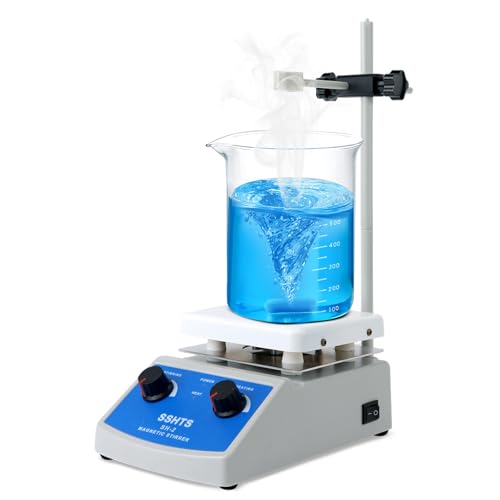
XiWiLiYOTA’s stir plate emphasizes high-temperature performance up to 520°F with a corrosion-resistant aluminum surface for reliable heat distribution. It supports stirring up to 2000 mL and 100-2000 RPM, satisfying small-scale and larger-volume experiments alike. The design includes dual control for independent heating and stirring adjustments. Practical notes highlight heat-safety awareness, such as avoiding contact with the hot plate immediately after use, and the unit’s durable construction makes it a strong choice for busy labs and makerspaces.
LACHOI LCD Display Stir Plate

LACHOI offers an LCD-equipped stir plate with a max 300°C heating capability and a 5 L stirring capacity, giving it the edge for larger sample volumes. The speed range from 100 to 1600 RPM makes it suitable for precise and repeatable mixes, while the PT1000 temperature sensor supports accurate temperature feedback. A 110V design aligns with common lab power standards, and the unit’s compact footprint helps maximize bench space in teaching labs or research shops.
Buying Guide: Key Purchase Considerations
- Temperature range: Match max temperature to your experiments. High-temp models (up to 520°F/300°C) suit chemical reactions and sterilization steps, while lower ranges are adequate for routine lab mixing.
- Stirring capacity and speed: Consider maximum stirring volume (mL to L) and 0-2,000 RPM ranges for rapid or gentle mixing. Larger volumes require sturdier platforms and stable mounts.
- Plate material and build quality: Stainless steel or aluminum plates offer durability and heat distribution. Look for corrosion resistance and a solid chassis to minimize vibration.
- Safety features: Overheat protection, splash guards, non-slip feet, and automatic shutoff can prevent accidents during prolonged runs or unattended experiments.
- Accessories and compatibility: Included stir bars, stands, and thermometer attachments save setup time. Check for compatibility with temperature probes and probes’ placement flexibility.
- Digital vs. analog control: LCD displays and programmable controls improve repeatability, especially when following precise protocols or teaching multiple steps.
- Maintenance and wear parts: Availability of replacement probes, stir bars, and seals can reduce downtime and cost over time.
- Power and footprint: Ensure the unit fits the lab bench layout and power outlets, especially in shared spaces or mobile setups.
These models provide a range of capacities and features. When selecting, align the device with your typical volumes, required temperature thresholds, and the need for simultaneous heating and stirring. For classrooms, durability and ease of use may trump advanced features, while research settings may prioritize precise control and data logging.