Hard antifouling bottom paints are designed to deter barnacles, algae and other marine growth while withstanding launch and trailering. This guide highlights five effective options, showing who each product is best for, and why they’re suitable for different boat types and waters. Use this overview to compare application ease, longevity, and environmental considerations to match your sailing or motorboat needs.
Choosing the right antifouling paint depends on hull material, water type, and how often you use the boat. The selections below are aimed at fiberglass, wood, steel, and aluminum hulls, for both fresh and saltwater conditions. The summary table below helps you quickly compare key attributes and best-use scenarios.
| Product | Best For | Hull Type | Coating Type |
|---|---|---|---|
| Rust-Oleum Marine Antifouling Paint (Quart, Black) | Occasional saltwater use; quick recoat | Fiberglass, Wood, Steel | Hard antifouling with copper release |
| TotalBoat Underdog Antifouling (Gallon, Black) | Frequent-use boats; long season protection | Fiberglass, Wood, Steel | Ablative, copper-based |
| TotalBoat JD Select Ablative Antifouling (Quart, Black) | Season-long protection; environmental considerations | Fiberglass, Wood, Steel | Ablative, copper-based |
| TotalBoat Krypton Copper Free Antifouling (Quart, Black) | Copper-free option for aluminum or sensitive metals | Fiberglass, Wood, Steel, Aluminum | Copper-free |
| Interlux Fiberglass Bottomkote NT (Gallon, Blue) | Low-odor, low-VOC, marina-friendly projects | Fiberglass | Antifouling, water-based |
Rust-Oleum Marine Flat Boat Bottom Antifouling Paint

Product overview: This hard antifouling paint is formulated to slowly release copper, preventing fouling on fiberglass, wood, or steel surfaces. It can be recoated quickly and is designed for relatively fast launches. Best for boaters who want a straightforward, quick-to-apply bottom coating for occasional saltwater use.
Who it’s best for: Casual and recreational boaters with infrequent launch cycles who want a simple, below-the-waterline protection that’s easy to refresh in a short time. Not ideal for heavy-use or long seasons in extreme conditions.
Why selected: It offers a compact, one-quart option that’s easy for small vessels or topping off an existing coat. The copper-release mechanism helps deter growth without complex maintenance.
Caution: Coverage is limited to around 110 sq ft, so larger hulls may require multiple coats or a different product. Recoat windows of four hours and launch readiness in about 16 hours should be observed for best results.
TotalBoat Underdog Antifouling Bottom Paint (Gallon, Black)
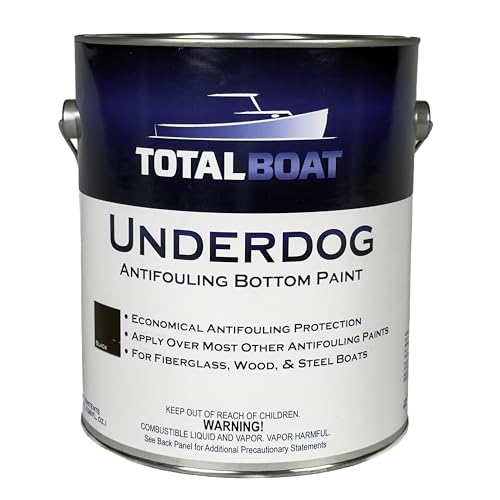
Product overview: Underdog is an economical single-season option designed to prevent barnacles and mussels from clinging to hulls. It is effective for saltwater conditions and works with fiberglass, wood, and steel boats. The coating is ablative, releasing fresh biocide as water moves under the hull and is known for durability during trailering and beaching.
Who it’s best for: Boats used frequently or season-long voyagers who need a balance of cost and protection without aggressive or copper-heavy formulations. Suitable for sailboats, powerboats, and workboats in varied saltwater environments.
Why selected: It provides a good combination of protection and ease of maintenance, with an ablative film that minimizes long-term buildup. The copper biocide remains active with water movement, reducing fouling over a season.
Caution: As an ablative coating, the protective layer wears away over the season; plan for a new coat next season and ensure proper surface preparation for reapplication.
TotalBoat JD Select Ablative Antifouling (Gallon, Black)

Product overview: A unique hybrid film keeps barnacles, weeds, and slime from clinging to the hull for a full season. It’s an ablative coating, which self-polishes and reduces paint buildup, aiding speed and fuel efficiency. It is low odor and low VOCs, with easy soap-and-water cleanup.
Who it’s best for: Boat owners seeking a low-odor, environmentally sensitive option suitable for marinas and boat yards with restrictions. Works well for fiberglass, wood, and steel in both fresh and saltwater.
Why selected: The product’s combination of self-polishing protection and low environmental impact makes it a strong all-around pick for seasonal use and regular launching schedules.
Caution: As with other ablatives, expect gradual wear and plan for annual reapplication to maintain protection levels.
TotalBoat Underdog Antifouling Bottom Paint (Blue, Gallon)

Product overview: An economical one-season antifouling option with copper biocide to keep barnacles and mussels from clinging to hulls. This is designed for boats used frequently in all types of saltwater conditions and is suitable for fiberglass, wood, and steel hulls.
Who it’s best for: Boat owners who want a budget-friendly solution that still provides solid season-long protection in varied saltwater environments. Best for boats that are used regularly rather than stored for long periods.
Why selected: The blue variant provides the same protective benefits as the black option with a weathering profile that supports frequent launch cycles.
Caution: Like other copper-based coatings, there may be limits in heavily restricted marinas; ensure compatibility with local environmental rules before use.
TotalBoat Krypton Copper Free Antifouling (Quart, Black)
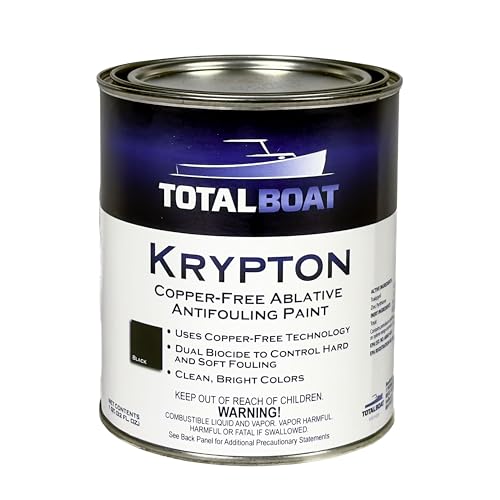
Product overview: A high-performance, copper-free antifouling paint designed for use on fiberglass, wood, steel, iron, and aluminum below the waterline. It offers single-season protection without copper biocide, reducing galvanic corrosion concerns for aluminum and other sensitive metals.
Who it’s best for: Boat owners with aluminum hulls or other metals sensitive to copper, or those seeking brighter colors and a copper-free alternative for environmental reasons.
Why selected: Copper-free formula avoids galvanic issues with mixed-metal hulls and trim tabs, making it a safer choice for aluminum components while maintaining antifouling effectiveness.
Caution: Copper-free formulations may require different maintenance schedules and may have different long-term performance in extreme conditions compared to copper-containing paints.
Interlux Fiberglass Bottomkote NT (Gallon, Blue)

Product overview: A marine antifouling paint designed for fiberglass hulls with a low-odor, low-VOC water-based formulation. It provides antifouling protection without strong fumes and is suitable for marinas and boat yards with environmental restrictions.
Who it’s best for: Mariners seeking marina-friendly options with lower odor and easier cleanup, particularly when working in shared or restricted spaces.
Why selected: Interlux Bottomkote NT’s low-VOC, water-based profile makes it a practical choice for urban or restricted marinas where emissions and fumes are a concern.
Caution: The product is noted as “Best In Class” in its category, but performance can vary with water salinity and hull preparation; confirm surface readiness before application.
Buying Guide: Key Purchase Considerations
- Water type and usage: Choose copper-based paints for higher, regular use in saltwater; copper-free options suit aluminum hulls and marinas with strict environmental rules.
- Hull material compatibility: Ensure the paint is rated for your hull type (fiberglass, wood, steel, aluminum). Ablative coatings work well for frequent use and easier removal next season.
- Environmental and regulatory considerations: Low-VOC and low-odor options are preferred in busy marinas or shared waterways.
- Application and maintenance: Ablative paints wear away with water movement, requiring annual reapplication. Hard antifouling options may offer longer intervals but require proper surface prep.
- Coverage and reload: Check square footage per can or gallon to estimate the needed amount for your hull size and number of coats.
- Drying and launching windows: Adhere to stated recoat times and launch readiness to ensure durable adhesion and performance.
FAQ
- What is the main difference between ablative and hard antifouling paints?
– Ablative paints slowly wear away as the boat moves, reducing buildup and easing reapplication; hard antifouling paints form a more durable film but may require more surface preparation when recoating. - Is copper-based antifouling paint safe for marinas?
– Copper-based paints are effective but may be restricted in some marinas due to environmental concerns; check local regulations before use. - Can I apply antifouling paint over an old coating?
– Generally, proper surface preparation is required; check product guidelines for whether existing coatings must be removed or can be scuffed. - Which option is best for aluminum hulls?
– Copper-free formulations or products explicitly rated for aluminum are preferred to avoid galvanic corrosion. - How long does antifouling paint last through a boating season?
– Longevity depends on water conditions, hull preparation, and coating type; ablative coatings wear away with use, while hard antifouling can last longer between applications. - Are low-VOC paints as effective as traditional options?
– Many low-VOC formulas offer comparable protection with easier cleanup and marina-friendly profiles; verify performance under your typical conditions.