If you’re outfitting a lab, the right fume hood is essential for protecting staff from chemical fumes and maintaining a clean workspace. This guide highlights five solid options across sizes and features, helping researchers, technicians, and lab managers choose the best fit for their needs. The top picks balance airflow control, filtration, durability, and ease of use for different lab environments—from teaching labs to industrial chemical work. The buyer’s focus ranges from compact spaces needing solid basic containment to large labs requiring expansive fume management and robust construction.
Top picks overview (quick reference):
| Product | Best For | Key Benefit | Approximate Size |
|---|---|---|---|
| VEVOR Ducted Fume Hood (Large) | Large labs | Highest airflow control and durable steel base | 23.62 x 31.69 x 27.56 in |
| VEVOR Ducted Fume Hood (Medium) | Mid-sized spaces | Good balance of size and performance | 22.83 x 25.98 x 24.80 in |
| VEVOR Ducted Fume Hood (Wide) | Compact lab benches | Wide working area with solid filtration | 19.69 x 41.54 x 27.56 in |
| Sentry Air Systems 18″ Wide | Smaller fume control tasks | Includes LED light, simple ducting | 18″ wide |
| Sentry Air Systems 24″ Wide | Moderate workflow labs | Wider opening for versatile use | 24″ wide |
VEVOR Ducted Fume Hood, Large Working Area

The VEVOR large fume hood delivers strong vertical airflow with a centrifugal fan, enabling a stepless speed control up to 3.9 m/s. This model uses a G1 pre-filter to capture 3–10 μm particles, helping maintain a cleaner lab environment. The frame is powder-coated cold-rolled steel with a 304 stainless steel base for durability in high-use labs. Best for labs needing robust containment and higher exhaust capacity, such as chemical synthesis or teaching labs with frequent fumes. Limitations: filter replacement every 2–3 months is recommended to sustain efficiency.
VEVOR Ducted Fume Hood, Medium Working Area

Ideal for mid-sized laboratories, this hood mirrors the large model’s core features: vertical airflow, a G1 pre-filter for 3–10 μm particles, and a steel construction with a 304 stainless steel base. It is best for classrooms or research spaces where steady containment is needed without occupying excessive floor space. Tip: maintain ventilation efficiency by replacing the pre-filter every 2–3 months.
VEVOR Ducted Fume Hood, Narrow Wide-Profile

This 19.69 x 41.54 inch hood emphasizes a broad working area in a compact footprint. The same airflow and filtration framework apply, with a 3.9 m/s maximum flow and a G1 pre-filter to reduce contamination. Choose this if you need a roomy working space on a tighter lab footprint, such as modular bench setups. Caution: ensure adequate ducting and room for external exhaust connections.
Sentry Air Systems 18-Inch Wide Fume Hood

Designed for smaller projects or teaching labs, this 18-inch model includes a 4-inch exhaust collar and LED lighting. It’s suitable for basic solvent work and light chemical handling. Best for students or technicians working on small-scale experiments where straightforward exhaust is sufficient. Limit: it requires external ductwork and a fan system (not included) for external venting.
Sentry Air Systems 24-Inch Wide Fume Hood

With a 24-inch wide opening, this unit offers a broader work surface while maintaining the same general construction and LED illumination. It’s best for labs requiring more maneuverability for mid-scale experiments while keeping the setup straightforward. Note: external ducting and a compatible fan are necessary for operation.
Bay Heights 4-Inch Articulated Hose Fume Extractor
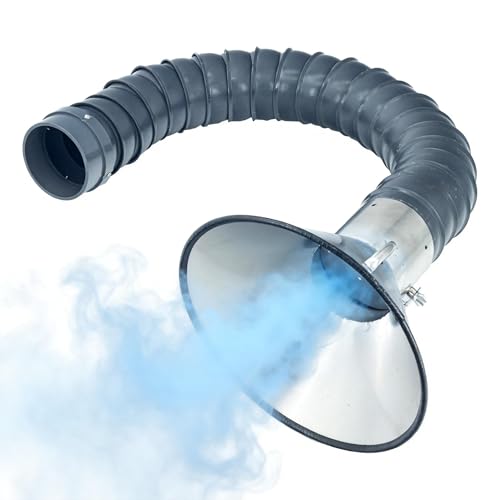
This option focuses on flexible, localized fume extraction. The 3.3-foot flexible hose, 4-inch diameter, and adjustable nozzle allow targeted capture near laser, soldering, or welding work. Best for tasks requiring mobility and a cost-efficient capture solution. Caution: not a full hood—best used as a supplemental extraction tool rather than a primary containment solution.
Sentry Air Systems 50-Inch Wide Fume Hood

This large-volume fume hood offers an expansive 50-inch wide opening with an 8-inch exhaust collar, designed for high-activity laboratories and pharmaceutical or chemical processing. Best for facilities that require maximum workspace and robust containment. Limitation: larger footprint requires compatible ductwork and space planning.
Buying Guide: Key Points For Choosing A Fume Hood
- Purpose and space: Match hood size and working area to your typical tasks. Larger spaces support more simultaneous work, while compact hoods fit tight laboratories.
- Airflow control: Look for a ducted system with adjustable speed. A stepless knob allows precise control to minimize exposure during sensitive operations.
- Filtration: Pre-filters (like G1) help trap particulates. Consider filter replacement frequency and maintenance impact on uptime.
- Materials and durability: Powder-coated steel frames with stainless bases resist chemical exposure and wear in busy labs.
- Ease of integration: Confirm compatibility with existing ductwork, fans, and electrical layouts. LED lighting improves visibility for detailed work.
- Safety and standards: While product specs vary, ensure the unit supports adequate containment for your solvents and complies with relevant safety guidelines.
- Maintenance: Routine filter changes and cleanability are essential to sustain airflow and reduce contamination risk.
Frequently Asked Questions
- What is a ducted fume hood?
A ducted fume hood exhausts air to an external vent, using a dedicated fan to draw contaminants away from the workspace. This design provides continuous containment for high-demand tasks.
- How often should pre-filters be replaced?
Typically every 2–3 months, depending on usage and the contaminants present, to maintain efficient airflow and filtration.
- Is larger always better for a fume hood?
Not always. The best size depends on the typical workflow. A larger hood provides more working space but may require more powerful exhaust and space.
- Do I need additional accessories to use a fume hood?
Some models require external ductwork or a separate fan system. Verify compatibility with your lab’s infrastructure before purchasing.
- What tasks are best suited for a small fume hood?
Small-scale chemical handling, solvent work, or demonstrations where space is limited and containment needs are moderate.