Looking for flush-mounted solar panels that sit nearly flat on a roof and still deliver solid power? This guide highlights top options that are well-suited for RVs, campers, boats, and off-grid homes. It covers high-efficiency monocrystalline panels, bifacial designs, and integrated kits with charge control. Each pick is evaluated for space-saving installs, durability, and suitability for different roof types and climates.
Buyer type overview:
– RV and van users benefit from compact, lightweight, and low-profile panels that install flush on curved roofs.
– Off-grid homeowners and cabins need durable panels with strong weather resistance and high daily output.
– Marine applications require corrosion resistance and reliable performance in variable light.
– Beginners should consider kits with included controllers for a simpler install.
Product Comparison Snapshot
- ECO-WORTHY 200W Kit — best for versatile off-grid RV use, compact for curved roofs.
- Renogy 50W Panel — best for modular, easy rooftop setups with low-light resilience.
- JJN 425W Bifacial Panel — best for large, high-output rooftops and reflective surfaces.
- Renogy ShadowFlux 200W (2-pack) — best for shaded or constrained sites with anti-shading tech.
- STAR 860W Bifacial Panel — best for maximum daily energy in open spaces or larger installations.
Product sections
ECO-WORTHY 200 Watts Kit With High Efficiency Panel
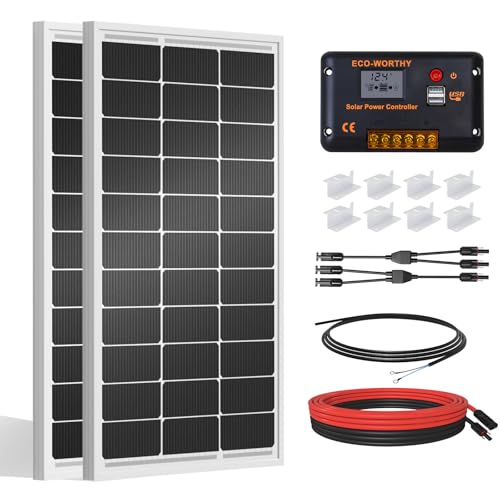
The ECO-WORTHY kit features a high-efficiency monocrystalline panel and a 30A PWM charge controller, designed for RVs, campers, and off-grid setups. It supports up to 800Wh per day under ideal sunny conditions and is built with a corrosion-resistant frame for longevity. The IP65-rated junction box adds weather protection. This kit is best for mobile users who need a reliable, straightforward solar solution that balances size and output. A caution: PWM controllers may be less efficient in partial shade compared with MPPT systems, which could affect daily yield in mixed skies.
Best for: RVs, campers, and small off-grid cabins seeking a compact, all-in-one package with straightforward setup.
Renogy 50 Watt 12V Solar Panel
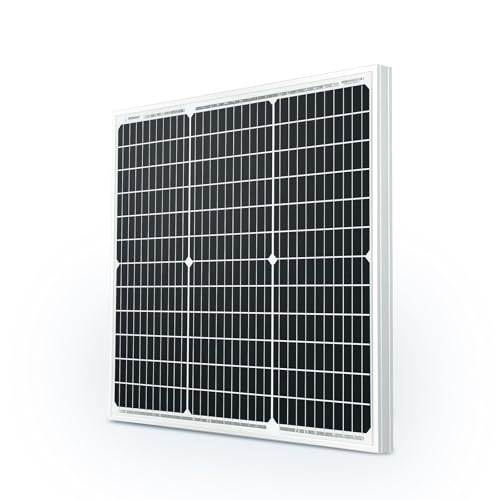
Renogy’s 50W panel uses advanced encapsulation and multi-layer laminations to extend life, with EL testing to minimize hot spots. It has a corrosion-resistant aluminum frame and a low-iron, tempered glass for durability. This panel is ideal for modular roofs or small installations where footprint matters. The panel’s performance in low light is aided by high transparency glass and anti-reflective coatings. Limitation: 50W may require multiple units for larger energy needs.
Best for: Small RV roofs or micro-cabins where modular, reliable 50W increments fit the space and energy goal.
JJN Bifacial 425W Solar Panel

The JJN 425W bifacial panel uses N-Type 16BB cells and a robust black aluminum frame, delivering up to 25% higher output by capturing light from the back. It is designed for 12V/24V/48V systems and can pair with rooftop installations on homes or RVs. Weather resistance includes IP65 junction box and IP68 connectors. Choose this if you need high power density in a larger roof area. Limitation: Higher upfront cost and size may require reinforced mounting on some roofs.
Best for: Larger off-grid roofs or RVs with ample space and a need for higher daily production, especially in bright climates.
Renogy ShadowFlux 200W Dual-Module Panels

Renogy’s ShadowFlux technology reduces shading impact and hotspot risk, delivering consistent output in partially shaded environments. The 200W set uses N-Type 16BB cells for efficiency at high temperatures and in low light. Its compact footprint helps with space constraints on RVs and small rooftops. A caveat: the two-panel system may need careful wiring to maximize the shading tolerance benefits.
Best for: RVs or cabins with partial shade from trees or structures, where shading is unavoidable but steady power is still desired.
STAR 860W Bifacial Panels (2x430W)

This pair of high-output bifacial panels uses A+ grade cells with a robust UL61730 certification and a long 30-year service life. The design emphasizes space efficiency and strong wind/snow resistance, making it suitable for larger rooftops or ground-mounted off-grid systems. Best for: homes or RV setups with extensive roof area or outdoor installations where maximum daily production is a priority. Limitation: The size and weight require more substantial mounting hardware and roof structure planning.
Buying Guide
Key considerations when choosing flush-mounted solar panels:
- Roof compatibility: curved RV roofs vs flat home rooftops require different mounting approaches and panel flexibility.
- Power needs: match panel wattage and number of panels to daily consumption, considering sun exposure and climate.
- Panel type: monocrystalline for efficiency; bifacial for extra gain in reflective environments; N-Type cells offer higher shading tolerance.
- Durability: look for corrosion-resistant frames, IP ratings, and robust junction boxes for outdoor use.
- Wiring and controller: consider PWM vs MPPT controllers. MPPT provides higher efficiency in variable conditions but adds cost and complexity.
- Installation ease: flush or near-flush installs reduce wind resistance and aesthetics but may require strong adhesives or reinforced mounts.
- Expansion: if future energy needs may grow, choose modular options or panels with scalable wiring.
Frequently Asked Questions
- What is flush-mounted solar panel installation best for?
– Best for roofs where a low profile is important, such as RVs, campers, boats, and tiny homes. - Do bifacial panels always outperform standard panels?
– They can, especially over reflective surfaces or bright days, but performance depends on installation conditions and cost. - Is a PWM controller sufficient for RV use?
– PWM works for straightforward setups and small systems, but MPPT controllers maximize efficiency in varied light and temperatures. - Can I mix different brands of panels on one system?
– It’s possible, but ensure compatible voltages, similar current ratings, and proper wiring to avoid imbalances. - Are more expensive panels worth it for an RV?
– Higher efficiency and durability can justify the cost if you need more power in limited space or longer lifespans in harsh climates. - What maintenance is required?
– Clean panels periodically, inspect mounting hardware for corrosion or loosening, and check wiring connections.