Choose the best flexible resin for your LCD/DLP 3D printer based on softness, toughness, and cure speed. This guide highlights five resins that balance rubber-like elasticity with strength, making them suitable for cosplay props, grips, phone cases, or wearable parts. Best for small-batch prototyping, engineering samples, or hobbyists seeking bendable yet durable results.
| Product | Shore Hardness | Volume | Key Benefit |
|---|---|---|---|
| Superflex 3D Printer Resin — 80A (3DMaterials) | 80A | 500g | Rubber-like balance of softness and strength |
| SUNLU Flexible Resin — 70A (2kg) | 70A | 2000g | Strong, bendable parts with fast curing |
| YOUSU Flexible Tough — 80A | 80A | 1000g | Excellent elasticity with high precision |
| Inslogic Flexible 70A — 1kg | 70A | 1000g | Rubber-like feel with good tear resistance |
| Siraya Tech Tenacious Flex — flexible black | Flexible | 500g | Fast rebound and high impact resistance |
Superflex 3D Printer Resin 80A — 500g
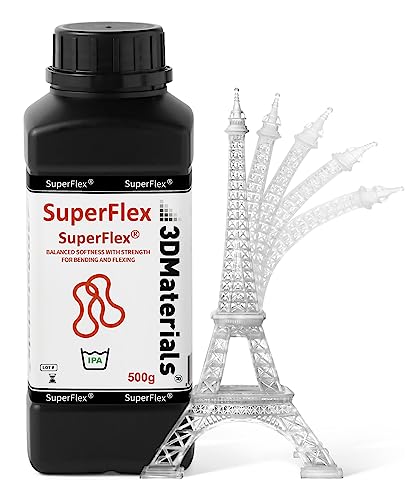
Brand: 3DMaterials. Features include ultra-fast printing with 50 µm layers in 1.7 seconds on monochrome LCD printers, boosting productivity by at least 40% for a printing farm. It balances softness with strength to simulate rubber or TPU in hard flexible prototypes (80A Shore).
Best for: small to medium batches needing rubber-like prototypes with quicker turnaround. Caution: data notes high-speed curing; ensure compatible printer and exposure settings to avoid over-curing in detailed parts.
SUNLU Flexible Resin 70A — 2kg
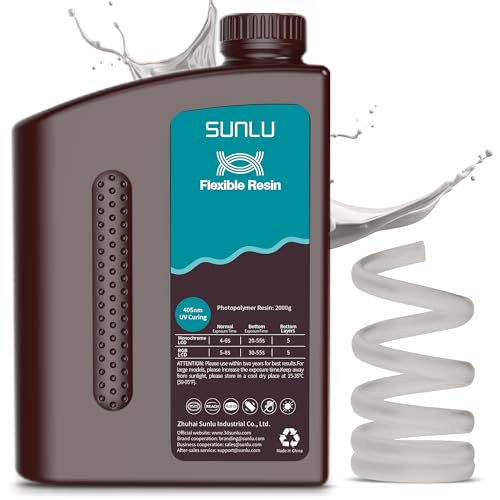
Brand: SUNLU. Features emphasize a balanced softness and strength to simulate rubber or durable flexible prototypes, 70A shore hardness, 135% elongation at break, and high impact resistance for durability. Noted for fast curing at 405 nm and reduced brittleness after wash and cure.
Best for: mid- and large-format prints requiring flexible yet resilient parts like casings or shells. Caution: 70A is softer than some 80A resins; for highly rigid parts, consider a stiffer resin.
YOUSU Flexible Tough 80A — 1kg

Brand: Yousu. Features include good softness with 80A hardness, high elongation, and tear resistance, making parts that can be folded or bent without breaking. Also highlights high precision with smooth surfaces and minimal yellowing over time.
Best for: flexible pads, cushions, or elastic components that require repeated bending. Caution: 80A resins can be less rigid; avoid load-bearing structural parts unless designed for flex.
Inslogic Flexible 70A Resin — 1kg
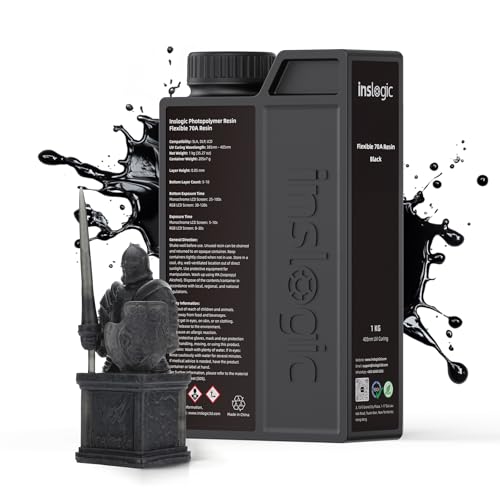
Brand: Inslogic. Features describe rubber-like elasticity (70A), true elasticity for comfort and durability, and exceptional tear resistance. It resists deformation under repeated bending and compression, making it suitable for moving or wearable parts.
Best for: ergonomic grips, flexible housings, or wearable components. Caution: lower hardness may reduce load-bearing stiffness in some designs.
Siraya Tech Tenacious — Flexible Black
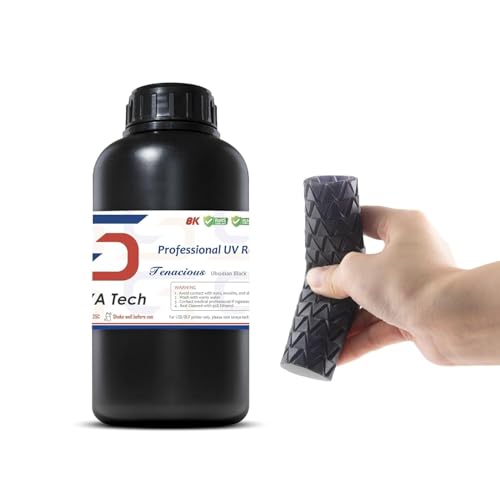
Brand: Siraya Tech. This Tenacious Flex formulation offers rubber-like flexibility with faster rebound and high impact resistance. It supports bending and compression without losing shape, enabling durable flexible prints when paired with compatible resins.
Best for: flexible parts requiring rapid rebound and robust resilience, such as seals or protective casings. Caution: mixing with other resins can alter cure behavior; test in small batches.
Buying Guide
What resin hardness should you choose? For bendable, shock-absorbent parts, 70–80A resins provide the best mix of softness and strength. Consider your part geometry: thin-walled or intricate sections benefit from low viscosity and high elongation. How important is impact resistance? Higher toughness resins like Tenacious-family or 70A/80A blends offer better resilience against drops. Do you print at scale? Larger prints may benefit from resins advertised as fast-curing to speed up production. Safety and post-processing: all flexible resins can produce fumes and require proper ventilation; ensure compatible wash and cure steps to preserve elasticity.
Frequently Asked Questions
- What does Shore hardness mean for flexible resins? It measures resistance to indentation; lower numbers are softer. Common flexible options are 70A–80A for rubber-like feel.
- Which resin is best for flexible phone cases? Resins with 70A–80A hardness and good elongation are ideal for bending and repeated flexing without cracking.
- Are faster-curing resins safe for detail fidelity? Fast curing speeds can affect fine details if exposure settings are too high; calibrate curing time to your printer and part geometry.
- Can I mix resins to tune properties? Some users mix resins to balance elasticity and strength, but this may alter curing behavior. Test in small batches first.
- What should I consider for post-processing? After washing and curing, flexible resins should retain elasticity; avoid over-curing to prevent brittleness.
- Which resin is best for high impact resistance? Tenacious or Tenacious Flex-style resins offer high impact resistance with rubber-like elasticity; test with your geometry.