For hobbyists and small businesses, an electric screen printing machine can streamline multi-color prints and increase consistency. This guide highlights five top options that balance footprint, reliability, and ease of use. Each choice is evaluated on stability, adaptability, and print area, with practical notes for home studios and small shops.
| Product | Brand | Printing Area | Color/Station | Key Benefit |
|---|---|---|---|---|
| VEVOR Screen Printing Machine, 4 Color 1 Station | VEVOR | 21.2 x 17.7 in / 54 x 45 cm | 4 Color, 1 Station | Compact, stable, 360° rotatable |
| VEVOR Screen Printing Machine, 1 Color 1 Station | VEVOR | 21.2 x 17.7 in / 54 x 45 cm | 1 Color, 1 Station | Space-efficient, adjustable tension |
| VEVOR Screen Printing Machine, 4 Color 4 Station | VEVOR | 21.2 x 17.7 in / 54 x 45 cm | 4 Color, 4 Station | High throughput, precise positioning |
| Speedball Beginner Screen Printing Craft Vinyl Kit | Speedball | Not specified | DIY Vinyl Kit | Easy entry for beginners |
| TECHTONGDA PCB Screen Printing Press | TECHTONGDA | Not specified | Screen Printing Press | Micro-registration for circuit boards |
VEVOR 4-Color 1-Station Screen Printer

Overview: A compact 4-color, 1-station press designed for small spaces. The 360° rotatable fuselage uses independent metal bearings for stable, precise positioning. Printing area spans 21.2 x 17.7 inches (54 x 45 cm). A double-layer positioning pallet reduces deviation, helping first-time and intermittent printers achieve repeatable results. This model is suitable for apparel, pillows, fabrics, plastics, and other flat media. The base is screw-mounted to the workbench for added stability, making it a practical choice for limited spaces.
VEVOR 1-Color 1-Station Screen Printer

Overview: This 1-color, 1-station press emphasizes stability with an independently bearing fuselage and double-layer pallet for consistent results. The printing area remains 21.2 x 17.7 inches, and adjustable tension supports pallets up to 23.6 x 27.5 inches with a thickness under 1.9 inches. It is ideal for home studios that prioritize space efficiency while printing apparel and flat items. The design focuses on precise alignment and balance, particularly useful for users who print occasionally or on smaller batches.
VEVOR 4-Color 4-Station Screen Printer

Overview: For higher volume, this four-color, four-station press provides robust throughput with a stable, 360° rotatable fuselage and independent metal bearings. The double-layer positioning pallet and under-arm stops help maintain accuracy across stations, reducing misprints. Printing area remains 21.2 x 17.7 inches. This model suits shops that run multiple colors or multiple items per frame, including garments, textiles, and other flat surfaces. It emphasizes repeatability and streamlined changeovers between jobs.
Speedball Beginner Screen Printing Craft Vinyl Kit
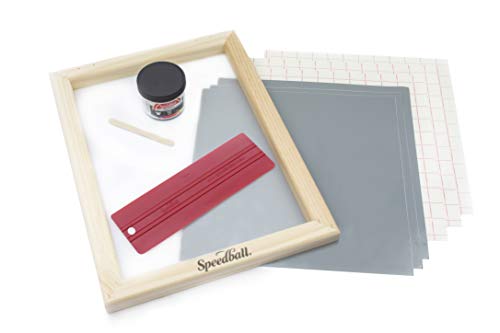
Overview: This kit combines vinyl crafting with screen printing for beginners. It offers a quick and simple process to start screen printing using a home vinyl cutting machine. The kit avoids the need for chemicals or emulsions, making it a low-barrier entry point for those exploring DIY apparel and home decor projects. It prioritizes ease of use and rapid experimentation for new users who want tangible results fast.
TECHTONGDA PCB Screen Printing Press

Overview: This micro-registration screen printing press is designed for circuit board printing and other precise applications. It features adjustable screen height (up to 6.7 inches) and multiple planes of movement to align printing with high accuracy. It is well-suited for detailed transfers on small or rigid substrates like boards, nameplates, and various plastics. The device supports fine-tuning for tight tolerances, which helps ensure consistent results across batches.
Buying Guide
- Printing area and footprint: Match the machine’s work area to your typical job size and available workspace. Larger formats enable bigger designs but require more space and stability.
- Station count and color capacity: More stations and colors boost throughput but add footprint and complexity. If you’re starting, a 1- to 4-color range covers most beginner-to-intermediate needs.
- Stability and alignment: Look for a rotatable fuselage, independent bearings, and double-layer pallets. Position stops and adjustable tension help with repeatable registration.
- Material compatibility: Ensure the press supports your common substrates (fabric, paper, plastics, metal, glass) and can handle the weight of heavier screens or pallets.
- Ease of use and maintenance: Consider screw-on frames for stability, simple tension adjustments, and clear manuals or tutorials. Cleanability and frame durability affect long-term performance.
- Accessories and ecosystem: Availability of compatible pallets, mounting hardware, and drying/curing options (like flash dryers) can impact workflow efficiency.
- Entry point vs. growth: Beginner kits or single-station presses are cheaper upfront but may limit growth. Plan for a scalable path with modular upgrades.
- Cost of ownership: Consider not just the initial purchase but also replacement parts, screens, squeegees, inks, and potential maintenance needs over time.