For homeowners, farms, and off-grid setups, a dual-axis solar tracker can significantly increase energy capture by aligning panels with the sun throughout the day. This article reviews five prominent dual-axis tracker solutions from ECO-WORTHY, BINGOX, and LeTkingok, highlighting how their sensors, wind protections, and controller interfaces translate into more reliable power generation. Read on to compare features, installation considerations, and what to look for when selecting a tracker kit.
Product Quick Overview
| Product | Brand | Key Benefit |
|---|---|---|
| ECO-WORTHY Solar Panel Dual Axis Tracking System (Expanded Version) | ECO-WORTHY | 40% power gain with dual-axis tracking; robust wind leveling |
| ECO-WORTHY Solar Panel Dual Axis Tracking System (Increase 40% Power) | ECO-WORTHY | 270° tracking; strong wind resistance and ground anchoring |
| BINGOX Dual-Axis Solar Tracker Controller Kit | BINGOX | LCD control, wind sensor, remote for easy setup |
| Dual Axis Solar Tracker Controller (WQV) | WQV | Real-time sun tracking with wind leveling and remote control |
| LeTkingok Sun Automatic Tracking Controller | LeTkingok | Automatic tracking with wind leveling; hemispheric compatibility |
Below are five detailed product sections. Each section presents a compact overview, notable features, and practical considerations to help you choose the right dual-axis tracker kit for your site.
ECO-WORTHY Dual Axis Tracking System (Expanded Version)

The Expanded Version from ECO-WORTHY features intelligent light sensing for high-precision sun tracking. A built-in light sensor continuously monitors sunlight intensity and adjusts the panels to maximize power generation, reportedly improving efficiency by up to 40% compared with non-tracking mounts. The system supports dual-axis drive for 270° sun tracking, enabling more surface area to capture daylight across morning and afternoon angles. It also includes a wind-levelling capability to automatically level the frame when wind speeds exceed a threshold, with manual controller overrides for snow-clearing conditions. Consider installation area, mounting surface rigidity, and weather exposure to ensure the auto-leveling mechanism remains reliable over time.
Reference features: high-precision light sensor, 270° sun tracking, automatic wind leveling, manual controller for adjustments, compatibility with various panel configurations. Installation notes: ensure a sturdy foundation and proper electrical wiring, plus a controller familiarization step to optimize sensor calibration and tracking response times.
ECO-WORTHY Dual Axis Tracking System (Increase 40% Power)

This complete tracker kit emphasizes automated 270° rotation guided by a sun sensor. The design promises at least a 40% increase in PV power generation over fixed panels by always facing the sun. It also includes sturdier ground mounting options such as expansion screws to anchor against high winds, helping maintain stable operation during storms. Users should plan for a solid initial layout, verify soil conditions for anchor stability, and confirm wiring runs to the controller and battery (if included) before setup.
Key points: 270° rotation, 40% power uplift, wind-aware design, hurricane-grade anchoring potential. Practical considerations include ensuring compatible panel sizes and a calm installation plan that minimizes maintenance during extreme weather events.
BINGOX Dual-Axis Solar Tracker Controller Kit
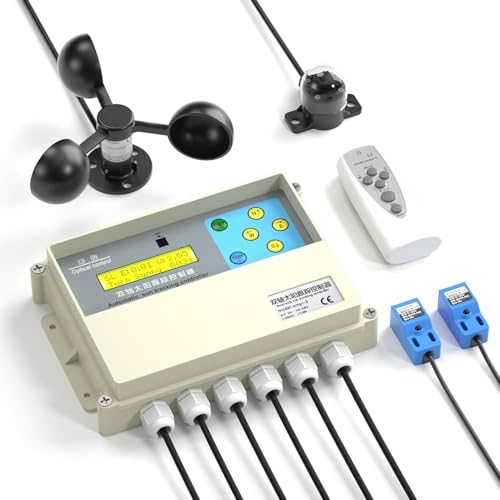
The BINGOX kit combines an auto sun-tracking controller with a wind protection system and a user-friendly LCD/controller interface. Its dual-axis motion allows panels to rotate toward the sun throughout the day, while the wind sensor prompts automatic adjustment or locking to protect the setup during gusts. The included remote and straightforward wiring guide support quick installation, making it a practical option for DIY solar projects on yards, farms, or RV setups. Assess cable routing, sensor placement, and controller calibration during initial setup to ensure reliable tracking performance.
Highlights: auto sun tracking, wind protection, LCD display, remote control. Considerations: ensure the wind sensor is positioned for accurate gust detection and check compatibility with your current solar panel size and mounting hardware.
Dual Axis Solar Tracker Controller Kit (WQV)

The WQV dual-axis controller provides real-time sun tracking with wind-leveling and cloudy-night returns to optimal position. It supports hemispheric applicability, making it versatile for different geographic locations. The kit relies on a 12V/24V DC brushless motor to drive the platform, with four-direction limit switches to ensure precise, repeatable movement. An intuitive LCD panel and remote control simplify parameter tuning. When selecting this kit, verify motor voltage compatibility with your system and plan for a proper emergency stop or manual override routine for safety and maintenance.
Core considerations: real-time tracking, wind leveling, remote control, hemispheric applicability. Practical setup tips include confirming the motor voltage matches your power source and ensuring the four-direction limits are correctly calibrated.
ECO-WORTHY Power Box for Solar Tracker System

This power box package provides an integrated energy storage and power management solution designed to support ECO-WORTHY tracking systems. It includes a 10W monocrystalline solar panel and a 6Ah 12V LiFePO4 battery with a long cycle life and BMS protection. The kit enables independent power for the tracker, reducing dependence on the main solar array. It’s suitable for garden and outdoor installations where a compact, plug-and-play energy source is advantageous. Installation is simplified with included clamps, brackets, and mounting hardware. When integrating a power box, confirm compatibility with your tracker’s voltage requirements and consider a charging/discharging schedule to extend battery life.
Benefits: self-powered operation, plug-and-play installation, rugged LiFePO4 battery with BMS protection. Consider trade-offs: battery capacity, potential temperature limitations, and the need for regular maintenance of the battery pack over multi-year deployments.
ECO-WORTHY Single-Axis Kit With Enhanced Space Saving
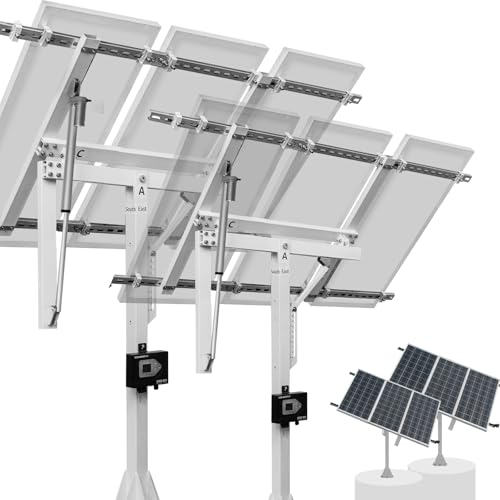
This ECO-WORTHY offering features two sets of tracking brackets capable of holding multiple panels while saving floor space. By focusing on single-axis tracking, it still maximizes sun exposure and can provide at least a 30% increase in power generation over fixed brackets. The 270° adjustment provided by the integrated sun sensor and controller ensures the panels follow the sun trajectory effectively. It’s well-suited for smaller plots, gardens, or rooftop installations where space efficiency is critical. Compatibility with standard panels and secure ground mounting are important considerations for this kit.
Key points: space-saving dual-mount design, 30% power uplift, 270° adjustment. When choosing, ensure the number of panels you plan to mount fits the bracket configuration and verify the mounting surface strength.
ECO-WORTHY 1600W Solar Tracker System

The 1600W system comprises eight 195W monocrystalline panels forming a robust dual-axis tracker kit with a power box and controller. This configuration targets higher daily outputs, noting an approximate improvement of around 8.68 kWh per day under favorable sun conditions. The tracker’s 270° rotation keeps panels aligned to the sun as it traverses the sky, and its compact footprint makes it attractive for sheds, farms, or yards with limited space. Ensure you have adequate electrical capacity and weatherproofing for outdoor deployment, plus a suitable mounting base that can bear the system’s weight.
Highlights: high-hourly output, 270° tracking range, efficient space use. Planning tips include assessing available daylight hours, shade risk from nearby structures, and local wind conditions to optimize anchoring strategies.
Buying Guide: Key Purchase Considerations
- Tracking accuracy and range: Dual-axis systems aim for precise sun alignment across the east-west and north-south axes. Look for 270° rotation and sensor-driven adjustments for maximal daily exposure.
- Wind resistance and weather protection: Wind sensors and automatic leveling help protect components. Verify wind speed thresholds and ensure controllers and connections are rated for your climate.
- Sensor reliability and maintenance: Light sensors, wind sensors, and anti-snow or debris features require periodic checks to maintain accuracy. Consider systems with easy field access and straightforward calibration.
- Power needs and compatibility: Confirm the system’s voltage requirements and compatibility with your panels, inverters, and any included power box. Battery integration adds resilience but adds maintenance considerations.
- Installation footprint and space efficiency: Some kits claim space savings or easier mounting. Measure your site’s footprint and ground stability to select the right frame and anchoring method.
- Control interface and remote capability: LCD panels, remotes, and smartphone-compatible controls can simplify setup and monitoring. Ensure remote connectivity matches your preferred workflow.
- Maintenance and support: Check warranty terms, available spare parts, and vendor support for sensor recalibration, motor wear, and weather-related repairs.
- Cost vs. benefit: While dual-axis trackers offer higher energy yield, evaluate total installed cost, expected lifespans, and regional sun exposure to estimate payback.