The right dog winter hiking gear keeps your pet warm, protected, and visible on cold, snowy trails. This guide highlights five practical options designed for chilly outdoor outings, ranging from insulated jackets to protective paw gear. It helps you pick gear based on weather, activity level, and your dog’s size. The top picks here are best for active dogs, urban strolls, or rugged hikes, with clear reasons to choose each item and a practical buying checklist to compare features side-by-side.
Overview of selected products:
| Product | Best For | Key Benefit |
|---|---|---|
| JOHNBOLIN Dog Winter Jacket & Raincoat | All-weather hiking and travel | Waterproof, windproof with reflective visibility |
| MIGOHI Comfortable Large Dog Coat | Cold-weather protection for large breeds | Waterproof with reflective safety details |
| QUMY Dog Shoes for Large Dogs | Paw protection on snow, ice, and hot pavements | Waterproof, anti-slip sole, adjustable fit |
| Fiveda Dog Winter Coat | Windy, wet climates with night visibility | Water-resistant, reflective strips, dual-leash rings |
| Hurtta Extreme Overall | Very cold conditions and high-insulation needs | Foil liner for heat retention and full-body coverage |
JOHNBOLIN Dog Winter Jacket & Raincoat

The JOHNBOLIN dog coat combines a 100% premium terylene outer with a polar fleece interior and a waterproof outer layer. This jacket is designed for all-weather hiking and travel, offering warmth in snow and rain while remaining lightweight for comfort. It includes a leash hole for easy attachment, a tension-adjustment buckle to prevent fur snagging, and reflective strips for nighttime visibility. Best for active dogs that need reliable warmth without bulk, and for owners who hike in mixed winter conditions. A potential limitation is that size selection depends on correct measurements; confirm chest and back lengths before purchase.
MIGOHI Comfortable Large Dog Coat

This large-dog coat emphasizes warmth and weather resistance with a waterproof, windproof, and snowproof design. The thick fleece lining and furry high collar add bulk-free warmth, while reflective trim improves safety in low-light conditions. It is machine-washable for easy maintenance, making it a practical option for dogs that regularly explore winter trails. Choose this for large breeds that spend extended time outdoors, but beware of potential fit issues for dogs with unusual chest shapes; verify measurements against the product’s sizing chart.
QUMY Dog Shoes for Large Dogs
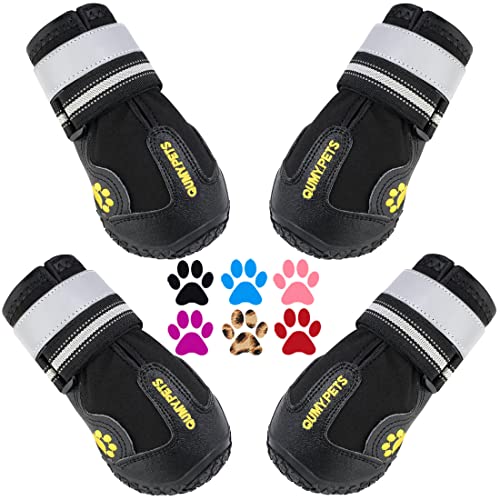
QUMY dog shoes are designed for protection across a range of winter terrains. Sizes vary by width and length, so accurate paw measurement is essential. The shoes feature a secure, adjustable strap system and reflective elements for visibility. They provide a rugged, slip-resistant sole that helps dogs navigate icy or rocky surfaces and protect paws from harsh pavement. Best for dogs that need paw protection in snow, slush, or hot pavement. A caution: correct sizing is critical to prevent slipping or rubbing during hikes.
Fiveda Dog Winter Coat

This water-resistant and windproof jacket uses a 100% polyester outer shell with a PE film coating to repel light rain and snow. The gray fleece lining traps body heat, and the back zipper with a protective guard prevents fur snagging. Dual D-ring leash attachment allows flexible harness setups, and 360° reflective strips boost night visibility. Best for urban and rural winter walks where wind and damp conditions are common. A limitation is the need for careful size selection to ensure the zipper doesn’t restrict movement.
Hurtta Extreme Overall

The Hurtta Extreme Overall is designed for very cold conditions, wrapping the dog’s large muscle groups, chest, and legs in a high-heat retention layer. It uses a foil liner to reflect body heat and boost circulation, paired with a soft, water- and wind-proof exterior. A high snood hood helps shield from wind and snow. Best for dogs that struggle in extreme cold or for extended outdoor sessions. A potential limitation is the overall bulk, which may affect maneuverability for very small dogs or highly active breeds in tight spaces.
Buying Guide: What to Consider When Picking Winter Hiking Gear
- Weather and terrain: Choose waterproof or water-resistant outer layers for wet snow or rain, and consider full-body protection for extremely cold, windy days.
- Size and fit: Measure chest, back length, and paw width where applicable. Correct sizing prevents chafing and ensures effective insulation and mobility.
- Material and warmth: Look for fleece linings, insulated fills, and windproof shells. Layering options can help adjust warmth on the fly.
- Visibility and safety: Reflective trims or strips and bright colors improve visibility during dawn, dusk, or foggy days.
- Foot protection: Paw boots are useful on hot pavements and icy surfaces, but fit and comfort are essential to prevent rubbing or slipping.
- Ease of use: Quick fastenings, leash access points, and machine-washable fabrics save time on multi-day trips.
- Maintenance: Durable materials that resist snagging, with simple cleaning instructions, extend the gear’s lifespan.
FAQ
- What is the best gear for extremely cold conditions?
The Hurtta Extreme Overall offers full-body coverage and a heat-reflective liner, making it well-suited for very cold days. - How important are paw boots in winter hiking?
Paw boots protect against ice, salt, and hot pavement, and provide traction on slick surfaces. Proper sizing is critical to avoid rubbing. - Should I choose a jacket or a full coat for my dog?
For mild to moderate winter days, a jacket may suffice; for windy, damp, or very cold weather, a full coat with full coverage offers better protection. - How do I measure my dog for coats and boots?
Use chest girth, back length for coats, and paw width/length for boots. Compare measurements to the product’s size charts for accuracy. - Are reflective features necessary?
While not mandatory, reflective elements significantly improve nighttime visibility and safety during early morning or late evening outings. - Can all dogs wear winter gear?
Most dogs can wear protective gear, but some may resist a snug fit. Start with shorter wear sessions to acclimate and ensure comfort.