Direct garment printing machines (DTF/DTG) offer scalable solutions for small studios, boutique brands, and home-based print shops seeking high-quality transfers. This guide highlights five capable models well-suited to different business needs, from entry-level setups to more advanced workflows. Each product is evaluated for who should buy it, its standout capabilities, and a practical limitation to consider. Use the buying guide to compare features like print resolution, ink circulation, automation, and workflow integration before choosing your system.
| Product | Brand | Best For | Key Benefit |
|---|---|---|---|
| KOMHOW R1390 DTF Printer | KOMHOW | Small apparel shops and independent creators | White ink circulation system for reliable multi-color transfers |
| KOMHOW L1800 A3 DTF Printer | KOMHOW | Designers needing high resolution and durable results | 2880 dpi with advanced RIP software |
| DXZ A3 DTG Printer | DXZ | Beginner and intermediate users | Ultra-high 2800 x 1440 DPI for sharp, vibrant prints |
| Procolored K13-Lite (HL-500) | Procolored | Startups and home studios | One-touch ink pumping and beginner-friendly touchscreen |
| InkSonic L1800 DTF Printer | RocRow | Entrepreneurs seeking strong support and maintenance | 3-in-1 white ink circulation with built-in protection features |
KOMHOW R1390 DTF Printer
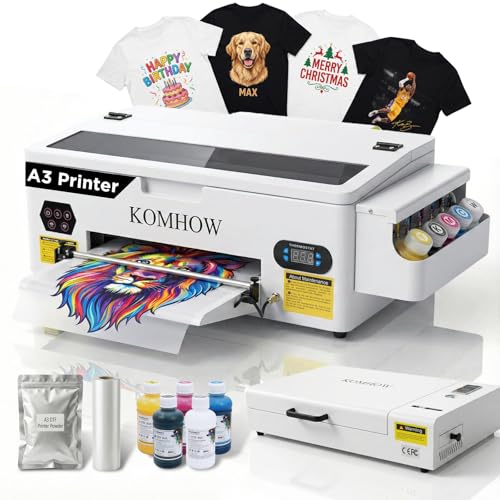
Best For: Small apparel shops and independent creators working on multi-color, detail-rich orders. This model emphasizes ease of use and a low learning curve for rapid setup. The included oven supports inline curing, which is convenient for small shops without full production lines.
Why selected: It offers a smart white ink circulation system to minimize maintenance and prevent common white ink issues. The printer aims to deliver high-resolution, vibrant transfers across a variety of fabrics with straightforward daily upkeep.
Caution: Performance hinges on consistent white ink management. Users should plan routine maintenance to sustain ink flow and printhead health.
KOMHOW L1800 A3 DTF Printer

Best For: Designers and shops needing high fidelity with rich color accuracy on dark fabrics. The six-channel L1800 printhead and advanced RIP software deliver professional-looking transfers suitable for logo-heavy designs and multi-color graphics.
Why selected: It emphasizes strong color performance and reliable maintenance tooling, including automatic white ink circulation and head-cleaning procedures that support consistent results across projects.
Caution: Higher-resolution output can require more computer and software configuration; ensure your workstation and RIP settings are prepared for the workflow.
DXZ A3 DTG Printer

Best For: Beginners and experienced users who want ultra-fine detail with vibrant color output on cotton garments. This model highlights high DPI and ease of loading garments for straightforward printing sequences.
Why selected: Its ultra-high resolution supports complex graphics and sharp text, with a user-friendly design intended to minimize setup time for new users.
Caution: Eco-conscious buyers should verify ink compatibility and drying requirements to maintain print integrity and garment feel.
Procolored K13-Lite (HL-500)

Best For: Startups, Etsy sellers, and small brands needing a compact but capable A3 DTF setup. The one-touch pump and intuitive touchscreen simplify entry into garment transfer printing.
Why selected: It balances approachable operation with solid transfer capability, making it a practical move from curiosity to production for new DTF businesses.
Caution: As a starter system, users should anticipate a learning period for color management and post-print finishing to achieve consistent results.
InkSonic L1800 DTF Printer
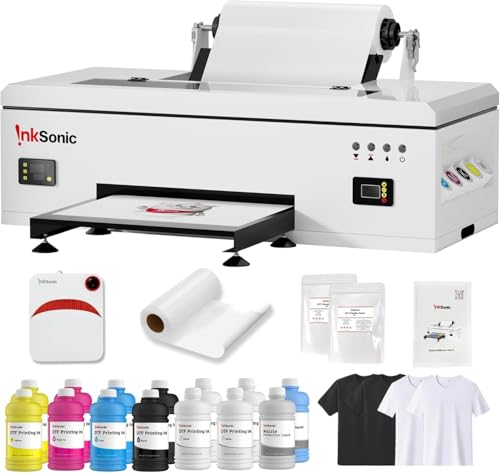
Best For: Entrepreneurs seeking a robust maintenance and support package. The InkSonic L1800 combines white-ink circulation with a printhead protection system and attentive customer support.
Why selected: It provides a comprehensive support structure, including remote assistance and replacement warranties, which can reduce downtime for growing print businesses.
Caution: The emphasis on support means technicians and replacement parts can influence long-term operating costs; align expectations with your production schedule.
Buying Guide: Direct Garment Printing Machines
Key questions to guide your decision:
- What is my intended production volume and garment types? Choose a system with appropriate bed size, ink capacity, and curing compatibility for your typical runs.
- Which print quality matters most? If you need fine detail and smooth gradients, prioritize higher DPI and robust RIP software integration.
- Do I need built-in curing or an external workflow? Some models include ovens or integrated curing to streamline small-batch production; others rely on separate equipment.
- How important is ink maintenance? Systems with active white ink circulation and automatic cleaning can reduce downtime but may require more upfront learning.
- What level of support is essential? Look for manuals, setup guides, and access to remote troubleshooting if you are building a new business.
- What is the total cost of ownership? Consider ink consumption, consumables, and potential repairs alongside the purchase price.
FAQ
- What is a DTF printer best for? It is designed to transfer full-color designs from film onto fabrics, enabling durable and vibrant t-shirt prints.
- Is white ink circulation important? Yes, it helps prevent clogs and ensures consistent opacity on dark fabrics.
- Do these machines require a lot of maintenance? Maintenance needs vary, but models with automated cleaning and circulation generally reduce manual work.
- Can beginners use these printers? Many models are designed for beginners with intuitive interfaces and helpful setup guides.
- Which features should I prioritize for a small shop? Look for ease of use, reliable ink management, curing options, and solid after-sales support.
- What should I expect from a buying decision? Align your choice with your production needs, space, and desired level of automation and color fidelity.