If you need steady water pressure across your home, a constant-pressure water pump is the right choice. These pumps automatically adjust to demand, delivering stable pressure whether you’re running a shower, dishwasher, or irrigation system. This guide highlights five top options, ideal for homeowners, apartments, and small commercial spaces seeking reliable, quiet operation and energy efficiency. Each selection is evaluated for who benefits most, plus practical tradeoffs to consider before buying.
Summary table of selected products
| Product | Best For | Key Benefit | Note |
|---|---|---|---|
| AQUASTRONG Smart 45 | Mid-size homes seeking automation | Integrated, variable-speed control with high efficiency | Low-noise operation |
| ECO-WORTHY 33-Series | Compact setups; simple diaphragm design | Smart pressure switch with self-priming | Low-amps, easy to install |
| GWANZI 1.2HP / 1 HP Models | Homes with larger flow needs | High head, substantial GPH, wireless app control | OTA firmware updates noted |
| Grundfos CMBE-10-54 | Large homes, apartments, small commercial | Pre-assembled with integrated drive; steady pressure | Heavier system; installation guidance recommended |
| SEAFLO 33 Series | RVs, boats, off-grid use | NSF/UL compliant; strong reliability | Compact, limited max head |
AQUASTRONG Smart 45: All-in-One Domestic Booster

The AQUASTRONG Smart 45 is a 115V, constant-pressure booster designed for homes, apartments, and light commercial use. It features an adjustable pressure and speed range (1.5-5.5 bar / 22-80 PSI) with a preset around 44 PSI. The integrated design includes a stainless steel impeller, rustproof motor housing, and a maintenance-free pressure tank. It uses an air-cooled permanent magnet motor with inverter technology, delivering quiet operation and energy savings—over 50% versus standard pumps. It handles up to 1500 GPH and heads to 150 ft. Best for buyers who want automated pressure stabilization across multiple fixtures with minimal external components. A potential limitation is the longer lead time for installation due to its integrated, all-in-one design.
Who this is best for: households seeking a compact, intelligent pump that automatically maintains consistent pressure with low noise. Why selected: strong overall performance, integrated components, and efficient operation under varying demand.
ECO-WORTHY 33-Series Diaphragm Pump
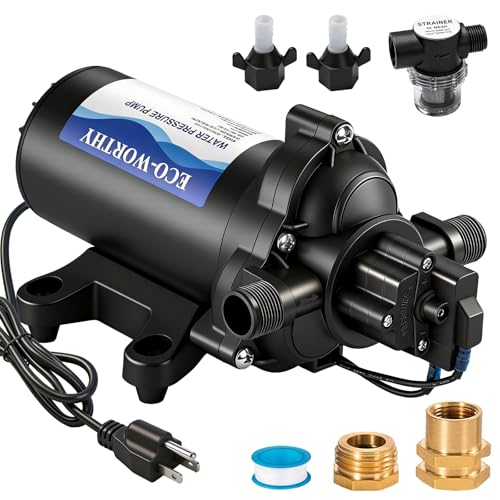
The ECO-WORTHY 33-Series is a 110V AC diaphragm pump with a 4.0 GPM flow rate and a 50 PSI start-stop range. It features a smart pressure switch that turns the pump on and off as demand changes, with self-priming capability and an easy installation profile. The unit offers thermal overload protection, preventing overheating, and can lift water up to about 9.8 feet. This pump is well-suited for RVs, boats, and small irrigation setups where a compact, controllable boost is needed. A potential limitation is its lower maximum head compared with larger, multi-stage systems.
Who this is best for: users needing a compact, cost-effective booster for intermittent domestic use. Why selected: reliable self-priming operation with a straightforward pressure switch and safety features.
GWANZI 1.2HP Whole-House Variable Speed

The GWANZI 1.2HP model provides powerful boosting with a 900W motor and a maximum head of 170 ft. It offers an adjustable pressure range of 1–6 bar (15–90 PSI) and a maximum flow of 1500 GPH. The unit uses stainless steel interior components and a thick ABS outer shell for durability and safe water delivery. This option is best for larger homes or properties with higher water demand, where higher head and flow are needed. The system supports OTA firmware upgrades via its SmartFarintl APP. A limitation to consider is the reliance on app updates for continued optimization.
Who this is best for: homes requiring high head and broad flow across multiple fixtures. Why selected: high performance with app-driven upgrades and robust construction.
Grundfos CMBE-10-54 Constant-Pressure System
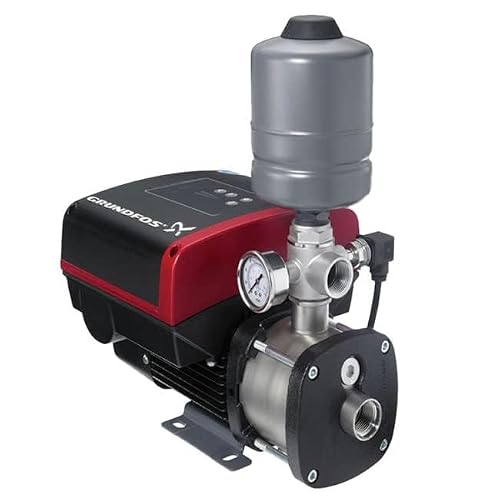
The Grundfos CMBE-10-54 is a complete pre-assembled 2 HP constant-pressure booster system built for large residential buildings, apartments, hotels, and light commercial uses. It includes a CME pump with an integrated drive, a diaphragm expansion tank, pressure gauge, and check valve. With 52.8 GPM max flow and 184 ft head, it maintains a steady outlet pressure at varying demands and reduces surges. It is a heavier, more professional-grade option. Best for multi-story or higher-demand installations where a turnkey, pre-assembled package is advantageous. A limitation is its installation footprint and weight.
Who this is best for: institutions or large homes needing reliable, centralized pressure boosting. Why selected: comprehensive package that minimizes adding external components and actively maintains constant pressure.
Grundfos SCALA2: Silent, Smart Pressure Boost

The Grundfos SCALA2 is an intelligent, compact domestic booster that automatically adjusts to water demand with a focus on low noise. It’s designed for everyday home use, delivering consistent pressure with quiet operation suitable for living spaces. The device is easy to configure, with one variant intended to cover typical domestic boosting needs. It is ideal for homes where minimizing noise and complexity is important. A potential drawback is that it may not meet very high head requirements in large or multi-story homes.
Who this is best for: households prioritizing quiet operation and straightforward setup. Why selected: proven intelligent control and compact footprint for standard home needs.
SEAFLO 33 Series: Reliable Fresh-Water Pump

The SEAFLO 33 Series is a 3.3 GPM, 45 PSI self-priming pump with a smart pressure switch. It is NSF/UL compliant, designed for RVs, caravans, boats, and off-grid applications where potable water safety is essential. The unit comes with a four-year warranty and emphasizes reliability and safety in demanding environments. It’s best for mobile or compact off-grid setups. A limitation is its lower pressure ceiling relative to some home-centric models.
Who this is best for: users needing a compliant, dependable pump for mobile or off-grid water systems. Why selected: robust safety certifications and warranty for tough environments.
Buying Guide: Key Considerations For Constant-Pressure Pumps
- Whole-house needs: Evaluate the required head (feet or meters) and GPM. Higher head supports multi-story homes and strong fixtures.
- Control strategy: Decide between integrated intelligent controllers vs. external pressure switches. Integrated systems simplify wiring and maintenance.
- Noise and footprint: If living space is a concern, prioritize models with low dBA and compact envelopes.
- Power and efficiency: Look for inverter-driven motors and energy-saving claims. Cooler operation often means longer life.
- Materials and durability: Stainless steel components resist corrosion and scale better in various water conditions.
- Warranty and serviceability: Consider the availability of replacement parts and firmware updates for longevity.
- Installation considerations: Some systems are pre-assembled, while others require more extensive plumbing and electrical work.
Frequently Asked Questions
- What is a constant-pressure water pump?
A pump that automatically adjusts motor speed to maintain a steady outlet pressure across fixtures, despite fluctuating water demand.
- Do I need a pressure tank with a constant-pressure system?
Many systems include an integrated or external pressure tank; check the product details to confirm. Tanks help stabilize pressure and reduce pump cycling.
- Which pump is best for a multi-story home?
Higher-head models from brands like GWANZI or Grundfos that offer 150 ft head or more are suitable for multi-story layouts.
- Are these pumps suitable for potable water?
Many listings indicate compatibility with potable water when using NSF/UL-certified components. Verify certifications for each model.
- What maintenance is required?
Most constant-pressure pumps are designed for low maintenance, but routine checks for leaks, electrical connections, and pressure settings are advised.
- Can I install these myself?
Simple units are DIY-friendly, but larger systems and pre-assembled commercial kits may require professional installation.