When selecting a commercial door exit device, prioritize durability, ADA compatibility, and ease of use for high-traffic areas. This guide highlights five reliable options, focusing on doors that see frequent use in offices, retail spaces, and industrial settings. Each product is evaluated for who it’s best for, potential limits, and why it’s a strong fit for specific applications.
| Product | Brand | Best For | Key Fit |
|---|---|---|---|
| Push Bar Panic Exit Device with Exterior Lever | Dynasty Hardware | Medium to high traffic commercial doors | ADA approved; reversible; dogging option |
| 31.5” Stainless Steel Exit Device with Exterior Lever | suermany | Wood or metal doors in busy spaces | Fits 30–37″ doors; reversible; long-term durability |
| Panic Bars for Exit Doors with Keypad | FORTSTRONG | High-traffic facilities needing additional security | UL listed; ADA compliant; doggings for open state |
| Brinks Rim Panic Exit Device with Storeroom Lever | BRINKS | Wide stile doors in commercial use | ANSI Grade 1; adjustable sizing; field modifications |
| VEVOR 28” Stainless Panic Bar with Exterior Lever | VEVOR | Versatile 28″ to 41″ doors | Thick carbon steel; dual-side access via keys |
Dynasty Hardware Push Bar Panic Exit Device with Exterior Lever
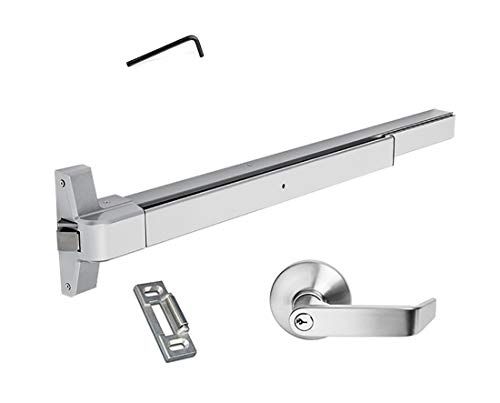
This unit is best for medium to high traffic doors in office buildings or retail spaces. It has passed extensive cycle testing and carries a Grade 1 certification, supporting reliable daily use. The exterior lever adds convenience for accessibility or frequent exterior egress. The reversible design suits both right- and left-handed doors, and the dogging feature helps keep the door open during deliveries or maintenance. A downside to consider is the need for correct alignment during installation for optimal dogging performance.
Who this is best for: Facilities needing ADA-compliant, durable exit hardware with an exterior lever for easy egress.
Why chosen: Combines high-cycle durability with practical features (reversible handedness, dogging, keyed exterior lock) for high-traffic environments.
Caution: Exterior lever components may require periodic adjustment to ensure reliable dogging and lever operation in busy entrances.
suermany 31.5” Stainless Steel Exit Device with Exterior Lever
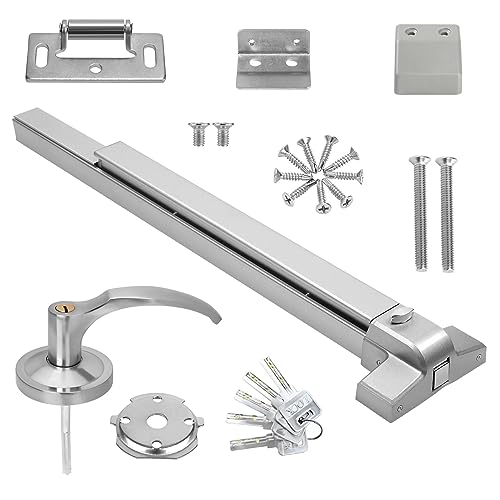
This model is ideal for doors within the 30″–37″ range and works on wooden or metal doors, not glass. Its 31.5″ length makes it a good fit for mid-sized commercial openings. The device is reversible and includes an exterior lever with keyed access, with eight keys provided. It has passed 300,000+ cycles, indicating solid durability for standard high-traffic usage. A limitation is that it is not designed for frameless glass doors.
Who this is best for: Businesses needing a solid, mid-length exit device for traditional wooden or metal doors with an exterior lever.
Why chosen: Strong cycle life and flexible sizing for common commercial doors; compact length reduces overhang on tighter openings.
Caution: Not compatible with glass doors; ensure door width is within the stated range before purchase.
FORTSTRONG Panic Bars for Exit Doors

This heavy-duty option suits high-traffic facilities and can integrate with keypad access controls where needed. It’s UL listed and ADA compliant, with a dogging feature to hold the door open for deliveries or maintenance. The 31″–47″ adjustable width makes it adaptable to many standard commercial doors. The keying system includes a dogging key for temporary opening. A potential limitation is that the broader width range may not fit very narrow doors without modification.
Who this is best for: Businesses requiring robust, UL-listed exit hardware with optional keypad integration and dogging capability.
Why chosen: Combines heavy-duty construction with flexible sizing and security features suitable for busy commercial sites.
Caution: If your door is on the narrow end, verify the minimum width and installation clearance to avoid misfit.
Brinks Commercial Rim Panic Exit Device with Storeroom Lever

This device is designed for wide stile doors and is reversible for left- or right-handed operation. It includes an adjustable roller strike and shim for fine adjustments, supporting precise alignment in commercial settings. It fits 36″–42″ doors out of the box but can be field sized for 28″–35″ widths. It meets ANSI Grade 1 standards and is ADA compliant, making it suitable for high-traffic wood or metal doors. A caveat is that field sizing requires careful measurement to ensure proper latch alignment.
Who this is best for: Facilities with wide doors that need precise adjustments and strong ANSI Grade 1 hardware.
Why chosen: Durable, compliant, and adjustable, suitable for large entrances in offices, schools, or retail spaces.
Caution: Field adjustments can be complex; ensure professional installation for optimal performance.
IRONWALLS Surface Vertical Rod Exit Device
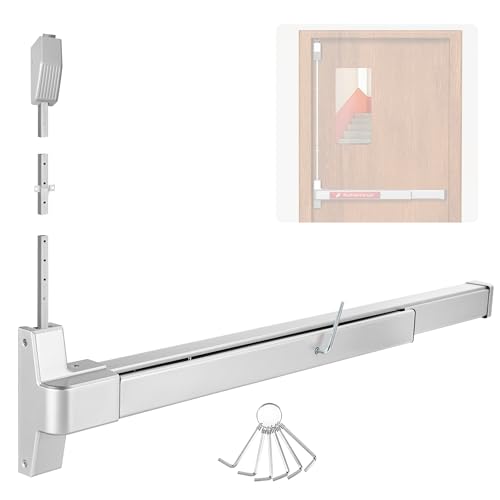
This 32″ vertical rod device is designed for 32″–48″ wide doors and features a single top latching design to simplify installation and maintenance. It uses heavy-duty stainless steel with a chrome finish for durability in high-traffic environments. The unit ships configured for left-handed doors and requires reversal for right-handed doors, which should be completed before installation. Not intended for frame-less glass doors. The top-rod design reduces bottom hardware, potentially lowering maintenance needs while maintaining reliability.
Who this is best for: Large, high-traffic openings on wood or metal doors that benefit from a streamlined top latching system.
Why chosen: Robust construction with a simplified design that reduces installation complexity and ongoing maintenance.
Caution: Verify door handedness and ensure compatibility with non-glass doors to avoid installation issues.
Buying Guide: Key Considerations for Commercial Door Exit Devices
What door width and height are compatible?
Most devices list a width range (for example, 30″–37″ or 36″–42″). Measure your door precisely and choose a model that fits within this range. For doors outside standard sizes, look for adjustable or field-cut options.
Which features matter most for high traffic?
Prioritize Grade 1 or ANSI Grade 1 hardware, heavy-duty construction, and a long cycle life (hundreds of thousands of cycles). Consider dogging capability if the door needs to stay open during deliveries. Exterior levers should be ADA-compliant for universal accessibility.
What about handedness and installation?
Many devices are reversible. Confirm whether the door is left- or right-handed and choose a model that supports easy reversal. Some systems require professional installation for proper alignment and to maintain safety standards.
Is there a need for integration with access controls?
If your facility uses keypad or electronic access, select a model designed to integrate with those systems. Ensure compatibility with existing hardware and note any required accessories (e.g., dogging keys, strikes, or power supplies).
What are common limitations?
Glass doors may not work with all exit devices. Some units require precise field adjustments, and certain models are not suitable for frameless openings. Always verify door material, width, and mounting surface before purchase.
Durability and maintenance considerations
Choose corrosion-resistant finishes (stainless steel or aluminum) for environments with moisture or salt exposure. Look for designs that minimize bottom hardware and simplify routine maintenance, especially in hospitals, schools, or large retail spaces.
FAQ
- What is an exit device dog feature? It allows the latch to stay retracted so the door can stay open in specific scenarios, like deliveries or maintenance.
- Are these devices ADA compliant? Many are; check the product page for ADA and accessibility certifications to ensure compliance for your building type.
- Can I install these on metal and wood doors? Yes, most models are designed for both wood and metal doors; verify any door-specific limitations in the product details.
- Do these include exterior lever options? Several models include exterior lever handles or offer them as optional accessories for easier egress.
- What maintenance is typical? Regular inspection of the latch, lever/handle operation, and dogging mechanism; ensure screws and mounting plates remain tight and aligned.
- Do these require professional installation? For best results and safety compliance, professional installation is recommended, especially for field modifications and precise alignment.