Choosing the right bass compressor pedal helps preserve your tone while smoothing dynamics. This guide focuses on studio-grade, transparent options that suit both active and passive bassists. The top picks emphasize low noise, good headroom, and tonal preservation—great for slap, fingerstyle, and clean bass lines. Best for players who want reliable compression without coloring their core sound.
Summary table of selected products:
| Product | Best For | Key Benefit |
|---|---|---|
| JOYO SCYLLA Bass Compressor | Bass players seeking optical, studio-grade compression | Transparent, quiet, six-knob precision (Attack, Release, Ratio, Tone, Input, Output) |
| Electro-Harmonix Bass Preacher | Flexibility with variable input and large gain reduction | Wide input sensitivity, strong limiting, simple controls |
| MXR Bass Compressor | Classic, reliable bass compression with true bypass | Constant Headroom Technology, LED indicators, true bypass |
| Keeley Bassist Compressor | Studio-grade compression in a stompbox | High-fidelity compression with THAT Corp. circuitry |
| JOYO JF-10 Dynamic Compressor | Transparent, low-noise compression for versatile tones | Three-knob control (Sustain, Attack, Level) with low-noise circuit |
JOYO SCYLLA Bass Compressor Pedal

The SCYLLA uses an optical compressor circuit for studio-grade transparency. It aims to smooth dynamics without coloring your bass tone. Best for players who want a quiet, natural squeeze with high headroom and minimal tone alteration.
Who it’s best for: bassists needing precise soft-knee compression with minimal tonal shifts, whether slapping, fingerpicking, or sustaining clean tones. Why selected: optical optical designs are renowned for smooth responses and low noise, making this a solid all-around choice for bass and versatile use with other instruments.
Caution: Optical circuits can respond differently with active basses; ensure proper gain staging to avoid unwanted peaks. Input and output controls are vital for dialing in unity gain.
Electro-Harmonix Bass Preacher Compressor

The Bass Preacher offers flexible input sensitivity from -10 dBu to +2 dBu, making it suitable for passive and active basses. It provides up to 21 dB of gain reduction with enough make-up gain to restore level at full sustain. Attack toggle shifts between fast, medium, and slow timing.
Who it’s best for: players who need a broad dynamic range and clear sustain without heavy tone coloring. Why selected: its adaptability to different bass outputs makes it a reliable all-purpose compressor in live or studio setups.
Caution: Higher gain reduction can require careful level matching to prevent level drops or hiss in denser rigs. Start with modest reduction and adjust.
MXR Bass Compressor

MXR’s Bass Compressor features CHT Constant Headroom Technology for clean, consistent performance and true bypass to preserve tone when off. It includes 10 gain-reduction LEDs as a visual guide for compression activity.
Who it’s best for: players who value a straightforward, dependable compressor with clear visual feedback. Why selected: classic MXR reliability and true bypass help maintain tone across pedalboards and stages.
Caution: Some users report a preference for pairing with a dedicated power supply to minimize noise; ensure proper power to avoid hum.
Keeley Bassist Compressor and Limiting Amplifier

Keeley’s Bassist Compressor centers on high-fidelity compression and limiting, built around THAT Corp. 4320 circuitry. It’s noted as an affordable, studio-grade option in stomp-box form.
Who it’s best for: players seeking pristine compression with a professional-grade circuit and a compact footprint. Why selected: Keeley’s reputation for audio fidelity translates to transparent sustain and reliable performance.
Caution: The more transparent the compression, the more subtle the audible changes; dial-in carefully to avoid under- or over-compression in live mix contexts.
JOYO JF-10 Dynamic Compressor
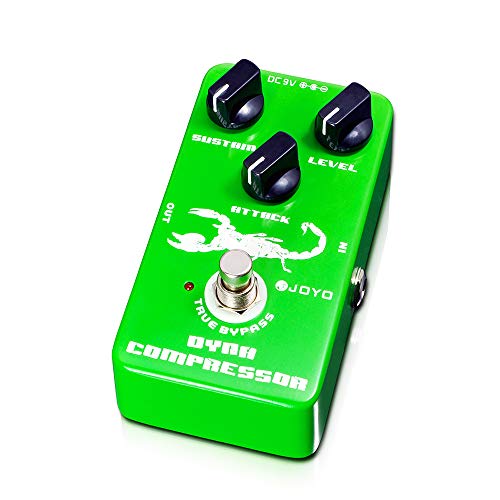
The JF-10 provides transparent, studio-style analog compression with three-knob control: Sustain, Attack, and Level. It emphasizes low noise and a natural-sounding squeeze, making it a practical choice for both bass and guitar tones.
Who it’s best for: players who want a simple, effective compressor that preserves core tone while adding sustain. Why selected: its three-knob design and low noise circuit offer intuitive control and dependable performance.
Caution: Some players may notice a perceived volume dip when applying compression; adjust Level to compensate if needed.
Buying Guide: Key Considerations For Bass Compressor Pedals
- Transparency vs. color: Optical and studio-grade circuits tend to be most transparent, preserving your core bass tone. If you want a noticeable smoothing effect, a more aggressive compressor can be chosen.
- Headroom and gain reduction: Look for pedals with ample headroom and measured gain reduction (dB) to maintain dynamics without squashing transients.
- Input/output compatibility: Ensure the pedal handles your bass type (passive vs active) and that the output can drive your amp or DI without noise.
- Controls and usability: Six-knob layouts (Attack, Release, Ratio, Tone, Input, Output) offer precise shaping, while simpler three-knob designs provide quick, reliable compression.
- Bypass type and noise: True bypass helps maintain signal when off. A quiet circuit reduces noise especially on low-output basses.
- Power considerations: Use a regulated 9V supply if recommended to minimize hum and noise. Some pedals support 18V or battery power; check the manual.
- Durability and form factor: Pedals with solid enclosures and compact design fit crowded boards and touring setups.
FAQ
- What is a bass compressor used for?
A bass compressor evens out dynamics, adds sustain, and helps keep your notes consistent, especially in slap or fingerstyle playing.
- Should I choose optical or solid-state compression?
Optical compressors are typically smoother and quieter, while solid-state designs can offer more aggressive control. Optical is often favored for bass.
- What does true bypass do?
True bypass preserves your tone when the pedal is turned off by not routing the signal through the pedal’s circuitry.
- How much gain reduction is ideal?
For bass, starting with modest gain reduction (around 3–6 dB) is common, then adjust to taste for your playing style.
- Can I use a compressor with both bass and guitar?
Yes. Many compressors are versatile and designed to work with both instruments, but settings may vary by instrument type.
- Is a dedicated power supply necessary?
While not always required, a regulated power supply often reduces noise and ensures stable operation across pedals.