When selecting a 3-port pool valve, the goal is reliable water flow control, long-lasting materials, and compatibility with your existing plumbing. This guide highlights five strong choices and explains who each product is best for, plus potential limitations to watch out for. Whether you’re upgrading a spa diverter, a backyard pool, or a commercial system, the right valve helps you route flow efficiently and maintain clear circulation.
| Product | Best For | Why It Stands Out |
|---|---|---|
| Jandy Neverlube 2″-2 1/2″, 4717 | Automated systems | Designed for easy automation and durable CPVC construction |
| FibroPool 1 1/2″ 3 Way Valve | Low-pressure spa and pool setups | Lubeless design, CPVC, serviceable and corrosion resistant |
| 4717 3 Port 2 to 2-1/2″ NeverLube (FQRANBO) | Jandy-compatible installations | Premium CPVC/PVC with high flow tolerance and positive seal |
| UcarSoon 4715/4717 3 Port Valve | High-flow spa and pool lines | CPVC/PVC, up to 150 PSI, corrosion-resistant |
| Jandy 4715 1.5″ – 2″ NeverLube | Compact, automation-ready setups | Never lubricate, durable CPVC, easy integration |
Jandy Genuine Parts Neverlube 2″ – 2 1/2″, Positive Seal 3 Port Valve, 4717

The Jandy 4717 is built for automation-friendly systems and heavy-duty use. Its NeverLube design emphasizes low maintenance by reducing the need for grease or lubrication. Made from CPVC, it stands up to high temperatures and pool chemical exposure, making it suitable for medium to large-volume pool and spa lines. Best for homeowners upgrading to automated valves or operators who want reduced upkeep. A limitation is that you’ll want to ensure your pipe sizes align with the 2″ to 2 1/2″ ratings in your plumbing map.
FibroPool 1 1/2 Inch 3 Way Valve with Positive Seal

This FibroPool valve uses a 1 1/2″ slip port configuration and features a lubeless PTFE seat. The CPVC construction provides good resistance to temperature change and impact, while the serviceable design supports easy maintenance without grease. Best for smaller pools or spa lines where ease of service is a priority. Choose this if your system favors a simple, low-lubricant setup, but be aware the 1 1/2″ size may limit flow for high-demand installations.
4717 3 Port 2 to 2-1/2-Inch Positive Seal NeverLube Valve (FQRANBO)

This valve is designed for compatibility with Jandy 4717 diverter systems and standard 2″–2.5″ pipe work. It emphasizes leak resistance via a triple-seal approach and corrosion-resistant O-rings with durable CPVC construction. Best for existing 4717-inspired setups requiring robust, leak-free division of flow. Best to avoid if your system uses non-standard port sizes or if you need a much higher flow than 170 GPM capacity.
UcarSoon 4715/4717 3 Port Valve (Black)

UcarSoon offers a CPVC/PVC-based 3-port valve designed for turning, closing, or mixing water flow. It handles high-pressure environments—up to 150 PSI—and resists chemical corrosion, making it suitable for spa diverters and pool lines with chemical exposure. Best for high-flow installations where chemical resistance matters. A potential limitation is ensuring compatibility with your existing port dimensions and mounting configurations.
Jandy Genuine Parts Neverlube 1.5″ – 2″, Positive Seal 3 Port Valve, 4715
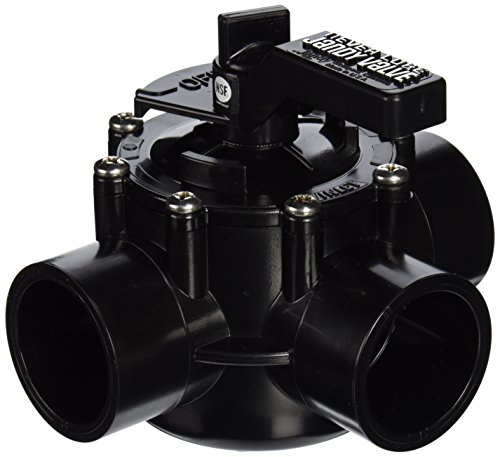
The 4715 is designed to be automation-friendly with a NeverLube design and CPVC construction. It’s compact, making it a good fit for smaller pools or spa connections where space is a factor. Best for systems requiring a low-maintenance valve that still provides reliable three-port control. Limitations include the smaller 1.5″ to 2″ size, which may constrain flow in larger circulation loops.
Buying Guide
- Valve size and pipe compatibility: Confirm the valve’s port size and the matching pipe slips or threads in your pool system. Mismatches can cause leaks or reduced flow.
- Material and chemical exposure: CPVC is common and heat- and chemical-resistant, but verify compatibility with your pool chemicals for long-term durability.
- Positive seal and lubrication: Positive-seal designs reduce leaks at high pressures. Lubeless (“NeverLube”) models minimize maintenance and grease use but ensure your automation and port layout support it.
- Flow capacity and pressure: Check maximum GPM and PSI ratings. If your system requires high flow, choose a model rated for greater head loss tolerance.
- Automation readiness: For automated pools and spas, select valves designed for easy integration with controllers or actuators.
- Installation considerations: Consider port spacing, mounting orientation, and whether replacement valves match your current diverter footprint to avoid plumbing work.
FAQ
- What is a NeverLube valve? A NeverLube valve is designed to avoid lubrication for smoother operation and reduced maintenance, typically using CPVC construction.
- Which valve size should I choose? Match the valve’s port sizes to your existing piping: common options are 1.5″ to 2″ or 2″ to 2.5″.
- Are these valves suitable for high-pressure systems? Yes, many models support up to 150 PSI, but always verify your system’s pressure and the valve’s rating.
- Can I replace a Jandy 4717 with another brand? Many 3-port valves are designed for compatibility with standard 2″ to 2.5″ plumbing, but confirm port dimensions and sealing type before mixing brands.
- Do these valves require maintenance? Lubeless models reduce lubrication needs, but periodic inspection of seals and ports is still recommended.
- Which valve is best for automation? Valves explicitly marketed as automation-ready or NeverLube are typically easiest to integrate with pool controllers and actuators.