Instant guidance for buyers seeking reliable 1-inch PEX water line coils. This guide highlights practical choices for residential plumbing, RV installations, radiant heating, and direct burial needs. Each top pick is described with who it’s best for and why it’s chosen. Use the summary table to compare core specs at a glance.
| Product | Best For | Coil Length | Flexibility | Notes |
|---|---|---|---|---|
| SharkBite 1″ x 300′ White U880W300 | Home water runs with few fittings | 300 ft | High | White PEX-B; versatile fittings |
| SharkBite 1″ x 100′ White UA80W100 | Shorter runs, easy routing | 100 ft | High | PEX-A, direct burial ready |
| SharkBite 1″ x 300′ Blue U880B300 | Cold/hot potable lines | 300 ft | High | Blue PEX-B; long runs |
| SUPPLYGIANT Pex-A Tubing 1″ x 500 ft Blue | Radiant heating and larger projects | 500 ft | Very High | Pex-A; flexible and easy installation |
| VEVOR PEX Pipe 1″ x 500 ft Red B Pipe | General plumbing with high bend needs | 500 ft | High | Non-oxygen barrier; durable |
SharkBite 1 Inch x 300 Feet White PEX-B, U880W300

Flexible PEX-B tubing designed for hot and cold potable water systems. This 1″ x 300′ white coil supports longer runs and reduces fittings, lowering installation time and potential leaks. The pipe is freeze-tolerant and expands slightly when frozen, contracting when thawed. It works with PEX expansion (F1960), push-to-connect (ASSE 1061) and barb fittings, and is suitable for direct burial including under concrete.
Best for: homeowners tackling longer water runs with minimal fittings. It’s also suitable for direct burial, making it a solid choice for foundational plumbing work. Choose this if you value fewer connections and straightforward installation.
Caution: verify compatibility with existing fittings, especially if you mix PEX-B with other PEX types or clamps.
SharkBite 1 Inch x 100 Feet White PEX-A, UA80W100

Flexible PEX-A tubing in a 1″ x 100′ coil, designed for hot and cold potable water. Its high flexibility supports longer runs with fewer fittings and improved water flow. Compatible with PEX expansion (F1960), push-to-connect (ASSE 1061), and both plastic and brass crimps. Suitable for direct burial including under concrete.
Best for: projects needing tighter routing in smaller spaces or shorter runs where high bend flexibility matters. Choose this if you prioritize minimal fittings and easy installation in compact layouts.
Caution: shorter coil length may require more spools for larger installations, increasing continuity considerations for longer projects.
SharkBite 1 Inch x 300 Feet Blue PEX-B, U880B300

This blue 1″ x 300′ PEX-B coil is designed for hot and cold potable water systems. It offers the same flexibility as white variants, with a long-run capability and reduced fittings. It is compatible with expansion, push-to-connect, plastic barb, and brass barb fittings, and suitable for direct burial including under concrete.
Best for: customers needing color-coded separation of water lines (e.g., cold lines), while still enjoying long runs. Choose this if you want consistent performance with clear line identification.
Caution: ensure color separation aligns with your local plumbing codes and labeling practices.
SharkBite 1 Inch x 500 Feet Blue PEX-B, U880B500

This blue PEX-B coil provides a long run with fewer connections, designed for hot and cold potable water distribution. It features a freeze-resistant design that expands and contracts with temperature changes. Push-to-connect fittings offer faster installation, with UV resistance and strong chlorine resistance as noted in its data style.
Best for: larger or multi-room plumbing projects where fewer joints save time. It’s a better pick when longer runs are required without sacrificing ease of installation.
Caution: longer coils can be heavier to handle; plan storage and routing to prevent kinking during installation.
Pex-A Tubing: 1 Inch x 500 Ft Coil, SUPPLYGIANT Blue

Pex-A is recognized for the most flexibility among PEX types, reducing fittings and kinkings. The 1″ x 500′ blue coil is suitable for various applications, including potable water and radiant heating. It complies with ANSI, ASTM, CAN/ULC, CSA standards, with markings every five feet. It supports F1960/Pex A, F1807/Pex B, expansion and crimp methods, as well as clamp or sleeve joining.
Best for: larger home or radiant heating projects where maximum bend capacity and long runs are critical. This is a strong all-around choice for flexible installations.
Caution: non-barrier PEX may require care to prevent oxygen diffusion in sensitive systems; check your project’s barrier needs.
VEVOR PEX Pipe, 1 Inch x 500 FT Red B Pipe
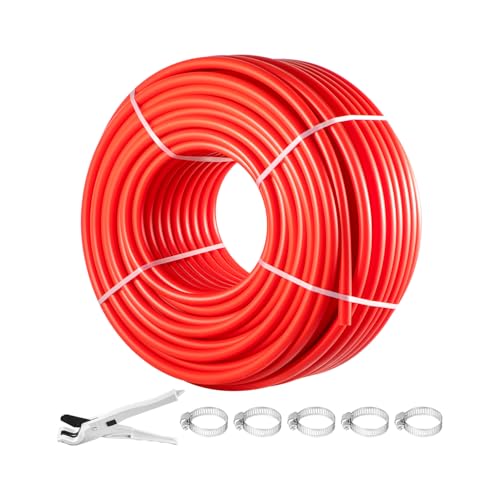
This 1″ red PEX tubing is non-oxygen barrier, offering flexibility and ease of installation. The 500′ coil is designed for durable water flow and long runs, including both underground and above-ground applications. It maintains performance under a wide temperature range and pressure conditions.
Best for: projects requiring a non-barrier PEX option with good bend capacity and durability. Choose this if non-barrier materials align with your system requirements and you need a robust long-run coil.
Caution: non-barrier PEX is not suitable for oxygen-sensitive systems; confirm compatibility with your heating and plumbing design before use.
Buying Guide
What type of PEX should I choose?
PEX-B is widely used for residential plumbing due to its balance of flexibility and cost. PEX-A is the most flexible, reducing fittings but at a higher price. For radiant heating, PEX-A often provides superior bend reliability. Consider your project’s bend radius, pressure requirements, and exposure to freezing when selecting your type.
How long should the coil be?
Coil length should match the scope of the project. Longer coils reduce fittings and connections but are heavier to handle. For small projects, 100–300 ft may suffice; for whole-house runs, 500 ft or more minimizes joints.
Which fittings compatibility matters?
Ensure the tubing is compatible with expansion (F1960), crimp (F1807), barb, or push-to-connect fittings used in your system. Mixed fittings can introduce leaks or reliability issues.
Are color codes important?
Blue typically indicates cold lines, white is general potable water, and red signals hot lines. Color-coding helps with maintenance and future upgrades, especially in multi-line installations.
Direct burial suitability
Some PEX lines are rated for direct burial under concrete or soil. Verify the product’s burial suitability to avoid insulation or protection issues in your installation.
What are common limitations to watch?
Be aware of coil weight, compatibility with your existing fittings, and local code requirements. Some non-barrier PEX may not be appropriate for all applications, particularly in highly oxygen-sensitive systems.
FAQ
- What is the difference between PEX-B and PEX-A for water lines?
PEX-A offers greater flexibility and the smallest bend radii, while PEX-B provides good strength and lower cost. Both are suitable for potable water with proper fittings.
- Can I bury PEX directly underground?
Many are rated for direct burial, but always verify burial suitability and local code requirements before installing.
- Is a longer coil always better?
Not necessarily. Longer coils reduce fittings but are heavier and harder to maneuver. Choose coil length to fit your space and workflow.
- Which color should I use for hot and cold lines?
Typically red or white for hot and blue for cold, but local codes and labeling practices should guide color use.
- Do all PEX types support expansion and crimp fittings?
Not all do; confirm compatibility (F1960 for expansion, F1807 for crimp) with your chosen tubing and fittings.
- Is PEX-A worth the extra cost?
For projects prioritizing maximum bendability and fewer fittings, PEX-A can justify the higher price, especially in tight spaces.