If you’re shopping for a three-tier hamster cage, you’re seeking more space, better enrichment, and easier access for cleaning. The top picks below are best for owners who want multi-level layouts, built-in toys, and straightforward maintenance. Each option targets different needs—from compact dwarf hamsters to curious Syrians—so you can pick the right fit for your pet’s size and activity level.
Summary table of selected products:
| Product | Best For | Key Feature | Notes |
|---|---|---|---|
| 5 in 1 Wooden Hamster Cage | Natural wood lovers; Syrian hamsters | Massive 3-level playground; openable top | Premium wood; easy cleaning |
| PawHut Large Hamster Cage with Deep Bottom | Active multi-tier play for dwarfs and hybrids | Three levels; tempered glass base | Strong, easy access |
| PawHut Wooden Hamster Cage 3-Tier with Hut | Families needing included accessories | Three tiers; hut, seesaw, ramps | Easy to assemble and clean |
| LOOBMBNS 3-Tier Starter Kit | New owners; expandability fans | Full top-opening; connectable tube ports | Lots of add-on potential |
| PawHut 3-Tier Gerbil Cage with Accessories | Gerbil-focused setups; small pets | Three tiers; includes wheel, tunnel, tubes | Ventilation and stability focus |
5 in 1 Wooden Hamster Cage — 3 Tier Small Animal Habitat

Brand: FTCBNet
Features include a solid wood “mansion” design with a spacious 3-level playground, deep bedding space, ladders, and a silent exercise wheel. The hinged top opens for easy access and cleaning. This cage is described as a natural, cozy home that helps syrian hamsters and active critters stay engaged.
Best for: Pet owners seeking a stylish, natural wood enclosure with substantial play areas. It suits Syrian hamsters and larger small pets that benefit from multiple levels.
Caution: Wood enclosures need regular inspection for chewing wear and occasional refinishing to maintain sturdiness. Ensure proper assembly to prevent gaps.
3-Tier Hamster Cage Starter Kit — 22x12x15in

Brand: LOOBMBNS
Features a compact rectangular layout with 264 square inches of floor space, 0.3″ bar spacing, and a 4″ deep base. It includes multiple accessory components like a silent wheel, water bottle, ladders, and a top-opening design for thorough cleaning and easy access.
Best for: First-time owners or those who want an expandable cage with essential tools right away. Suitable for a single dwarf hamster under typical body length.
Caution: The base area is compact for larger hamsters; monitor space use as the pet grows.
PawHut Wooden Hamster Cage — 3 Tier with Detachable Bottom

Brand: PawHut
Three-tier design with a 12.6″ deep bottom, hut, seesaw, and an exercise wheel. The bottom detaches for easy cleaning, and a front door plus top opening aids access. It’s built to promote climbing, exploration, and daily activity.
Best for: Active dwarfs or small gerbils that benefit from a deep digging area and multi-level play. Choose this if you want integrated toys and straightforward maintenance.
Caution: Some users may find the overall footprint larger; verify room space before purchasing.
PawHut Hamster Cage — 3-Tier with Tubes and Accessories
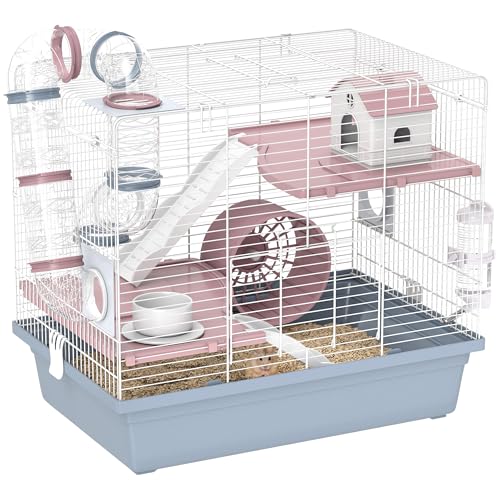
Brand: PawHut
This cage features a vertical three-tier design with transparent tunnels, a cozy hideout, running wheel, water bottle, food bowl, and ramps. A 0.39″ wire gap and sturdy mesh emphasize safety and airflow for small pets.
Best for: Owners who want a visually engaging habitat with built-in enrichment. It supports natural climbing and exploration while maintaining good ventilation.
Caution: The multi-piece design may require careful assembly to ensure all tunnels align securely.
PawHut Wooden Cage — 3-Tier with Acrylic Panel

Brand: PawHut
Offers a roomy 29.9″ L x 17.9″ W x 30.3″ H space with three tiers, ramps, a hut, seesaw, and an acrylic panel for visibility. The bottom tray and top mesh are designed for easy separation and cleaning, while a large front opening supports quick access.
Best for: Pet parents who want strong visibility and easy maintenance without sacrificing play space. Suitable for small to mid-sized hamsters and gerbils.
Caution: The acrylic panel requires gentle cleaning to avoid scratches; avoid harsh cleaners.
Buying Guide
What size and layout work best?
Look for a cage with at least 264 square inches of floor space for a single dwarf hamster, and more for Syrians. Multi-level designs should have accessible ramps and wide openings to make daily handling easier and safer.
What materials matter?
Wood houses provide a natural feel but require regular maintenance to prevent chew damage. Plastic and acrylic components offer easy cleaning and visibility but should be sturdy and well-ventilated. Glass bottoms give a clean view but can be heavier and less forgiving if the pet chews nearby.
Are included accessories worth it?
Integrated wheels, huts, and ramps save setup time and keep hamsters engaged. Check for removable bases or detachable sections to simplify cleaning and avoid buildup in hard-to-reach corners.
How important is ventilation?
Good airflow reduces odors and humidity, improving pet wellbeing. Look for cages with gaps that balance escape prevention and air exchange; avoid cages with obstructed airflow.
Maintenance and safety considerations
Prefer cages with top-opening designs for thorough cleaning. Ensure doors and latches are secure to prevent escapes, and inspect plastic parts for wear over time. If you use bedding, select dust-free options to reduce respiratory irritation.
Expansion and future needs
If you anticipate growing a colony or accommodating a larger hamster, choose a modular design with tube ports or the ability to add more levels without replacing the entire cage.
FAQ
- Is a three-tier cage better than a single-level cage? A three-tier cage provides more vertical space and enrichment, which encourages climbing and exploration, especially for active hamsters.
- What size is best for a dwarf hamster? A compact three-tier setup with 22″ x 12″ base can work, but prioritize floor space and safe, shallow levels to prevent falls.
- How often should I clean a multi-level cage? Clean the base and removable components weekly, and do a full clean every two to four weeks, depending on bedding and odor.
- Are wooden cages safe? Yes, if properly treated and regularly checked for chew marks. Avoid rough finishes that can splinter and pose hazards.
- Can I use glass bottoms? Glass bottoms offer clear visibility but require careful setup to prevent overheating and ensure airflow around bedding.
- Should I include accessories? Yes. Ramps, wheels, huts, and tunnels provide physical and mental stimulation, promoting healthier activity patterns.