Answer: For durable, reusable edging options that emulate curb shapes and provide clean lines, these concrete curb forms are ideal for DIYers and professional builders alike. This guide highlights five top picks that suit garden borders, walkways, and edging projects. Best for homeowners completing small-to-medium projects, pros needing reusable forms, and outdoor enthusiasts chasing consistent curb profiles.
Buyers often wonder which formwork kit to choose for curved versus straight edges, and for durable reuse. The picks below balance stiffness, flexibility, ease of use, and compatibility with common concrete mixes. Use the quick comparison below to narrow down options, then read each product section for specifics on suitability and limitations.
| Product | Best For | Key Benefit |
|---|---|---|
| Plastic Mold for Concrete Curb DIY – BR19 | Curved garden borders | Rigid ABS with reusable formwork |
| Plastic Flex Forms for Concrete Flatwork & Curbs – 5 inch | Flexible edging | Excellent for curved and irregular layouts |
| KiBcsLic Drainage Curb Form – 60x30x15 cm | Drainage-friendly edges | S-shaped curb for water guidance |
| KiBcsLic Half Curb Straight Walls | Straight-edge sections | Open-top cavity for controlled pours |
| Plastic Flex Forms for Concrete Flatwork & Curbs Set | Large projects | Multiple pieces for longer runs |
Plastic Mold for Concrete Curb DIY – BR19
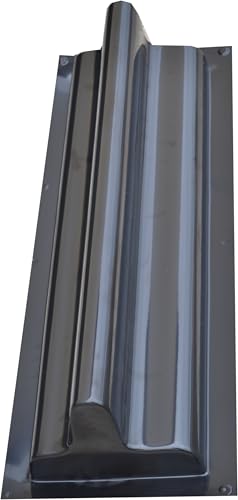
- Brand: SvitMolds
- Features: Sold Set 2 pcs; ABS plastic mold for concrete curb; 505×140×100 mm; reusable formwork for garden and path edging; thickness 1.9–2 mm; wall thickness may vary with geometry.
Best for: DIYers building garden borders or small edging runs with a rigid, reusable curb mold. Why selected: Compact two-piece set provides consistent edge lines and is easy to reposition for short runs. Limitation: Overall dimensions may vary due to wall thickness; ensure fit for your edge profile before pouring.
Plastic Flex Forms for Concrete Flatwork & Curbs 5 Inch

- Brand: Walttools
- Features: Create smooth curved edges; durable and reusable; easy to bend and set; resists cracking and bending; suitable for curves and irregular layouts.
Best for: Projects requiring curved edging and irregular layouts, such as garden paths or rounded borders. Why selected: Flexible yet sturdy formwork that reuses across multiple pours; good control for curved lines. Caution: Flexible forms may require staking to prevent movement in windy conditions or when pour weight is high.
KiBcsLic Drainage Curb Form Reusable Curb Form

- Brand: KiBcsLic
- Features: Curved water-runoff design for smoother drainage; rigid construction for repeated casting; S-shaped curb profile for drainage guidance and edge definition.
Best for: Projects needing enhanced drainage along curbs, such as roadways or walkways. Why selected: Combines drainage control with defined curb edges. Caution: Data notes a specialized S-shaped profile—verify if your layout requires a standard straight curb or a custom curve.
KiBcsLic Half Curb Straight Walls Concrete Curb Form

- Brand: KiBcsLic
- Features: Rectangular tub with straight inner walls, wide rims, flat base; open-top cavity for controlled casting; easy handling; white color for visibility on site.
Best for: Straight-edge curb sections and easier, predictable pours. Why selected: Simple, stable form that supports consistent shape and easy removal after set. Limitation: Straight-wall design may be less suitable for curved edging without additional forms.
Plastic Flex Forms for Concrete Flatwork & Curbs Set (6 8″ x 8′ Pieces)
- Brand: Walttools
- Features: Large set of flexible forms; multiple pieces for longer runs; durable and reusable; easy to bend and set; conform to curves and irregular layouts.
Best for: Larger edging installations or longer continuous runs, such as long garden borders or patios. Why selected: High piece count enables longer sections with consistent curves; reusable for multiple projects. Caution: Large sets may require extra storage and handling space on site.
U0U 4×78.7 Plastic Concrete Forms for Walkway

- Brand: U0U
- Features: Polyethylene plastic; durable and long service life; easy to remove and clean; prevents cracking and bending under pressure; includes 4 x 78.7 inch per set; modular and reusable; simple assembly with stakes.
Best for: Garden paths and edging projects where modularity and reuse matter. Why selected: Long, continuous forms that can be assembled to fit various layouts. Limitation: Requires staking and alignment to prevent movement during pour.
Buying Guide: Concrete Curb Forms For Edge Work
What to consider when choosing curb forms for edging and pathways:
- Material and durability: ABS and PE plastics offer reuse, while white and rigid forms provide stable edges. Consider environmental exposure and concrete weight.
- Curve vs. straight: Flexible forms are ideal for curves; straight forms are easier for long, uniform runs. Choose a mix if your project alternates between straight and curved sections.
- Size and capacity: Measure edge length and desired curb height. Larger sets speed up big jobs, but require storage space.
- Setup and removal: Forms with simple stake systems or clip-on edges simplify setup and post-pour removal. Look for low-resistance release and clean straight edges.
- Reusability: Reusable forms reduce long-term costs and waste. Check for consistent wall thickness and return policy for damaged pieces.
- Drainage and edge definition: Some forms feature curved or S-shaped profiles to guide runoff and create defined curb lines. Match to site drainage needs.
Frequently Asked Questions
- What is the difference between a curb form and a general concrete form?
Curb forms are designed to shape edging profiles that define borders and edges, often with specific curvature or drainage features. General concrete forms shape broader surfaces like slabs or patios.
- Are plastic curb forms reusable for outdoor projects?
Yes. Most plastic curb forms are designed for repeated use, provided they are cleaned after pours and stored properly to prevent warping or cracking.
- Can curb forms be used for large commercial projects?
Yes, but for large commercial jobs you may need modular systems or a combination of forms to cover long runs and varied layouts efficiently.
- How do I prevent forms from sticking to concrete?
Apply a release agent or use properly designed low-friction surfaces; ensure the form is clean and dry before pouring.
- What shapes are best for drainage-curb applications?
Curved and S-shaped profiles can guide runoff more effectively along walkways and road edges, reducing pooling and promoting safe drainage.
- Do these forms require special tools to set?
Basic tools like stakes, mallets, and levelers are typically sufficient; some sets may have built-in stakes or alignment guides for faster setup.