Best options for converting old negatives and slides to digital files are film scanners with built-in displays and easy-to-use one-touch interfaces. This guide highlights five reliable models that suit different needs, from casual family memories to archival projects. Whether you want a large LCD screen for quick previews, standalone operation, or compatibility with various film formats, these picks help you preserve photos without a computer. The buyer types best served include: hobbyists digitizing home photo collections, seniors sharing memories with relatives, and small households building digital archives.
| Product | Best For | Key Benefit |
|---|---|---|
| KODAK Slide N SCAN Film & Slide Scanner | Families preserving varied formats | 5” LCD, supports 135/110/126 slides and films |
| DigitPro Film And Slide Scanner | Casual digitizers seeking simple use | 5” LCD, one-touch scanning, multi-format support |
| DigitPro Photo Scanner And Film Digitizer | Photo-heavy archives | Standalone operation with built-in memory and SD card |
| DIGITNOW! 135 Film Negative Scanner | Budget-friendly conversion | SD card saving, 1800DPI, simple feeder |
| BEONEGLOBAL ClearScan MINI | Compact, beginner-friendly | 16MP scans, small footprint, easy to use |
Below are five detailed product sections to help you compare features, suitability, and potential limitations. Each product includes who it’s best for and why it was selected, with practical notes to aid your decision.
KODAK Slide N SCAN Film & Slide Scanner
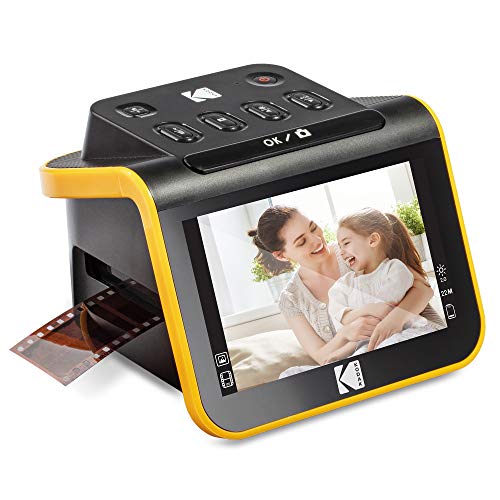
Best For: Families and older-format collectors who want a single device for 135, 110, and 126 film and slides. The 5” LCD provides instant previews, and built-in adapters support multiple formats. The main draw is quick load and direct saving to an SD card. Limitations include dependency on SD card compatibility and potential file size limits for large scans.
DigitPro Film And Slide Scanner

Best For: Beginners who want an easy, all-in-one solution. It supports 135/110/126 negatives and 50mm slides, plus Super 8 film, with a 5” LCD for real-time previews. It stores images on the built-in memory or SD card. Caution: external memory card capacity and compatibility may affect long-term archiving plans.
DigitPro Photo Scanner And Film Digitizer
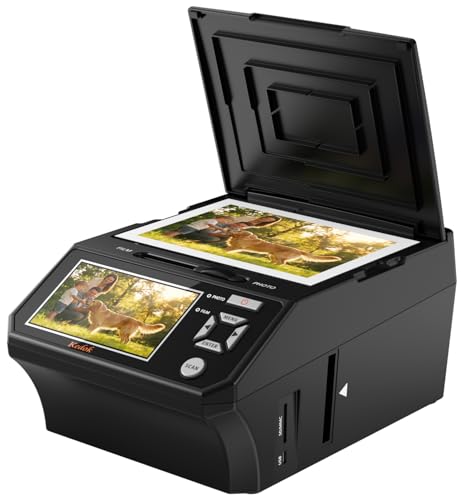
Best For: Users with a mix of 35mm slides, 135/110 negatives, and printed photos who want standalone operation. It includes an 8GB SD card and offers a large 5” LCD for quick viewing without a computer. Limitation: built-in memory capacity may require frequent card swaps for large batches.
DIGITNOW! 135 Film Negative Scanner

Best For: Budget-conscious buyers needing a straightforward 35mm film and slide conversion. It saves to SD card up to 32GB and supports 1800DPI. Caution: The device relies on USB and may require a computer for some file transfers, depending on setup.
BEONEGLOBAL ClearScan MINI Film Scanner

Best For: Space-constrained setups and beginners who want a compact, 16MP option with a built-in display. It supports 35mm, 135, and 126 formats and outputs directly to a photo, slide, or negative file. Limitation: 16MP may be lower than some higher-end models for large archival scans.
Buying Guide
What to consider when choosing a film and slide scanner
- Format compatibility: Ensure the device supports your film types (35mm/135, 110, 126, slides) and any negatives you own.
- Display size and usability: A larger built-in LCD helps with accurate previews and quick editing without a computer.
- Storage options: Look for SD card support and internal memory to store scans before transferring.
- One-touch scanning vs. manual control: One-touch is faster for casual use; manual controls may suit precise color and brightness adjustments.
- File resolution: Higher megapixel output yields sharper digital images; consider DPI compatibility with your archival goals.
- Power and portability: Standalone units work without a computer but check power options and USB/HDMI outputs for later use.
How to use these scanners effectively
- Organize slides and negatives by format to minimize reloads and maintain sequence in scans.
- Preview each image on the built-in display before saving to ensure correct orientation and color.
- Label files with date and description to simplify future searching.
- Regularly back up digital files to an external drive or cloud storage for redundancy.
Common limitations to watch for
- Some devices rely on SD cards with limited capacity; plan for card swaps during large scans.
- Built-in software may have basic editing features; consider external editors for advanced work.
- Not all models offer automatic feeders; you may need to feed slides manually, which affects speed.
Frequently Asked Questions
- Do these scanners require a computer? Most are standalone but some can connect to a computer for saving or editing.
- Can I scan 126 or 110 formats with all models? Most models listed support the common formats, but verify compatibility for each device.
- What’s the best resolution for archival purposes? Higher native resolution yields more detail; check the device’s megapixel output and DPI.
- Is an 8GB or 16GB SD card sufficient for many scans? It depends on MP output and batch size; larger cards reduce interruptions.
- Are there any risks of color drift over time? Regularly calibrate and digitize under consistent lighting or settings to minimize drift.