Answering the top question for moon observers: these telescopes provide bright lunar details, easy setup, and portability for home or travel use. The best picks suit beginners, families, and hobbyists who want sharp moon views without a steep learning curve. This guide highlights five options with strong optics, stable mounts, and practical features for moon-focused observing.
Product Quick Reference
| Product | Best For | Why It Stands Out |
|---|---|---|
| Celticbird Telescope for Adults | Beginners and families | 80mm aperture, portable with backbag and phone adapter |
| Gskyer Telescope | Travel and learning | 70mm aperture, 400mm focal length, wireless remote |
| NASA Lunar Telescope for Kids | Young aspiring astronomers | Moon-focused, tabletop tripod, finder scope |
| Koolpte Telescope 70mm | All ages | Compact, multi-coated optics, phone adapter |
| Koolpte Alternative Option | Compact lunar observers | Similar value with easy setup |
Introduction to Moon-Focused Observing
Moon viewing benefits from wide-to-medium apertures, stable mounts, and simple alignment. The five selected models emphasize bright lunar details, portability, and straightforward use, making them suitable for first-time stargazers, families with kids, and casual stargazers who want to explore craters, maria, and highlands with clarity.
Celticbird Telescope for Adults High Powered

Best for beginners and families who want a complete, portable kit. The 80mm aperture and 600mm focal length capture more lunar detail than entry-level models, with high-transmission coated optics to enhance brightness. The kit includes a backpack, adjustable aluminum tripod, and a phone adapter for quick lunar photos. A potential limitation is the cockpit-like setup that may require careful initial alignment for optimal lunar viewing. Best for: weekend moon watchers and kids 8–12 learning the night sky.
Gskyer Telescope, 70mm Aperture 400mm AZ Mount

Choose this if you want an affordable, portable refractor with solid optics. The 70mm aperture and 400mm focal length deliver bright lunar views, and the kit includes two eyepieces, a 3x Barlow lens, a finder scope, and a wireless remote for easy smartphone photography. Best for: casual observers and families who value travel-friendly gear. Caution: smaller aperture limits extremely fine lunar textures at high magnification.
NASA Lunar Telescope for Kids
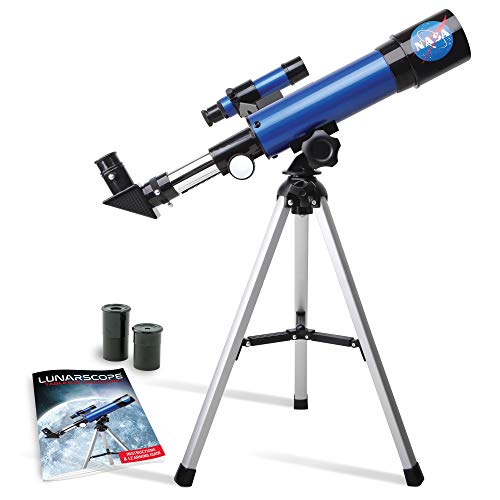
Best for young explorers or classroom-style moon learning. This table-top telescope emphasizes lunar detail with low- and high-power eyepieces and a finder scope. The included tabletop tripod offers stability for steady Moon views. A limitation is that it is more beginner-focused and may have a smaller aperture compared to larger refractors. Best for: kids and beginners building foundational moon observation skills.
Celestron Signature Series Moon by Robert Reeves

Best for those seeking a premium lunar viewing instrument with strong support. The Moon by Robert Reeves model emphasizes optical quality and a respectable warranty. This option is well-suited for moon observers who want reliable optics and strong brand support for future upgrades. Caution: advanced users may find the setup and alignment steps more involved than entry-level kits. Best for: committed hobbyists and collectors seeking durable lunar observation capable of long-term use.
Celestron StarSense Explorer LT 114AZ
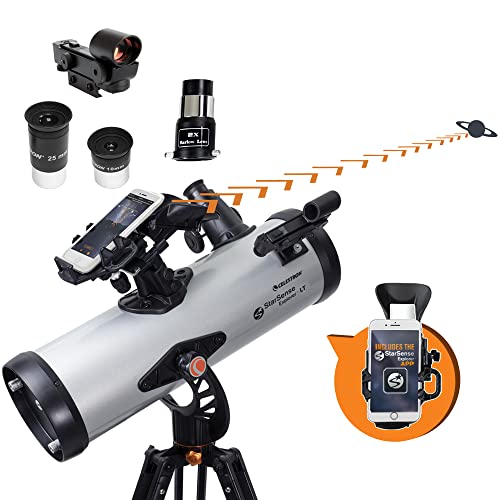
Best for tech-enabled beginners who want guided sky tours. The smartphone dock and StarSense app help locate targets with sky recognition technology, streamlining moon observations. It offers a modern observing experience, yet it packs a 114mm Newtonian design that is bulkier than entry-level travel kits. Best for: new stargazers who enjoy a guided, app-assisted moon hunt.
WOSPORTS Telescope for Adults High Powered

Best for ambitious moon observers seeking stronger light gathering and higher magnification options. The 90mm aperture and 600mm focal length deliver crisper lunar textures with two eyepieces and a 3x Barlow lens. The portable tripod and carry bag support on-the-go moon watching. Caution: higher magnification can demand steadier mounting and careful alignment for best results.
HUGERSTAR Telescope for Adults High Powered

Best for users who want bright lunar views with simple handling. The 90mm aperture and 800mm focal length provide crisp moon details, with two eyepieces, a 3x Barlow lens, a finder scope, and a sturdy adjustable tripod. Suitable for adults and older kids. Best for: steady moon mapping and learning, with a practical travel kit. Caution: setup can be more involved than ultra-compact models.
Koolpte Telescope 70mm 500mm

Best for budget-conscious buyers who still want solid moon viewing. The 70mm aperture and 500mm focal length provide bright lunar observations with multi-coated optics. It includes a phone adapter, carry bag, and wireless remote for easy photography. Limitation: smaller aperture means slightly less light-gathering than larger models, which can affect fine lunar detail at higher magnifications.
Buying Guide: Moon-Viewing Telescope Essentials
What should you look for when choosing a moon-focused telescope?
- Aperture vs. Focal Length: Larger apertures gather more light for brighter lunar features. Focal length influences magnification potential when paired with eyepieces.
- Stability: A sturdy mount or tripod minimizes vibration during steady lunar viewing. Consider height adjustability for comfortable use.
- Ease of Setup: Beginners benefit from models with clear manuals, minimal tools, and included phone adapters for photography.
- Portability: If moon-watching is a travel activity, prioritize lightweight, compact kits with carrying cases.
- Accessory Suite: Look for additional eyepieces, a finder scope, a diagonal mirror, and a smartphone dock for easier lunar photography.
What about compatibility and future upgrades?
- Some telescopes offer modular upgrades or additional eyepieces; consider whether you want to expand magnification in the future.
- Smartphone integration enhances quick lunar captures and sharing but may require a specific adapter or app ecosystem.
Frequently Asked Questions
- What is the best telescope for beginner Moon viewing?
An 70–90mm refractor with a stable mount is a solid starting point, offering bright lunar views and straightforward setup.
- Do I need a tripod for Moon observing?
Yes. A steady tripod or mount reduces vibration and improves lunar detail, especially at higher magnifications.
- Is a bigger aperture always better for the Moon?
Generally, larger apertures gather more light and reveal finer features, but portability and ease of use matter for beginners.
- Can I take pictures of the Moon with a phone?
Many models include phone adapters or are compatible with smartphone mounts to capture lunar images.
- Are app-guided telescopes useful for beginners?
Yes. Apps can help locate targets and simplify alignment, especially in light-polluted areas with fewer recognizable stars.