Answering the question for buyers who want efficient, large-scale dethatching, these pull-behind dethatchers attach to lawn tractors, ATVs, or UTVs to remove dead grass and thatch in wide swaths. This guide highlights five solid options, focused on durability, coverage, and ease of use. The best choice depends on yard size, terrain, and whether you prefer heavier ballast or quick height adjustments. The following products are well-suited for homeowners with expansive lawns, estates, or frequent dethatching needs, and each entry notes who it’s best for and a key limitation to consider.
| Product | Width | Tines | Best For | Notes |
|---|---|---|---|---|
| Agri-Fab 40in Tow-Behind Dethatcher | 40 in | 20 steel tines | Medium to large yards; budget-friendly | Made in USA; standard depth |
| Agri-Fab 48in Tow-Behind Dethatcher | 48 in | 24 steel tines | Large lawns; faster coverage | Cantilever lift for height |
| BlumeTrec Tow Behind Dethatcher | 40 in | 20 spring tines | Large yards; heavy-duty build | Bearings-equipped wheel; limit: assembly |
| Vlaeng 40″ Tow Behind Dethatcher | 40 in | 20 rust-proof tines | Sun-exposed lawns; ballast optional | 70 lb ballast tray; note on residue |
| MegaChoice 48 in Tow Behind Dethatcher | 48 in | 24 spring tines | Rugged use; universal hitch | Heavy-duty steel; replaceable tines |
Agri-Fab 40in Tow-Behind Lawn Dethatcher
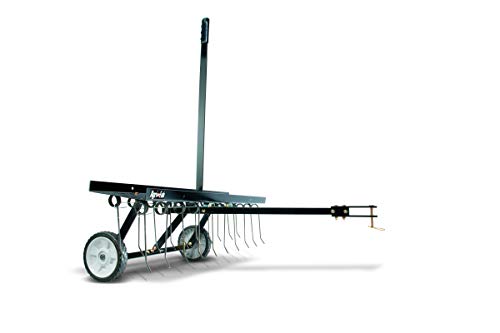
Built to detach thatch across a 40-inch swath, the Agri-Fab dethatcher features twenty durable spring tines designed to uproot dead grass and dislodge compacted soil. The unit is described as MADE IN USA, with tines that penetrate dried grass and soil to expose thatch for effective removal. It suits mid-to-large yards where a reliable, mid-range attachment is preferred. The 40-inch width keeps passes manageable on uneven terrain. Best for: homeowners with riding tractors or garden tractors seeking an economical, US-made option. Caution: consistent maintenance may be needed to preserve tine flexibility over seasons.
Agri-Fab 48 In Tow Behind Lawn Dethatcher
This 48-inch dethatcher increases coverage with 24 spring steel tines for lofting dead grass and loosening compacted soil. A cantilever transport handle facilitates raised and lowered positions for smoother operation and transport, making it well-suited for large lawns with even terrain. The wide working width improves efficiency, and the design aims to help water, air, and nutrients access roots more readily. Best for: larger lawns where faster dethatching matters. Caution: ensure hitch compatibility with your mower or tractor before purchase.
BlumeTrec Tow Behind Dethatcher

BlumeTrec offers a 40-inch thatching solution with 20 spring steel tines in a heavy-duty carbon steel frame. The tines are replaceable and rust-proof, designed to lift thatch and loosen compacted soil to improve lawn health. A universal pin-style hitch enables compatibility with riding mowers, tractors, ATVs, and UTVs. The product includes a ballast-friendly design via a wheel with bearings to handle heavier loads. Best for: large estates or farms needing reliable, long-term dethatching capability. Caution: avoid reversing during operation to protect tines and the lawn surface.
Vlaeng 40″ Tow Behind Dethatcher

Vlaeng’s 40-inch dethatcher uses 20 rust-proof spring tines and a heavy-duty frame with two robust wheels. The device supports a 70-pound ballast tray to deepen tine penetration for more thorough thatch removal. Height adjustment on the handle allows tailoring for different turf conditions, with a note to remove soil residue after use to maintain performance. Best for: homeowners who may need extra downward pressure for thicker thatch. Caution: heavier ballast adds strain on pulling vehicle and may require careful maneuvering on slopes.
Buying Guide
Key considerations when choosing a dethatcher pull-behind mower include working width, tine design, ballast options, hitch compatibility, and overall durability. A wider 40–48 inch working width reduces passes but increases the demand on the towing vehicle and terrain. Tine material matters: spring steel tines are common for flexibility and self-cleaning action, while replaceable tines extend lifespan on heavier use.
– How large is your lawn? Large properties benefit from 48-inch models for faster coverage.
– Do you need adjustable height or ballast? Ballast trays and height-adjustment features help tailor penetration depth and minimize turf damage.
– What equipment will you attach to? Verify universal hitch compatibility to avoid fit issues with tractors, ATVs, or UTVs.
– Are you concerned about maintenance? Models with replaceable tines and corrosion-resistant materials reduce long-term upkeep.
Frequently Asked Questions
- Q: What is the main purpose of a pull-behind dethatcher? A: To remove thatch and dead grass, improving airflow, water penetration, and nutrient uptake in lawns.
- Q: Is a heavier ballast tray always better? A: More ballast can improve tine penetration on tough soil but may require more powerful towing equipment and careful handling.
- Q: Can I use these on a riding mower or ATV? A: Yes, many models include universal hitch compatibility and wheels designed for mobility on various machines.
- Q: How wide should the working width be for my yard? A: For large yards, 48 inches provides faster coverage; for smaller or uneven terrain, 40 inches may offer better maneuverability.
- Q: Should I dethatch in spring or fall? A: Dethatching is commonly done in spring to remove winter buildup and promote new growth, though fall dethatching can also prepare turf for winter and reseeding.
- Q: Do dethatchers require professional maintenance? A: Regular cleaning of soil residue and occasional tine replacement can extend the tool’s life.