This guide highlights top 3500-watt RV generators ideal for campers, RV owners, and backup power enthusiasts. The best picks balance run time, portability, and clean power for sensitive devices. The top contenders are best for: frequent campers who need quiet operation; RV owners seeking a reliable 30A outlet; and emergencies where fuel flexibility matters. Below is a quick reference to the five most relevant models, followed by in-depth sections and a buying guide.
- MaXpeedingrods 3500 Watt Portable Inverter Generator
- PowerSmart 3800 Watt Dual Fuel Inverter Generator
- LIFAN 3500W Portable Inverter Generator
- AFOERIT 3500 Watt Inverter Generator
- Oxseryn Power Equipment 4400 Watts Inverter Generator
Product Overview
| Product | Type | Peak / Running Watts | Best For |
|---|---|---|---|
| MaXpeedingrods 3500W | Gas Powered Inverter | 3500 / 3000 | Compact, travel-friendly backup for RVs |
| PowerSmart 3800W Dual Fuel | Gas/Propane Inverter | 3800 / 3300 (gas), 3500 / 3100 (propane) | Quiet, versatile fuel options |
| LIFAN 3500W | Gas Inverter | 3500 / 3000 | Low noise, portable RV backup |
| AFOERIT 3500W | Gas Inverter | 3500 / 3000 | Lightweight transport for camping |
| Oxseryn 4400W | Gas Inverter | 4400 / 3400 | Long runtimes, RV and home backup |
Each generator below is evaluated for RV readiness, portability, and clean power suitable for laptops, CPAP machines, and other electronics. The selections emphasize models with good balance between weight and output, plus practical outlets for RVs.
MaXpeedingrods 3500 Watt Portable Inverter Generator
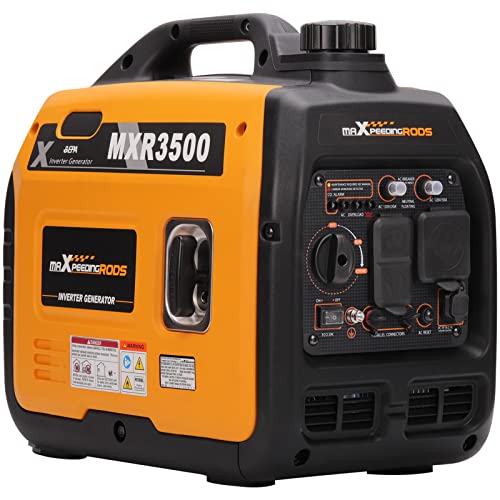
Peak 3500 watts, running 3000 watts, ECO mode extends runtime. Features include 1 x 120V 30A RV outlet, 2 x 120V 20A outlets, and 2 x 5V USB outlets. Best for: RV trips and small home backup where compact size matters. Limitation: running on gasoline only may require frequent refueling for longer outages.
PowerSmart 3800 Watt Dual Fuel Inverter Generator
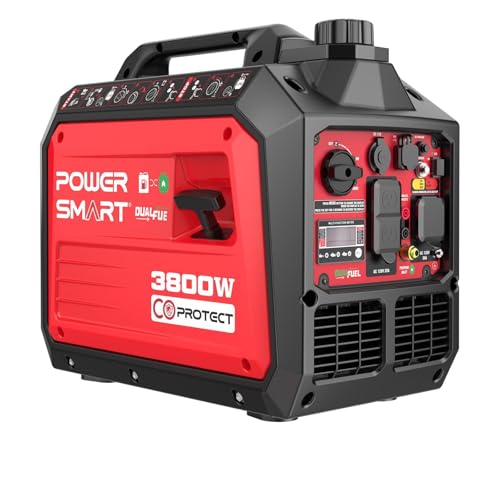
Dual fuel offers gasoline and propane options, with 3800 starting / 3300 running watts on gasoline and 3500 / 3100 on propane. Quiet operation at 65 dBA at 23 feet makes it suitable for quiet campgrounds. Best for: RV owners who want flexibility with fuel sources and long runtimes. Caution: propane performance may vary with ambient temperature and tank size.
LIFAN 3500W Portable Inverter Generator

3000W running, 3500W peak with <3% THD, quiet at 62 dB. Portable 46 lbs with a built-in handle; ideal for RV parks and camping where noise is a concern. Best for: travelers needing a compact, quiet power source. Limitation: lighter duty rating means slower startup power for high-demand appliances.
AFOERIT 3500 Watt Inverter Generator
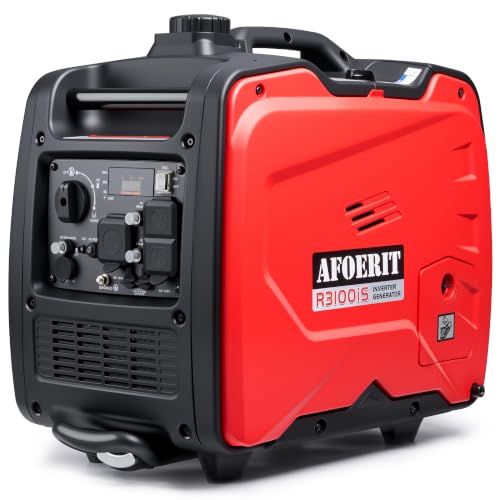
Peak 3500W, running 3000W; portable with a handle for easy transport. Quiet operation complements camping or RV travel. Best for: users who prioritize portability and straightforward operation. Limitation: data notes do not specify extended runtime at higher loads.
Oxseryn Power Equipment 4400W Inverter Generator

4400 peak watts and 3400 running watts offer strong backing for RVs and home backup. Includes multiple outlets and ECO mode for longer runtimes. Best for: RV owners needing more power headroom. Limitation: higher weight at 54 pounds, which may affect portability in tight spaces.
Buying Guide
What should you consider when choosing a 3500-watt RV generator?
Power needs: Assess your typical load. If you regularly run AC, water pumps, or multiple devices, look for higher running watts (3000-3400W) and a strong surge rating. If you mostly run lights and small electronics, 3000W running power can suffice.
Fuel type and efficiency
Gasoline-only units are common and fast to refuel, but dual-fuel models add propane flexibility during long outages. Check Eco or economizer modes for better fuel efficiency and longer runtimes at partial loads.
Noise and neighborhood compatibility
Inverter generators with quiet operation (around 58-65 dBA at a set distance) are preferable for campgrounds and shared spaces. Look for models with a Pure Sine Wave output for sensitive electronics.
Portability and storage
Weight and dimensions matter for RV compartments and trunks. Look for <1000W-class weights around 40-50 lbs with integrated handles. Compact models fit better in tight cargo spaces.
Outlets and RV readiness
Important RV features include a 30A RV connector, multiple 120V outlets, and USB charging if needed. A unit with parallel-ready options can expand capacity when more power is required.
Maintenance and warranty considerations
Verify service availability and simple maintenance tasks. Inverter models typically require spark plug checks and oil changes at recommended intervals. A clear user manual helps with routine care.
FAQ
- Q: Is a 3500W generator enough to run an RV air conditioner? A: It depends on the AC size. A typical RV AC may require 1500-3000W; pairing with other loads can push limits. Choose higher running watts if you plan to run AC along with other devices.
- Q: Are 3500W inverters quiet enough for campsite use? A: Yes, most models in this range offer sound levels around 58-65 dBA at a practical distance, making them camp-friendly.
- Q: Can I parallel two 3500W generators? A: Some models are listed as parallel-ready, allowing increased capacity by linking two units. Check the manufacturer’s instructions for compatibility.
- Q: What fuels do these units use? A: Most are gasoline-powered; some offer dual-fuel options with propane. Propane can extend runtime when gas is scarce.
- Q: Do 3500W generators provide clean power for electronics? A: Inverter generators with less than 3% THD are generally suitable for laptops, TVs, CPAP machines, and smartphones.
- Q: Which feature matters most for RV use? A: A dedicated 30A RV outlet and portability are crucial. Quiet operation helps preserve campground harmony.