If you’re upgrading an RC boat or building a new one, choosing the right electric motor is critical for performance. This guide highlights five top options that balance power, cooling, and reliability for common 650–800mm watercraft. Each pick serves a distinct use case—competition-level speed, rugged touring, or hobbyist upgrades—so you can select the best fit for your craft and skill level. A quick buyer’s table follows to simplify side-by-side comparisons.
| Product | Best For | Why It Stands Out | Limitations |
|---|---|---|---|
| Surpass Hobby 4082 Brushless RC Boat Motor (1600KV) | High-speed paddles and racing boats | Excellent heat dissipation, 4-pole design for torque | Requires proper cooling setup |
| Surpass Hobby 2948 4800 KV Brushless Motor | Powerful, responsive boats | High efficiency, strong acceleration | Standard cooling may need enhancement |
| HOBBYWING SEAKING 2040SL Motor V2 (5000KV) | Speed-focused DIY builds | Smooth startup, optimized ESC compatibility | Higher KV may demand careful tuning |
| Dilwe RC Brushless Motor | Durable upgrades and stability | High stability for controlled handling | Availability may vary |
| LICHIFIT RC Jet Boat Underwater Motor Thruster | Underwater propulsion and micro ROVs | Designed for underwater use with strong power | Not a surface-motoring option |
Surpass Hobby 4082 Brushless RC Boat Motor Review

Best for high-speed boat builds, the Surpass Hobby 4082 is a 1600KV brushless motor designed for 650–800mm hulls. This 4-pole configuration delivers strong torque for rapid acceleration and stable power output. The motor uses a aluminum alloy and copper construction with a cooling set to improve heat dissipation, extending service life during intense runs.
Who it’s for: builders seeking peak speed and reliable cooling in sport or racing boats. Why selected: high torque and efficiency, with a cooling-focused design to sustain performance. Caution: ensure your setup provides adequate cooling, as high-speed runs generate significant heat.
Surpass Hobby 2948 4800 KV Brushless Motor

Another Surpass option, the 2948 4800 KV motor targets speed enthusiasts with a larger 4-pole design for efficient torque delivery. It’s optimized for 650–800mm boats and includes a cooling jacket to improve heat management, supporting longer runs at high throttle.
Who it’s for: racers or hobbyists prioritizing fast response and acceleration. Why selected: excellent efficiency and cooling support. Caution: ensure the motor’s KV aligns with your propeller and battery to avoid over-revving.
ZChiMiao 21T RS550 Brushed Waterproof RC Motor
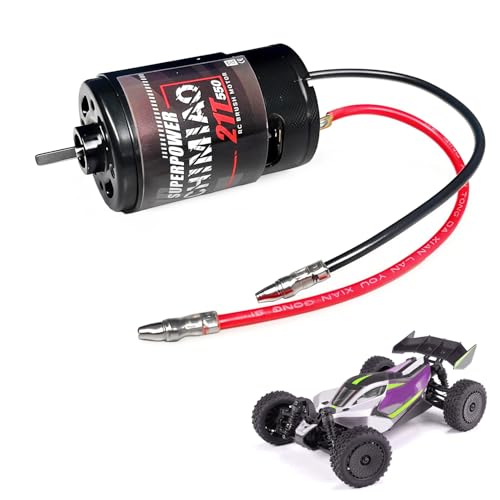
This brushed motor offers a practical upgrade path for players who prefer simplicity and lower upfront costs. Built for 1/10-scale boats and popular models like TRX trucks, it features a longer armature and robust cooling fans to improve performance under moderate loads.
Who it’s for: hobbyists upgrading budget-friendly kits or newcomers easing into RC boating. Why selected: balance of power and reliability in a cost-conscious package. Caution: brushed designs wear faster than brushless motors and may require more frequent maintenance.
LICHIFIT RC Jet Boat Underwater Motor Thruster

Designed for underwater propulsion and micro ROVs, this thruster-style motor brings strong power to submerged applications. It’s suitable for modification projects, nest ships, and submarine-style RC kits where underwater operation is required.
Who it’s for: builders pursuing underwater propulsion or hybrid surface-underwater configurations. Why selected: specialized design for underwater use. Caution: not intended as a standard surface-mount motor for mainstream speedboats.
Buying Guide: Key Considerations For RC Boat Motors
- Motor type and hull compatibility: Brushless vs brushed motors affect efficiency, heat, and maintenance. Match KV rating to hull size and propeller to avoid overloading.
- KV rating and speed needs: Higher KV suggests higher no-load speed but more heat. For 650–800mm boats, a balance between torque and speed often yields the best handling.
- Cooling and heat management: Conventional aluminum housings with cooling jackets help sustain performance during long sessions. Consider water-cooled options for high-power setups.
- Durability and build quality: 4-pole designs typically deliver more torque and better efficiency. Look for robust materials and a secure shaft and coupling arrangement.
- Compatibility with ESC and batteries: Ensure the motor’s electrical requirements align with your ESC and LiPo battery to prevent ESC saturation or battery sag.
- Maintenance needs: Brushed motors may require more frequent brush and bearing replacements. Brushless systems generally offer longer life with proper cooling.
Frequently Asked Questions
- What motor KV is best for a 650–800mm RC boat?
A mid-to-high KV range paired with a suitable propeller offers a balance of speed and control. Start with a value in the 1500–5000 KV range and tune based on hull behavior. - Do I need a cooling jacket for my brushless RC boat motor?
Cooling jackets improve heat dissipation, especially on high-power setups or longer runs. They help prevent thermal throttling and extend motor life. - Is brushed or brushless better for beginners?
Brushed motors are simpler and cheaper to start with, but brushless motors offer greater efficiency, speed, and longevity with proper care. - Can I mix different KV motors with the same ESC?
Check ESC specifications for maximum continuous current and compatibility with the motor’s KV to avoid overheating or damage. - What maintenance is required for an RC boat motor?
Regular inspection of bearings, prop shaft, and cooling connections; clean debris after runs; replace worn brushes or seals as needed for brushed motors. - How do I choose between surface and underwater motors?
Surface motors are designed for hull propulsion, while underwater thrusters are specific to submerged use. Choose based on your project’s intended environment.