Exploring model airplane engines combines craft, engineering, and display value. The following five products offer realistic engine replicas and interactive kits suitable for aviation fans, students, and hobbyists. Each item highlights authentic construction, educational detail, and durable materials to help you build impressive dioramas or functional display pieces.
Product Quick Reference
The table below provides a snapshot of the five selected model airplane engine products, including brand and key features.
| Product | Brand | Notable Feature |
|---|---|---|
| DM122 Mini Metal Turbofan Engine Model Kit | TECHING | All-metal construction with a transparent cover and motion-ready engine internals |
| NikolaToy TR900 Turbofan Engine Model Kit | NIKOLATOY | 3D-printed, highly detailed engine model with educational appeal |
| TR900 Turbofan Model Kit (Assembly Version) | Generic | Adjustable speed, LED lighting, USB power, and visible turbine internals |
| HI-REEKE Jet Engine Model Kit | HI-REEKE | TR900-inspired design with rotatable demonstration of internals |
| HIGH GODO Aircraft Engine Building Kit | HIGH GODO | 1786-piece STEM project with motor, battery box, and working turbofan |
DM122 Mini Metal Turbofan Engine Model Kit
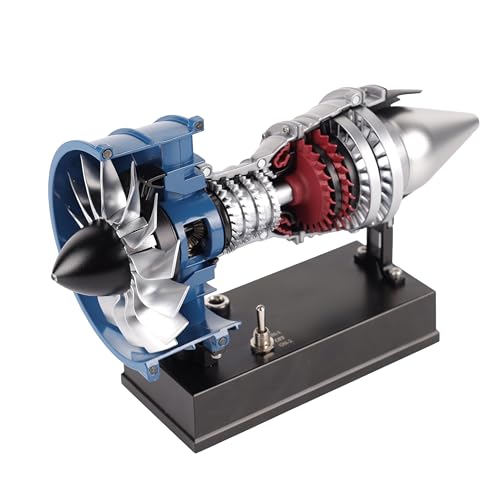
The DM122 kit presents a realistic turbofan engine in a compact metal build. Core features include a first-stage fan, high-pressure rotor assembly, combustion chamber, and dual turbine assemblies, all forged through precision casting and CNC machining. A semi-transparent cover reveals internal components, enabling observers to study motion while the engine runs. The kit includes a sturdy mounting bracket and a throttle control lever, supporting a dynamic display and hands-on demonstrations. It is designed for aviation students, hobbyists, and exhibitors seeking an authentic classroom or display model.
NikolaToy TR900 Turbofan Engine Model Kit

The NikolaToy TR900 model represents a high-precision, 3D-printed turbofan design inspired by modern airliners. It emphasizes realism and educational value, offering an opportunity to study the inner workings of a large engine at home or in the classroom. This item is well-suited for aviation enthusiasts who appreciate detailed detailing and hands-on assembly. The model serves as a tangible bridge between theoretical concepts and mechanical understanding, making it a strong display or teaching tool for STEM learning and aviation history.
TR900 Turbofan Model Kit (Assembly Version)

This assembly-version kit mirrors the TR900 turbofan engine with attention to detail and a practical build experience. It features adjustable speeds and LED lighting, enabling a dynamic display that showcases the engine’s operation. A USB-powered power setup supports continuous demonstrations, while a transparent casing allows viewers to observe internal components as the engine runs. The kit is designed for hobbyists seeking a visually engaging, hands-on project with educational potential in propulsion concepts.
HI-REEKE Jet Engine Model Kit

The HI-REEKE kit replicates a TR900-style turbojet engine in a compact, rotatable form. This design is ideal for demonstrating the turbine concept, airflow, and turbine blade interaction. The model emphasizes portability and ease of demonstration, making it suitable for classrooms or hobby displays. It supports exploration of propulsion principles and the mechanical nuances of turbojet operation, offering a hands-on approach to learning about jet engine theory and practical engineering.
HIGH GODO Aircraft Engine Building Kit

The HIGH GODO kit offers a comprehensive aircraft turbofan building experience with 1786 pieces. It includes a motor and a battery box (requires 6 AAA batteries, not included), enabling a working model that demonstrates engine operation. The sides open to reveal internal mechanisms, fostering a deeper understanding of propulsion design. This STEM-oriented project supports problem-solving, mechanical reasoning, and teamwork as builders assemble and test the running turbofan, making it a robust educational tool for teens and adults alike.
Buying Guide: Key Considerations for Model Airplane Engine Kits
- Purpose and audience: Determine whether you want a display piece, a teaching aid, or an interactive build. Some kits prioritize visual accuracy, while others emphasize educational engagement with working components.
- Scale and realism: Check the scale (1:100, 1:20, 1:87, etc.) to ensure compatibility with your existing models or display space. Consider build quality, surface finish, and detail fidelity for authenticity.
- Materials and construction: Metal bodies typically offer durability and weight, while 3D-printed or plastic components can enable intricate details but may require careful handling.
- Electrical features: Kits with adjustable speed, LEDs, or USB power provide dynamic demonstrations. Confirm power requirements and safety considerations for your setup.
- Educational value: Look for kits that clearly label major components (fan, compressor, turbine, exhaust) and include guides or manuals that explain propulsion concepts.
- Assembly complexity: Some kits are beginner-friendly with straightforward assembly; others are advanced and designed for experienced hobbyists. Match the project to your skill level and time available.
- Display suitability: Consider whether the kit includes mounting hardware, transparent casings, and rotation options to optimize display impact in a cabinet or classroom.
- Maintenance and durability: Durable finishes and protective coatings help preserve appearance during handling. Transparent covers and secure housings reduce risk of component damage during demonstrations.
- Educational extensions: Some kits pair with supplementary materials on aerodynamics, jet propulsion, and engineering career paths, expanding learning opportunities beyond the model itself.
These considerations help buyers balance realism, interactivity, and value. For collectors, prioritizing build quality and display impact matters most; for educators, the ability to illustrate propulsion principles clearly can be equally important.