For demanding soils and larger plots, hydraulic rear tine tillers deliver enhanced power, precise control, and easier operation. This guide highlights five top options, comparing engine strength, gear transmission, and maneuverability to help American gardeners choose the right model for heavy-duty tilling and consistent seedbed preparation.
| Product | Brand | Tilling Width | Engine | |
|---|---|---|---|---|
| NOVUS 18-Inch Dual Direction Rear Tine Tiller | NOVUS | 18 inch | 212cc 4-Cycle | Full Gear Transmission with dual rotating tines |
| Toro Dual Direction Rear Tine Tiller | Toro | Unknown | 127cc Briggs & Stratton | Instant Reverse; airless tires |
| Earthquake 37037 Pioneer Dual-Direction | EARTHQUAKE | Unknown | 99cc Viper engine | CRT and SRT modes; lightweight and quiet |
| Earthquake 46059 Pioneer Dual Direction | EARTHQUAKE | 17 inch | 127cc Briggs & Stratton | Frustration Free Shifting; Instant Reverse |
| EARTHQUAKE Victory Rear Tine Tiller | EARTHQUAKE | Unknown | 209cc Viper | Counter-rotating tines; highly maneuverable |
NOVUS 18-Inch Dual Direction Rear Tine Tiller

The NOVUS rear tine tiller combines a robust 212cc 4-cycle gas engine with a full gear transmission. Its 18-inch tilling width and 10-inch depth provide substantial soil penetration, making it well-suited for heavy-duty garden tasks. The dual rotating tines offer forward and reverse rotation, aiding in breaking tough soils and minimizing clumps. Durable construction and airless tires reduce maintenance and downtime in larger landscapes.
Toro Dual Direction Rear Tine Tiller

The Toro tiller uses a 127cc Briggs & Stratton 4-cycle engine paired with airless tires for consistent performance and durability. Its instant reverse feature enables quick maneuvering without complex shifting, which helps save time during border work and bed preparation. While lighter than some heavy-duty models, Toro emphasizes convenience and reliability for medium-to-large garden tasks.
Earthquake 37037 Pioneer Dual-Direction
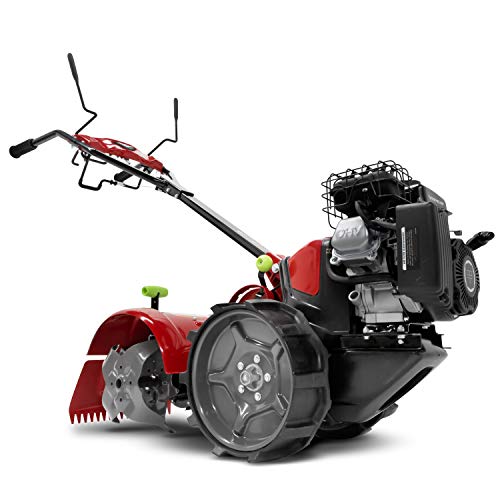
The Pioneer 37037 offers CRT (counter-rotating tines) and SRT (standard rotating tines) modes, allowing users to bust sod or create smooth seed beds. A lighter 99cc Viper engine reduces weight and noise while maintaining solid tilling performance. The shifting system is designed to be user-friendly, enabling efficient gear changes without guesswork.
Earthquake 46059 Pioneer Dual Direction
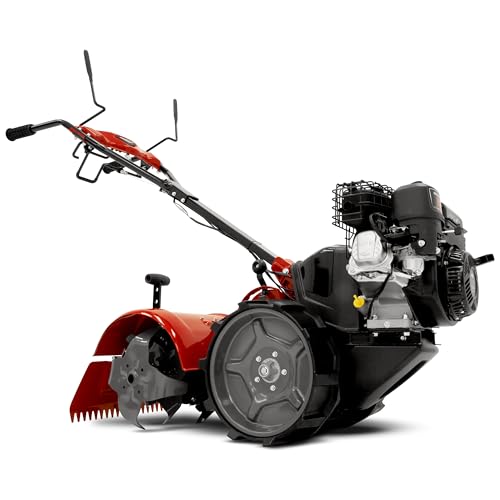
This Pioneer model pairs a compact, powerful 127cc Briggs & Stratton engine with dual-direction tines for sod busting and seed-bed prep. Its frustration-free shifting system helps operators locate the preferred drive mode quickly, reducing setup time. The design focuses on balance and ease of use, which aids in maneuvering around garden beds and edges.
Earthquake Victory Rear Tine Tiller

The Victory combines a 209cc Viper engine with a rugged bronze gear transmission and counter-rotating tines for robust sod-busting capability. Instant reverse allows quick direction changes without stopping to shift gears, and a purpose-built pneumatic wheel setup enhances stability and control in uneven or tilled ground. The unit is designed for tough jobs where maneuverability in tight spaces matters.
Buying Guide
- Engine power and size: Heavier soils require larger engines (100cc+ or more). For dense clay or sod, prioritize models with higher displacement and torque.
- Gear transmission vs belt drive: Full gear transmission generally offers greater durability and consistent power under load, but may add weight and cost; belt-driven units are lighter and simpler but can wear faster in demanding use.
- Tine configuration: Dual-direction tines enable forward and reverse tilling, which simplifies turning and breaking compacted layers. Look for adjustable width and depth to tailor to different beds.
- Weight and maneuverability: Heavier tillers offer more power but can be harder to steer. Pneumatic or airless wheels affect traction and ease of movement on uneven ground.
- Shifting system: Frustration-free or simplified shifting reduces operator fatigue. In dual-direction models, a clear locator or simple lever helps select CRT vs SRT modes.
- Maintenance and durability: Materials, engine type, and transmission design influence long-term reliability. Full assembly instructions and spare parts availability are practical considerations.
- Applications: Choose a tiller with adequate width and depth for your garden plots, whether you’re preparing large vegetable rows, perennial borders, or raised beds.
- Noise and emissions: Quieter engines and lower emissions can improve comfort during extended tilling sessions, especially in residential neighborhoods.
Selecting a hydraulic rear tine tiller involves balancing power, control, and ease of use. For heavy soils and larger plots, models with dual-direction tines, robust transmissions, and substantial engine displacement provide the best performance, while lighter models suit smaller beds and maintenance tasks. Consider your typical garden size, soil type, and preferred operating style when evaluating the options above.