Choosing the right plastic exterior panels can protect sheds, greenhouses, carports, and other outdoor spaces while keeping temperatures stable and reducing maintenance. This guide highlights five reliable options, focusing on polycarbonate and multi-layer panels known for UV resistance, impact strength, weather durability, and easy installation. Compare features to help decide which panels best fit your climate, roof design, and project needs.
| Product | Brand | Core Material | Thickness | Key Benefit |
|---|---|---|---|---|
| Tatuo 12 Pack 6′ X 2′ Panels | Tatuo | Polycarbonate | 0.24″ | Thick, robust twin-wall sheets with UV protection |
| WOHNZA 6 PCS Roofing Panels | WOHNZA | Polycarbonate | 1.0 mm | High transparency, fewer seams for leak resistance |
| UMIG 8 PCS Panels | UMIG | Polycarbonate | 0.32″ | Double-sided UV coating, strong weather resistance |
| Quibbay 6PCS Panels | Quibbay | Polycarbonate | 0.32″ | Three-layer honeycomb design with UV protection |
| VEVOR 14 Pack Panels | VEVOR | Polycarbonate | 0.16″ | 80% light transmission with strong UV protection |
Tatuo 12 Pack 6′ X 2′ Polycarbonate Panels

These 12 polycarbonate greenhouse panels measure approximately 2 by 6 feet with a thickness of 0.24 inches. The hollow honeycomb design enhances heat insulation, helping to reduce summer heat and maintain warmth in winter. Both sides feature UV protection for long-term outdoor use. Panels are easily cut with a utility knife to fit custom shapes and sizes, making it suitable for various greenhouse roof configurations. A solid option for builders seeking durable, impact-resistant panels with strong insulation properties.
WOHNZA 6 PCS Polycarbonate Roofing Panels

These 6-piece panels are crafted from 1mm polycarbonate with high transparency. They offer waterproofing, heat insulation, and UV protection to prolong outdoor shelter life. The design emphasizes fewer seams for better leak resistance and easier installation, compatible with various framing shapes, including curved or arched configurations. The panels are lightweight, making handling and installation straightforward while delivering reliable weather resistance in diverse climates.
UMIG 8 PCS 6′ x 2′ Panels
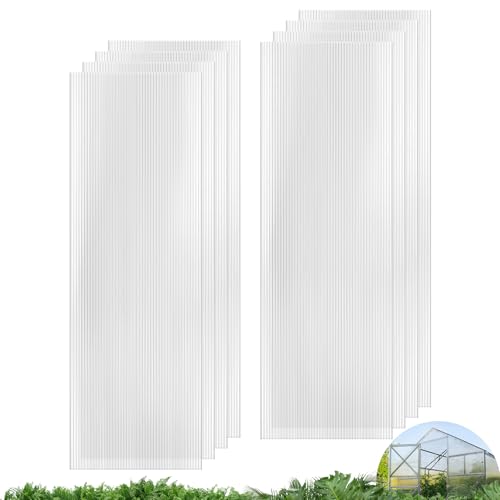
UMIG panels feature double-sided UV coating to extend outdoor life and optimize plant growth by maintaining warmer winter temperatures while cutting heat in summer. The 0.32-inch thickness provides sturdy performance with fewer seams, reducing potential leaks in rain. Lightweight construction supports flexible installation on varied geometries, including curved rooflines. They offer robust weather resistance, including hail and heavy precipitation, making them suitable for long-term greenhouse or shed projects.
Quibbay 6PCS Panels

Quibbay offers a three-layer honeycomb polycarbonate panel with UV protection that blocks up to 99.9% of UV rays. The honeycomb structure enhances strength and wind resistance while allowing around 70% light transmission for healthy plant growth. Designed to withstand extreme temperatures from -40°C to 120°C, these panels resist fading, yellowing, or cracking under prolonged sun exposure. They are well-suited for rooftops in windy or storm-prone areas requiring durable, clear roofing.
VEVOR 14 Pack Polycarbonate Panels

VEVOR provides a large kit with 14 panels, each designed for high light transmission (about 80%) while blocking 98% of UV rays. The double-layer honeycomb construction provides impact resistance and strength against hail and heavy loads, with a thickness of 0.16 inches. They are rated for a wide temperature range (-40°C to 120°C) and are built to endure rain, snow, and storms without cracking or erosion, making them a solid choice for year-round outdoor installations.
Buying Guide
Key purchase considerations for plastic exterior building panels:
- Material and construction: Polycarbonate panels offer high impact resistance and good light transmission. Honeycomb structures improve insulation and strength, while twin-wall designs reduce heat transfer and noise.
- Thickness and seals: Thicker panels typically provide better durability and insulation, but can be heavier. Look for UV protection on both sides and tight seam designs to minimize leaks.
- Light transmission and insulation: Balance the need for sunlight with heat management. Panels with 70%–80% light transmission are common for greenhouses, while additional UV filtering protects plants and interiors.
- Temperature tolerance: Consider climate extremes. Most panels tolerate a broad range, but check your product’s rated operating temperatures.
- Ease of installation: Prefabricated sizes that match common framing (2′ x 6′, 4′ x 8′, etc.) simplify installation. Look for cuttable panels and clear guidance on cutting tools and methods.
- Durability and maintenance: UV stability, impact resistance, and weatherproofing influence long-term performance. Panels that resist yellowing and cracking offer better longevity with less maintenance.
- Application fit: Greenhouse roofs, sheds, carports, and exterior walls require different panel thicknesses and mounting methods. Ensure compatibility with your structure’s design.
- Warranty and service: A solid warranty protects against manufacturing defects and premature degradation, especially for outdoor exposure.
Overall, select panels that align with climate, roof design, and maintenance preferences. For greenhouse projects, prioritize UV protection, insulation, and light transmission to support plant growth. For exterior walls or sheds, prioritize impact resistance, weather sealing, and ease of installation. Compare kit sizes and seam configurations to minimize leaks and simplify future replacements.