Choosing the right 96-well plate can impact assay accuracy, data consistency, and ease of use in biology, chemistry, and teaching labs. This guide highlights top clear 96-well plates that offer clarity, sterility, and dependable well structures. Read on for concise product summaries, hands-on features, and a buying guide to help you compare options without price distractions.
| Product | Brand | Key Feature |
|---|---|---|
| 96 Well Culture Plate | Scienfocus lab | Clear polystyrene with treated surface and individual packaging |
| 96-Well Polystyrene U-Bottom Microplate | Kashi Scientific | U-bottom, sterile, single-direction lids |
| Black Clear Bottom 96-Well Plate | BioAssay Systems | Dark well bottoms for fluorometric assays |
| Weysat 20 Pcs 96 Well Plates | Weysat | Transparent PS, flat bottom, teaching and lab use |
| Nest Scientific 701001 96 Well Plate | Nest | Sterile, tissue-culture treated, clear |
Below are five selected plates that balance clarity, sterility, and practical features for routine assays and educational demonstrations. Each section provides a quick overview, material notes, and the key attributes that influence performance in common workflows.
96 Well Culture Plate With Lid By Scienfocus Lab

The Scienfocus lab plate is crafted from high-quality polystyrene (PS) with a transparent appearance to maximize visual readouts. Each plate is individually packaged with a lid and coded for easy inventory management, a feature that can streamline plate tracking in busy labs. The surface is specially treated to promote tissue adhesion while maintaining compatibility with a wide range of porous plate instruments. This plate suits both routine cell-based assays and high-throughput screening workflows where optical clarity matters.
96-Well Polystyrene U-Bottom Microplate With Lids

This Kashi Scientific plate features a clear U-bottom geometry with a 250 µL well volume, providing uniform sample distribution and reliable optical measurements. Constructed from durable polystyrene, it is designed for longevity in varied lab testing contexts. The product ships 100 plates per pack and comes sterile with single-direction lids to minimize spill risk and simplify handling, making it suitable for multi-well assays and educational demonstrations alike.
Black Clear Bottom 96-Well Plate

BioAssay Systems offers a single-plate option featuring a black clear bottom design, optimized for fluorometric assays that require reduced well-to-well light interference. The plate is sterile and comes with a lid, supporting reliable reading in fluorescence-based protocols and imaging applications. The clear bottom allows for enhanced observation while the black well area can help minimize cross-talk in optical measurements.
Weysat 20 Pcs 96 Well Tissue Culture Plates
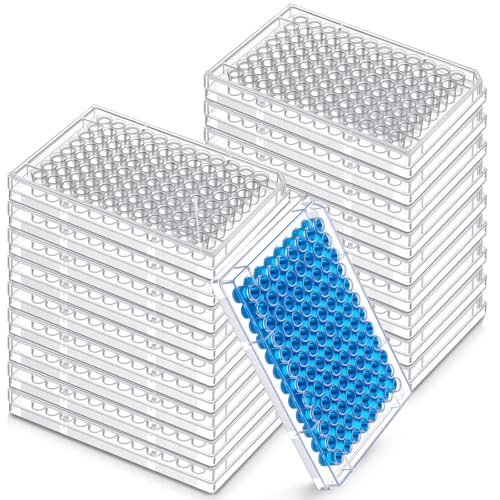
The Weysat set includes 20 tissue culture plates designed to meet frequent lab and educational needs. The plates have flat bottoms and are made from optical-grade clear polystyrene, ensuring uniform sample distribution and precise optical analysis. The plates are lightweight and compact for easy storage, with a transparent composition that supports straightforward observation of specimens across wells.
Nest Scientific 701001 96 Well Plate

Nest’s 96-well plate is sterilized by electron-beam processing and made from 100% virgin polystyrene with vacuum plasma tissue culture treatment. It offers high clarity and a clear lot number for batch traceability, along with peel-to-open packaging. The plate is individually wrapped and gamma-irradiated, supporting clean handling and reliable results in sensitive assays and educational setups requiring sterile conditions.
Celltreat 96 Clear Polystyrene Plate With Lid

Celltreat’s plate stands out with alpha-numeric well labeling for easy identification. Each well includes a raised rim that nests into the lid’s rings to reduce evaporation and cross-contamination risks. The lids also feature a stacking ring for stability when handling tall plate stacks. This design supports meticulous experimental workflows and automation-friendly handling in busy labs or classrooms.
96-Well Polystyrene V-Bottom Microplate

This Kashi Scientific V-bottom plate delivers a 250 µL well volume in a sterile, individually wrapped package with single-direction lids. The V-bottom geometry is advantageous for certain binding assays and sedimentation studies, providing reliable bottom-related readouts. The plate’s clarity and rigid construction support consistent optical measurements across replicates.
Buying Guide: Key Purchase Considerations
- Bottom geometry: U-bottom, flat-bottom, and V-bottom designs affect liquid handling, mixing, and optical readouts. Choose according to assay type and plate reader compatibility.
- Material and clarity: Polystyrene offers strong clarity and compatibility with many dyes and proteins. Consider tissue culture-treated variants for adherent cell assays or treated surfaces for better cell attachment.
- Sterility and packaging: Pre-sterilized plates in individually wrapped packaging reduce contamination risk, especially for sensitive assays. Some plates are gamma-irradiated or electron-beam sterilized; understand your facility’s sterilization standards.
- Well volume and density: Typical 250 µL wells suit many standard assays, but verify the volume for your specific reagents to avoid overflow or evaporation issues.
- Lid design and evaporation control: Lids with single-direction openings help minimize leakage and evaporation. Some lids have stacking features for space-saving storage.
- Batch traceability: Lot numbers and clear labeling support traceability for quality control and regulatory compliance in research environments.
- Teaching and automation compatibility: Educational settings may prioritize lightweight, economical packs, while automation workflows value uniform bottom geometry and compatibility with plate handlers and readers.
- Optical interference: For fluorometric and spectrophotometric assays, bottoms with low autofluorescence and darkened areas can help reduce cross-talk and improve signal-to-noise ratios.
The selection above reflects plates that balance optical clarity, sterile packaging, and practical lab features for American researchers and educators. When evaluating options, align plate type with your typical assays, reader compatibility, and handling practices to optimize data quality and workflow efficiency.