Water intrusion can threaten foundations, basements, and roofing projects. Liquid rubber waterproofing membranes provide flexible, durable protection that adapts to movement and temperature changes. This article highlights five top options, detailing coverage, durability, and best uses to help American homeowners choose the right membrane for flat roofs, foundations, basements, and more. Each product is evaluated on adhesion, elongation, and overall performance in typical DIY environments.
| Product | Best For | Key Benefit | Approx. Coverage |
|---|---|---|---|
| Liquid Rubber Waterproof Sealant – 1 Gallon | Flat/low-slope roofs, foundations | High elongation, flexible protection | 15 sq ft per gallon (60-80 mil) |
| Liquid Rubber Waterproof Sealant – 5 Gallon | Large roofs, foundations | Same flexible membrane in bulk | 15 sq ft per gallon (60-80 mil) |
| Liquid Rubber Basement and Foundation Repair Sealant – 1 Gallon | Basements, foundation leaks | 900% elongation, robust waterproofing | |
| MAPEI Mapelastic WaterStop – 1 Gallon | Under tile/stone, interior/exterior floors | Crack isolation and moisture barrier | |
| USG DUROCK Liquid Waterproofing Membrane – 1 Gallon | Foundations, walls | Versatile application methods |
Note: All products listed are commercially available through Amazon and designed to form flexible, durable membranes that resist weathering, UV exposure, and structural movement. This guide focuses on performance characteristics relevant to typical DIY home projects in the United States.
Liquid Rubber Waterproof Sealant – 1 Gallon

Product overview: This industrial-strength bitumen-based formula creates a seamless waterproof membrane suitable for flat roofs, metal roofs, low-slope surfaces, foundations, gutters, and other concrete or wooden substrates. The membrane remains flexible with movement and temperature changes, resisting cracking and UV damage for long-lasting protection. Coverage varies by surface type: about 15 sq ft per gallon on flat/low-slope roofs with 3-4 heavy coats to reach 60-80 mil thickness; about 30 sq ft per gallon on vertical surfaces like foundations with 2-3 coats for a 30 mil membrane. This versatility makes it a popular choice for both repair and preventive maintenance.
Key considerations: Users should plan for multiple coats to achieve the recommended membrane thickness. Brush, roll, or spray application is supported, offering flexibility for different project sizes. The formula provides a durable barrier against water infiltration where other sealants may fail, acting as a reliable alternative to traditional roof tar or patch products. Suitable for DIYers with basic coating equipment, as long as surface preparation and proper ventilation are maintained.
Best uses: Roofing repairs on flat and low-slope roofs, sealing around gutters, and protecting concrete surfaces from moisture ingress. It also serves as a protective coating for planters and other exterior concrete features. For vertical applications, ensure multiple coats to build a robust membrane.
Liquid Rubber Basement and Foundation Repair Sealant – 5 Gallon

Product overview: A professional-grade waterproofing membrane engineered for basement and foundation work, this sealant delivers a robust barrier against active leaks and moisture. With remarkable elasticity (up to 900%), it accommodates structural shifts without compromising adhesion. It surpasses basic concrete paints and standard sealants by providing a comprehensive basement waterproofing system. The formula bonds well to concrete, masonry, wood, metal, and foundation surfaces, and integrates with self-leveling concrete applications for broader DIY compatibility.
Key considerations: The larger 5-gallon size is ideal for extensive foundation projects or multiple exterior repair tasks. Proper surface prep—clean, dry, and free of loose material—ensures optimal adhesion. The material remains flexible across temperature changes, helping prevent future cracks. This product is well-suited for DIYers tackling ongoing basement moisture issues or planning long-term foundation protection across several areas of a home.
Best uses: Basement leaks, foundation waterproofing, shower liners, and planter boxes. Its high elongation helps it maintain a watertight seal over time, even where temperature and moisture shifts occur. Compatible with many substrate types, it’s a versatile option for comprehensive waterproofing projects.
Liquid Rubber Waterproof Sealant – 5 Gallon

Product overview: This is the larger-volume version of the standard Liquid Rubber sealant, designed to deliver the same flexible, durable membrane across bigger DIY projects. It employs the same industrial-strength bitumen formula and exhibits superior elongation to absorb building movement and temperature changes. Coverage mirrors the 1-gallon variant: approximately 15 sq ft per gallon on flat/low-slope roof surfaces with multiple coats to reach a 60-80 mil thickness, and about 30 sq ft per gallon for vertical surfaces like foundations.
Key considerations: For large roofing or foundation projects, the 5-gallon option reduces trips to the store and speeds up completion. Ensure proper ventilation and surface preparation. The membrane resists UV damage and cracking, maintaining adhesion over time. Like other Liquid Rubber products, it supports brush, roll, or spray application to fit user preference and equipment availability.
Best uses: Roof repairs on flat and low-slope roofs, foundation sealing, gutters, and other exterior concrete surfaces. It is suitable for preventative maintenance and active leak repair, offering a long-lasting protective coating that conforms to irregular shapes and edges.
Liquid Rubber Basement and Foundation Repair Sealant – 1 Gallon

Product overview: This 1-gallon bottle provides a flexible, long-lasting solution for basement waterproofing and foundation repair. It peaks in adhesion to concrete, masonry, wood, metal, and other foundation surfaces. The 900% elongation rating enhances its ability to move with the building without cracking or losing adhesion, making it a strong option for DIY basement projects or small foundation repairs.
Key considerations: The product is designed to form a permanent waterproof membrane that resists active leaks and moisture. It is compatible with self-leveling concrete and acts as a flexible crack filler for concrete and masonry expansion joints. The low odor formula is convenient for indoor applications when ventilation is available.
Best uses: Basements, foundation leaks, shower liners, planter boxes, and other indoor/outdoor projects needing a durable waterproof seal. The product’s versatility supports mixed-material substrates common in residential settings.
MAPEI Mapelastic WaterStop – 1 Gallon

Product overview: Mapelastic WaterStop is a liquid-rubber waterproofing and crack-isolation membrane designed for use under tile or stone, on residential and commercial floors, walls, and ceilings. It provides a moisture barrier and helps manage in-plane floor cracks up to 1/8 inch (3 mm). The membrane also suits submerged applications like freshwater pools and fountains under ceramic tile installations, making it a versatile underlayment for tile projects in damp environments.
Key considerations: Mapelastic WaterStop offers crack-isolation properties in addition to waterproofing, helping maintain tile integrity in areas prone to movement or moisture. It is suitable for interior and exterior applications and can be used above or below tile surfaces where a waterproof layer is required. Ensure proper mixing and uniform coat thickness to maximize performance.
Best uses: Under-tile waterproofing for showers, bathrooms, kitchens, and outdoor tile installations near water features or moisture-prone areas. It is particularly valuable where a moisture barrier is necessary before tiling or stone installation.
USG DUROCK Brand Liquid Waterproofing Membrane – 1 Gallon
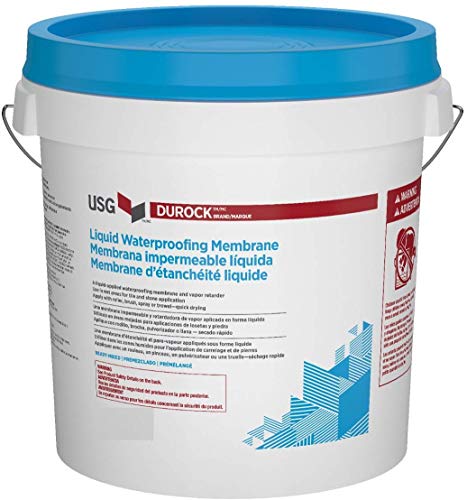
Product overview: USG DUROCK’s liquid waterproofing membrane is designed for a range of substrates and application methods, including roll, brush, trowel, and spray. It dries relatively quickly, enabling quicker project turnarounds. The membrane has a low Perm Rating (0.38 perms at 20 mils dry thickness per ASTM E96), which helps ensure a strong moisture barrier for walls, floors, and other surfaces exposed to water exposure in residential settings.
Key considerations: The product’s versatility in application methods can accommodate DIYers with varying tool access. Fast drying times are beneficial for projects that require quick progress but should be balanced with adequate curing and venting. The low perm rating is an important factor for basements and foundations where moisture control is critical.
Best uses: Foundations, basements, walls in damp spaces, and subareas requiring a durable waterproof barrier. It pairs well with tile or other surface coverings where moisture control is a priority.
Buying Guide: Key Purchase Considerations
When selecting a liquid rubber waterproofing membrane, consider the following factors to ensure you choose the right product for your project:
- Elongation and flexibility: Look for very high elongation (often 900% or more). This allows the membrane to accommodate building movement without cracking.
- Surface compatibility: Check adhesion to concrete, masonry, metal, and wood. Some products are better for basements and foundations, others for under-tile installations.
- Application method: Determine whether you will brush, roll, or spray. Some products are versatile enough to accommodate all methods, which can affect project speed and cleanup.
- Coverage and thickness: Understand intended thickness (mil) and corresponding coverage per gallon. Plan for multiple coats where recommended to reach the desired barrier thickness.
- UV exposure and weather resistance: For exterior use, UV resistance helps prevent premature degradation. For indoor use, consider odor and cure time.
- Compatibility with substrates: Some sealants work well with concrete and masonry, while others are suitable for wood, metal, or a combination of surfaces.
- Safety and ventilation: Many solvent-based membranes require ventilation during application. Follow manufacturer safety guidelines and use protective gear as needed.
- Storage and shelf life: If purchasing in bulk, verify storage conditions to maintain performance over time.
Performance considerations from a multi-perspective view:
- DIY accessibility: Most products are designed for homeowners with basic tools, but some may require sprayers or special rollers for best results on large areas.
- Long-term protection: A high-elasticity membrane reduces maintenance needs by reducing rework caused by shifting or cracking in foundations and roofs.
- Cost efficiency: Larger volumes reduce per-unit costs for bigger projects, but ensure you can apply the product evenly in one session to avoid inconsistencies.
- Environmental and indoor use: For indoor basements, consider low-odor formulations and easy cleanup. Outdoor use requires weather-resistant performance and UV stability.
- Compatibility with finishing layers: If you plan to tile or cover the surface later, confirm that the membrane will bond adequately with subsequent finishes.
In summary, selecting the right liquid rubber waterproofing membrane depends on your specific project scope, substrate types, and climate conditions. The options above—ranging from single-gallon to multi-gallon kits—provide durable, flexible barriers designed to resist water intrusion across residential roofs, basements, foundations, and tile installations. Always follow surface preparation steps, apply in the recommended number of coats, and allow full cure time for optimal performance.