Answering a common buyer question: an alternating air pressure mattress pad can help relieve and prevent bed sores by distributing pressure, boosting circulation, and reducing prolonged pressure on vulnerable areas. This guide highlights top picks tailored for bedridden individuals, caregivers, and long-term care settings. Each product is evaluated for comfort, durability, and ease of use to help you choose the right solution for home or hospital use. The summary table below compares key details at a glance.
| Product | Best For | Key Benefit | Notes |
|---|---|---|---|
| Vive Alternating Air Pressure Mattress Pad | Bedridden patients needing proven relief | 130 air cells with waves for even pressure | Whisper-quiet pump |
| Lunderg Alternating Air Pressure Mattress Pad w/ Static Mode | Care settings needing a break from alternation | Quiet pump; Static mode option | Supports up to 300 lbs |
| Alcedo Alternating Air Pressure Mattress Pad | Home or hospital use with easy cleaning | Breathable, waterproof surface | High-density construction; 300 lb capacity |
| Kekoy Alternating Air Pressure Mattress Pad | Early-stage pressure sore prevention | 130 bubble cells for continuous redistribution | Beige look; 75″ x 35″ |
| Lunderg PressuRelief Alternating Air Pressure Mattress Pad | Users needing softer comfort layer | PressuRelief Comfort Layer; static mode | Quiet operation; doctor recommended |
Vive Alternating Air Pressure Mattress Pad
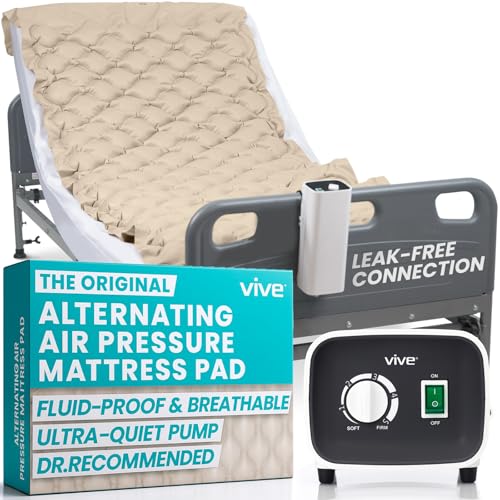
The Vive original model uses 130 air cells with a wave-like alternation to distribute weight evenly and relieve pressure points. It is best for bedridden individuals who need continuous pressure redistribution and heartier relief for ulcers and sores. The whisper-quiet pump operates around 22 dBA, supporting multiple pressure levels for a customizable experience. A potential limitation is that the system requires proper setup to ensure uniform cell inflation across the surface.
Who it is best for
- Caregivers seeking a proven, durable solution for long-term bedbound patients.
- Individuals at risk of pressure ulcers in home or hospital settings.
Why selected
It combines a large 130-cell array with a quiet pump, allowing for steady pressure redistribution and comfortable rest, which are essential for preventing ulcers.
Limitations to note
Ensure the pad is securely aligned with the mattress and check for any wear on seals; prolonged use requires routine inspection for leaks.
Lunderg Alternating Air Pressure Mattress Pad with Static Mode
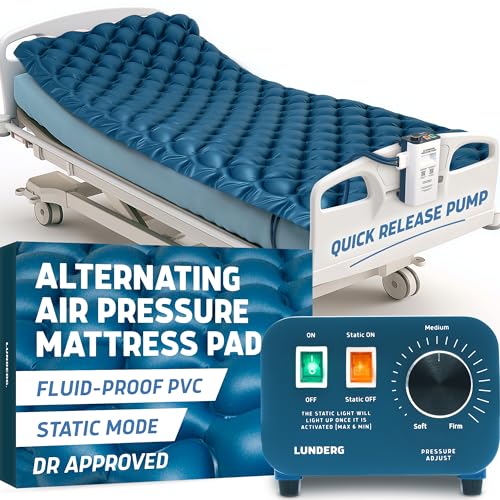
The Lunderg model emphasizes doctor and therapist approval with optional Static Mode for non-alternating support. This makes it a strong choice for caregivers who want the flexibility of an all-purpose solution. Its whisper-quiet pump (about 23 dBA) provides soft-to-firm control and a quick connector for easy setup. Best for: patients who may benefit from alternating therapy most days, with occasional need for stable support. Limitation: weight capacity up to 300 lbs, which is suitable for many users but may not cover all heavier patients.
Who it is best for
- Hospitals, nursing homes, and homes needing adaptable therapy modes.
- Users who may require a break from full alternation for rest or comfort.
Why selected
Static Mode provides rest when needed without letting the surface drift, improving sleep quality for some users and easing caregiver management.
Limitations to note
Static Mode reduces facilitation of pressure relief waves; for active pressure redistribution, revert to Alternating Mode.
Alcedo Alternating Air Pressure Mattress Pad

Alcedo’s pad targets bed sore prevention with medical-grade alternating pressure technology. It features a breathable, waterproof surface for easy cleaning and a high-density construction that supports up to 300 lbs. Ideal for bedridden users in home or clinical settings. A potential limitation is ensuring the inflated area aligns with the bed’s dimensions to maximize coverage.
Who it is best for
- Caregivers prioritizing hygiene-friendly surfaces and reliable performance.
- Bedridden patients who require durable, long-lasting support.
Why selected
Breathable, waterproof surface plus strong seams provide practical, low-maintenance care, with effective pressure redistribution essential for prevention.
Limitations to note
Check dimension fit to ensure the pad adequately covers critical pressure zones on the mattress.
Kekoy Alternating Air Pressure Mattress Pad

Kekoy’s model markets itself for early-stage pressure sore prevention with 130 bubble air cells for continuous distribution of weight. It’s designed for elderly care, bedridden users, and post-surgery recovery, with a beige, neutral look. Best for: users in early redness stages or those needing proactive prevention. Caution: as with all pads, ensure proper sizing and fit to maximize effectiveness and comfort.
Who it is best for
- Early-stage prevention and elderly care.
- Users needing regular pressure redistribution without full-time active alternation.
Why selected
The 130-cell array supports gradual, even pressure distribution, which can help reduce focal pressure on hips, shoulders, and heels.
Limitations to note
115–130-cell layout requires correct bed sizing for full-area coverage; verify mattress depth and sheet fit before use.
Lunderg PressuRelief Alternating Air Pressure Mattress Pad

This Lunderg model adds a PressuRelief Comfort Layer to create a softer, more familiar surface while maintaining effective alternating therapy. It includes a static mode and a quiet pump for easy day-to-day use. Best for: users who want comfort-first padding alongside prevention. A note: the comfort layer may slightly alter the feel of the surface compared to a naked pad.
Who it is best for
- Individuals sensitive to the feel of vinyl or hard surfaces.
- Care settings needing a gentle balance of therapy and comfort.
Why selected
The additional comfort layer helps reduce resistance to rest and can improve adherence to a prevention routine, which is key for long-term outcomes.
Limitations to note
Static and alternating modes are available, but if full alternation is needed constantly, verify the mode settings and caregiver usage.
Buying Guide: Key Considerations For Choosing An Air Mattress Pad
- Intended use: Home care vs. hospital environments. Choose models with higher weight capacity and quiet pumps for long shifts.
- Pressure redistribution technology: 130-cell systems provide broad coverage; ensure fit for your mattress size.
- Modes: Alternating, Static, and optional comfort layers. Static mode is helpful for rest days or when a break from cycling is desired.
- Surface material: Waterproof, breathable surfaces simplify cleaning and reduce moisture-related skin issues.
- Noise level: Pumps around 22–23 dBA are preferable for uninterrupted sleep.
- Durability and maintenance: Heat-sealed cells, reinforced seams, and patch kits improve longevity and repairability.
- Weight capacity: Ensure the pad supports the user’s weight, especially for heavier patients.
- Size and fit: Check mattress dimensions; improper fit can reduce effectiveness and comfort.
Frequently Asked Questions
- What is an alternating air mattress pad used for? Answer: It redistributes pressure and improves circulation to prevent or heal bed sores in bedridden individuals.
- How do I choose between alternating and static modes? Answer: Use alternating mode for active pressure relief; switch to static mode for rest or after relief has occurred.
- Is a higher cell count always better? Answer: A higher cell count helps distribute pressure more evenly but must fit the bed correctly.
- Can these pads be used at home and in hospitals? Answer: Yes, most models are designed for hospital beds and home care, with appropriate sizing and durability.
- Do these pads require professional installation? Answer: Most models are designed for caregiver setup; follow manufacturer instructions for installation and maintenance.
- What is a common maintenance task? Answer: Regularly inspect seals and seams, clean the surface per instructions, and replace worn components as needed.