Finding the right anti snore pillow can reduce nighttime snoring and relieve neck tension for many sleepers. This guide highlights five top options tailored for different sleep styles—side, back, and stomach sleepers—so you can choose the best match for your needs. Each product focuses on cervical support, ergonomic contours, and breathable materials to promote open airways and comfortable alignment. Below you’ll see who each pillow is best for, plus a quick buying table to compare core features at a glance.
| Product | Best For | Why It Stands Out |
|---|---|---|
| IvaBed Sleep Apnea Pillow | Side and back sleepers seeking multi-height support | Dual-height design with arm rest zones for natural arm placement and cervical contour |
| Ergo Pillow for Sleep Apnea (Generic) | People needing open-airway support across positions | Two loft levels and high-resiliency memory foam for stable alignment |
| Cozyplayer Ultra Pain Relief Cooling Pillow | Hot sleepers who want cooling comfort | Hollow concave design with six contour zones and Arc-Chill pillowcase |
| WENGTY Sleep Apnea Pillow (Darkgrey) | Dual-position sleepers wanting adjustable height | Patented contour with rotating height options for neck and spine alignment |
| BDEUS Ergonomic Cervical Pillow | Side sleepers who want a 2-in-1 option | Horn side and roll side with neck-cradle design to reduce snoring tendencies |
IvaBed Sleep Apnea Pillow
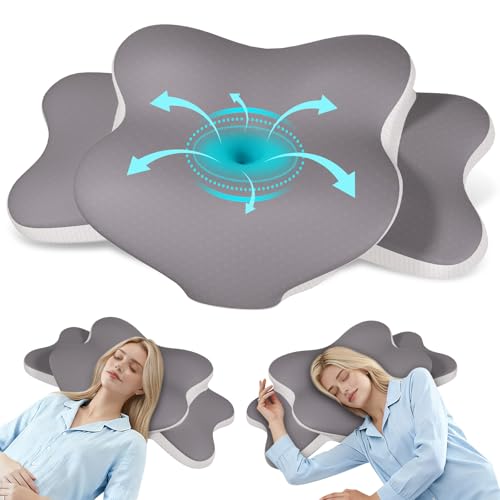
The IvaBed pillow targets cervical alignment by following your neck’s natural curve. Its contoured memory foam offers balanced cushioning for deeper, more restful sleep. Armrest zones and a dual-height design allow your arms to rest comfortably beneath the pillow, reducing shoulder pressure. The pillow adapts to side, back, and stomach sleeping to maintain natural head-neck-shoulder alignment throughout the night. Best for: side sleepers seeking lower or higher profiles to fit shoulder width and back sleepers needing neck support. Caution: if you prefer a uniform height across all sleep positions, this dual-height approach may require a short adjustment period.
Ergo Pillow for Sleep Apnea (Generic)

This pillow emphasizes an ergonomic neck cradle designed to open airways and reduce snoring. It features two distinct loft levels for back, side, and stomach sleepers, keeping the spine neutral all night. The high-resiliency memory foam resists sagging while conforming to curves for ongoing neck and shoulder relief. Best for: those who want a flexible option across sleep positions. Caution: the memory foam core may retain heat in warmer rooms unless paired with breathable covers.
Cozyplayer Ultra Pain Relief Cooling Pillow

This pillow combines a hollow concave design with six contour zones to address targeted pressure points, supporting the neck, shoulders, and arms. The Arc-Chill cooling pillowcase and 98% breathable memory foam enhance airflow to reduce heat buildup. Best for: hot sleepers who want steady neck support without overheating. Caution: some users may prefer a firmer contour if they sleep primarily on one position all night.
Sleep Apnea Pillow by WENGTY (Darkgrey)
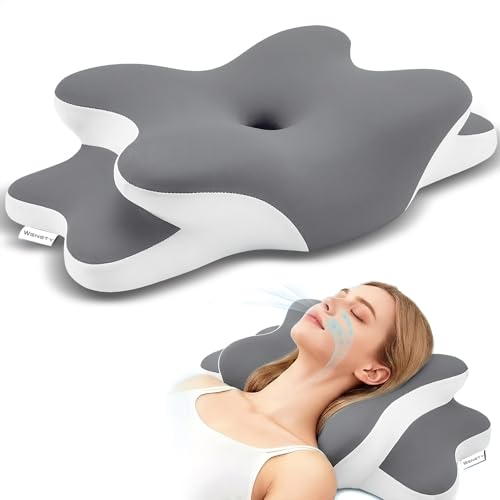
The WENGTY pillow centers on a deep ergonomic contour designed to fit the neck and shoulder area, promoting spinal alignment in multiple sleep positions. Its dual-thickness option lets you rotate the pillow for higher or lower support. Best for: sleepers who shift positions and want adjustable neck elevation. Caution: some users may find the contour mid-range in firmness; test both lofts to determine comfort.
BDEUS Ergonomic Cervical Pillow
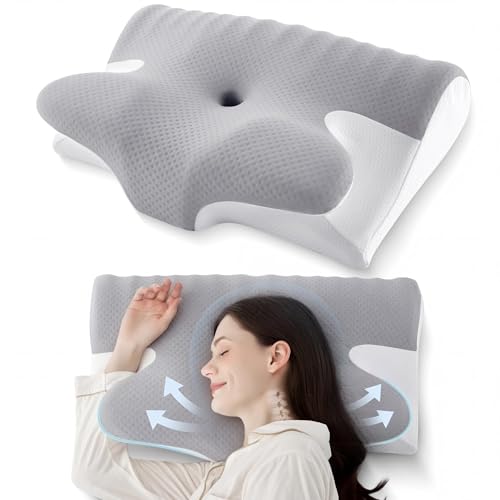
The BDEUS pillow offers a two-in-one design with a Horn Side (5.5”) and a Roll Side (4.7”) to switch quickly between a structured contour and a more forgiving classic feel. The Horn Side supports an elevated head position to encourage snore-reducing airway alignment, while the Roll Side provides unrestricted movement. Best for: side sleepers who want quick transitions between sleeping styles. Caution: the dual-surface design may require time to identify the preferred orientation for all-night comfort.
Buying Guide: Key Considerations For Anti Snore Pillows
- Sleep position compatibility: Side sleepers benefit from elevated contours; back sleepers may prefer higher profiles to support the cervical curve.
- Contour and height options: Pillows with dual lofts or ambidextrous designs can accommodate changing sleep positions and shoulder width.
- Neck and spine alignment: Look for a pillow that cradles the neck and keeps the spine in a neutral line from head to shoulders.
- Material quality and breathability: Memory foam with cooling covers or breathable mesh improves airflow and temperature control.
- Anti-snore features: Contoured edges that raise the head or neck can reduce tissue vibration and snoring for many users.
- Maintenance and care: Removable, washable covers extend pillow life and maintain hygiene for nightly use.
FAQ
- Do anti snore pillows actually reduce snoring?
– They can help by aligning the neck and spine to keep airways open, reducing airway obstruction for many sleepers. - Is a dual-height pillow better than a single-height pillow?
– Dual-height options are helpful for sleepers who change positions or have varying shoulder widths. - What is memory foam’s role in neck support?
– It conforms to the neck’s shape and supports stable alignment without sagging. - Should I choose a cooling pillow if I sleep warm?
– Yes. A breathable core and cooling cover can significantly reduce heat buildup during the night. - Are these pillows suitable for stomach sleepers?
– Some offer lower profiles and flexible contours suitable for stomach sleepers; check the height and contour design before buying. - How do I determine the right pillow height?
– Consider shoulder width and preferred sleeping position; if you wake with neck pain, try a higher loft first and adjust.